
Deserted Walled Medieval Town of Craco, Italy (Sitios fantasma XIII) – 24 Tales of Ghost Towns and Abandoned Cities – WebUrbanist


Foto:  WebUrbanist
Foto: WebUrbanist

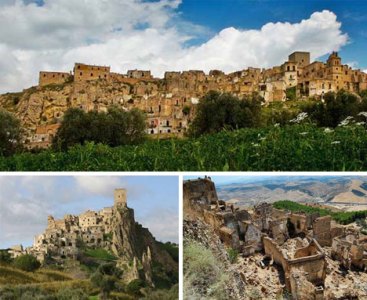
Deserted Walled Medieval Town of Craco, Italy

Like This!

The deserted walled medieval town of Craco had a village located on its site as far back as the 500s AD. Over time, however, it was plagued by, well, plagues … as well as agricultural droughts, rogue banditry and finally insurmountable seismic activity which threatened to bring the whole town down. In the 1960s the last of the residents were evacuated for fear of an earthquake that could level the entire site and the town has since sat entirely abandoned high up on a 400-foot cliff.

vía 24 Tales of Ghost Towns and Abandoned Cities Deserted Walled Medieval Town of Craco, Italy – WebUrbanist.

Pueblos fantasma. Craco, ciudad medieval abandonada. En «Tejiendo el Mundo«

Craco

Paseando por las solitarias calles de este lugar, se pueden escuchar los ecos de miles de niños que corretearon por sus empinadas cuestas. Imaginar los pasos apresurados de las viejas que, al son de las campanas de la iglesia parroquial de San Nicola, acuden presurosas a la misa de doce.

Sin prisa y con el silbido de la brisa que siempre sopla en el valle de Cavone como único compañero, las destartaladas fachadas de palacios como el palazzo Grossi, el Madonna, el Carbone o el Simonetti van guiando el rumbo del caminante hacia las ruinas del viejo castillo. Fortaleza que durante muchísimos siglos acogió a las familias más poderosas del sur de Italia.
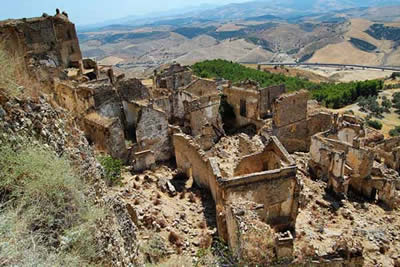
Craco, Italia. Foto: Petes Travel Snippets

CRACO (Italy): A Fascinating Medieval Town

Craco is located in the Region of Basilicata and the Province of Matera. About 25 miles inland from the Gulf of Taranto at the instep of the “boot” of Italy. This medieval town is typical of those in the area, built up with long undulating hills all around that allow for the farming of wheat and other crops. Craco can be dated back to 1060 when the land was in the ownership of Archbishop Arnaldo, Bishop of Tricarico. This long-standing relationshop with the Church had much influence over the inhabitants throughout the ages.

The solitude of ghost towns like Craco in Italy

From the hustle and bustle and the chaos to the silence and most absolute desolation: Once upon a time, cities that are now completely deserted use to be immersed in the everyday din of noisy life. A continuous flow of people and cars and the roar of civilization were witnesses of their essence till the day everything stopped. They were completely abandoned, left empty and silent.

ITALY, Craco: the ghost town ! skyscrapercity.com

Craco – De Wikipedia

Craco is a comune and medieval village located in the Region of Basilicata and the Province of Matera in Italy. About 25 miles inland from the Gulf of Taranto at the instep of the “boot” of Italy. The medieval village of Craco is typical of the hill towns of the region with mildly undulating shapes and the lands surrounding it sown with wheat.

Craco was built on a very steep summit, for defensive reasons, giving it a stark and striking appearance and distinguishing it from the surrounding lands which are characterized by soft shapes. The center, built on the highest side of the town, facing a ridge runs steeply to the southwest where newer buildings exist. The town sits atop a 400 meter high cliff that overlooks the Cavone River valley. Throughout the area are many unique vegetation-less mounds formed by intensive erosion that are called «calanchi.»

Abandoned Resort Town of Yashima, Japan (Sitios fantasma XII) – 24 Tales of Ghost Towns and Abandoned Cities – WebUrbanist


Imagen: Web Urbanist

Abandoned Resort Town of Yashima, Japan

Like This!

Yashima is a high and open plateau on one of the main islands of Japan. During peak economic years in the 1980s investors decided to create a resort village complete with a half-dozen hotels, curio shops and a rail line to the top of the peak of the city. When the economy fell on harder times and they could not bring in the tourist dollars the entire village was shut down, leaving many shops with eerie remnant collections of collectible tourist goodies and leaving furniture and other relics in the hotels and other support buildings.

vía 24 Tales of Ghost Towns and Abandoned Cities Abandoned Resort Town of Yashima, Japan – WebUrbanist.

Yashima

Located on Shikoku, one of the major islands of Japan, Yashima is an abandoned tourist resort that was supposed to draw tourists to the area. After all, this is one of the most important pilgrimage sites on Shikoku, with the Yashima Temple rising up at the top of the plateau. It’s also where a very important battle took place during the Genpei War, in 1185.

Yashima Junior High School - Foto: douglaspperkins (Flickr)

Unfortunately things didn’t quite go according to plan. The economy was surging during the 1980s and entrepreneurs around Takamatsu thought it would be a good idea to invest in tourism and capitalize on the area’s spiritual reputation. They built six hotels, many other theme parks and even an aquarium.

Business was good for a while, but, somewhere along the way people realized there wasn’t much to see in Yashima, so they stopped coming here. The resort’s hotels and gift-shops had to be shut down, and the investors, who had already lost millions of Yen, simply abandoned the project.

Many of the hotel rooms look untouched and some of the tourist shops have their merchandise carefully arranged, making it look like their owners had to leave in a hurry, thus adding to the place eeriness.

Abandoned Yashima

Yashima (or 屋島 which probably won’t display right) is an imposing plateau to the northeast of Takamatsu, the second largest city on Shikoku, one of Japan’s major islands.

ABANDONED YASHIMA RESORT: Shikoku In Japan

The Yashima hotel resort village in Shikoku was intended by investors to be a bustling place with several hotels, restaurants, shops, a rail line and probably more if it were continued.

It was originally build in the 1980’s alongside a popular temple that was seen as an attraction centerpiece to try and draw visitors in.

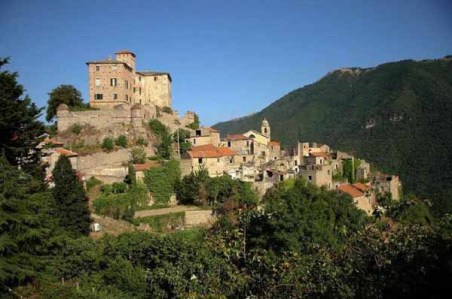
Abandoned Medieval Town of Balestrino, Italy (Sitios fantasma IX) – 24 Tales of Ghost Towns and Abandoned Cities – WebUrbanist


Balestrino, Italy - listverse.com

The origins and much of the history of this slow-built settlement in Tuscany remain unknown, constructed in pieces over many centuries. In the 1100s it was owned by the Benedictine abbey of San Pietro dei Monti. Today the beautiful small town-on-the-bluffs features a castle at the top and partially walled city sprawled on the olive-treed hillside around – but all are completely abandoned. Due to seismic instability the residents were moved out decades ago, leaving behind a perfectly preserved but piecemeal museum of modern and medieval history. Still, visit it soon: the next earthquake in the area may be the last this old town ever sees.

Like This!

vía 24 Tales of Ghost Towns and Abandoned Cities Abandoned Medieval Town of Balestrino, Italy – WebUrbanist.

Balestrino, Italy en listverse.com
Balestrino is quite a strange case in that it was extremely difficult to find any decent information on it. At least on the abandonment itself. No one is quite sure when the town was established, though records date back to before the eleventh century – when Balestrino was owned by the Benedictine abbey of San Pietro dei Monti. As you can see from the pictures, the upper part of the town consists of a Castle (of Marquis) and the lower part a parish church (of Sant’Andrea). Records of population go back to around 1860, when around 800-850 people lived there. Mainly famers who took advantage of the landscape to farm olive trees.

Balestrino – Abandoned Italian hill town – Virtual Globetrotting

Balestrino, Italy is just as picturesque as many other medieval Italian towns, with its stunning hilltop location 70 km southeast of Genoa. Once owned by the Benedictine abbey of San Pietro dei Monti, Balestrino began losing its population in the late 19th century as earthquakes struck the region and damaged property. In 1953, the town was abandoned due to ‘geological instability’. The part of the town that has remained untouched since that time is currently undergoing planning for redevelopment, so it won’t remain abandoned for much longer.

Bookmark and Share

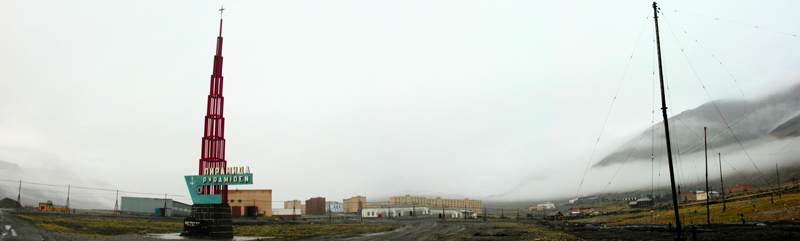
Deserted Mining Town of Pyramiden, Sweden (Sitios fantasma VII) 24 Tales of Ghost Towns and Abandoned Cities – WebUrbanist


Pyramiden - Foto: Norwegian Polar Institute

Deserted Mining Town of Pyramiden, Sweden

Like This!

A thriving coal-mining town sold by Sweden to the former Soviet Union in the early 1920s fell victim to a classic case of soviet state-run company decision-making. Once the town was deemed insufficiently necessary and productive for the government’s purposes it was summarily and suddenly evacuated in its entirety. The population left many relics and furniture items behind which tourists can see through the windows – but not up close as visitors are forbidden (for safety reasons) from entering.

vía 24 Tales of Ghost Towns and Abandoned Cities Deserted Mining Town of Pyramiden, Sweden – WebUrbanist.

Pyramiden [78° 39.3′ N 16° 20′ E]

By Bjørn Fossli Johansen (ed.), Jørn Henriksen, Øystein Overrein, Kristin Prestvold

The Russian mining settlement of Pyramiden was discontinued and abandoned in 1998. Since then time has virtually been standing still here. With its wide streets and planned town-structure the place is a witness to the Soviet presence on the islands in the 1970s and 1980s. Everything here was designed with effectiveness and with mining in mind, but also with the intention of taking care of the workers’ welfare and family life. In contrast to the male dominated Longyearbyen, a community of families was characteristic for the Russian settlements.

Deserted Mining Town of Pyramiden, Sweden - Foto: WebUrbanist

Pyramiden Maps

Bookmark and Share

Pyramiden – De Wikipedia

Pyramiden (DanishNorwegian and Swedish meaning «the pyramid», Russian: Пирамида, piramida) was a Russian settlement and coal mining community on the archipelago of SvalbardNorway. It was founded by Sweden in 1910, and sold to the Soviet Union in 1927.

It lies at the foot of the Billefjorden on the island of Spitsbergen, and is named for the pyramid-shaped mountain adjacent to the town. The settlement, with a one time population of over 1,000 inhabitants,[1] was abandoned January 10, 1998 by its owner, the state-owned Russian companyArctikugol Trust, and is now a ghost town. Within the buildings things remain exactly as they were left, abandoned in a hurry.

There are no restrictions on visiting Pyramiden. However, visitors may not enter any buildings without permission, even if the doors are open, due to the health and safety hazards involved. Most buildings are now locked. Pyramiden is accessible by boat or snowmobile. Guided tours are available in Russian, Norwegian, and English.

The nearest settlements are Svalbard’s capital, Longyearbyen, some 50 km to the south,Barentsburg approximately 100 km south-east and the small research community of Ny-Ålesund, 100 km to the west.

Diseña un sitio como este con WordPress.com
Comenzar