
Culturing Science – Biology as relevant to us earthly beings
By Hannah Waters |
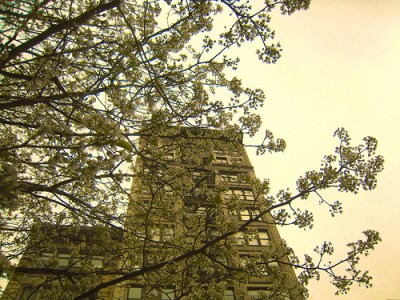
When you read the word “nature,” what do you think of?
Maybe you imagine a dark wood with sunlight reaching a mottled floor of foliage, thrushes singing and chipmunks hopping. Maybe you peer through grassy dunes at sanderlings running back and forth in the surf , occasionally halting to frantically peck at the sand. Or maybe you see an expanse of cedars bearing a snowfall, deer perusing the bark, and nuthatches hanging from a limb.
In any of these visions, is there a human in sight?
Our species largely views nature as a separate entity from the world we inhabit. We can traverse it on a camping trip, and even bring along our binoculars to better analyze this space so foreign to our own. In heavily populated areas, we visit parks to escape from the city, although we recognize that these spaces are not true “nature,” but manicured to our specifications for our greatest enjoyment.
This divide between the two worlds is a fallacy. Its premise is that, before our invasion, ecosystems were static environments that we have, over time, displaced with our buildings and soot and trash. But, while our cities certainly displace the former environment, they also create new ecosystems. And we are intimately involved in these systems, whether we recognize it or not.
vía Urban ecology doesn’t have enough humans in it | Culturing Science, Scientific American Blog Network.
Follow @arquitectonico
 Arquitectonico
Debe estar conectado para enviar un comentario.