
Deserted Walled City of Kowloon, Hong Kong (Sitios fantasma XIV) – 24 Tales of Ghost Towns and Abandoned Cities – WebUrbanist


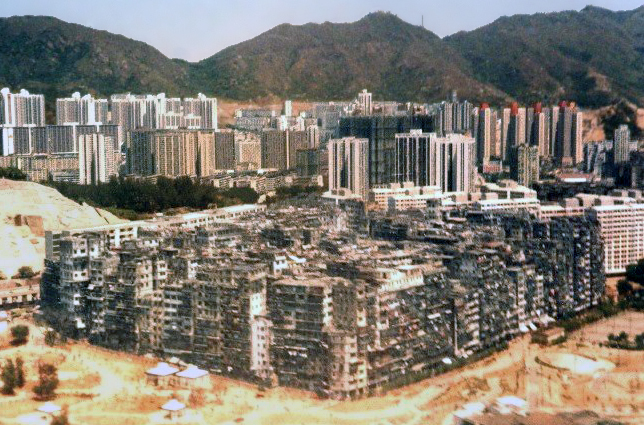
An aerial view of Kowloon Walled City in 1989 - Foto: Wikipedia

Deserted Walled City of Kowloon, Hong Kong

Kowloon Walled City was a loophole, a glitch never meant to exist. It grew organically devoid of building codes and largely absent of legal oversight, a kind of organic tent city times one thousand. As it grew without rules some areas were cut off entirely from natural light and air, crime ebbed and flowed and everything grew densely packed until the government finally intervened – evacuating the city and demolishing what remained.

vía 24 Tales of Ghost Towns and Abandoned Cities Deserted Walled City of Kowloon, Hong Kong – WebUrbanist.

Kowloon Walled City – De Wikipedia

Kowloon Walled City was a densely populated, largely ungoverned settlement in KowloonHong Kong. Originally a Chinesemilitary fort, the Walled City became an enclave after the New Territories were leased to Britain in 1898. Its population increased dramatically following the Japanese occupation of Hong Kong during World War II. From the 1950s to the 1970s, it was controlled by Triads and had high rates of prostitutiongambling, and drug use. In 1987, the Walled City contained 33,000 residents within its 6.5-acre (0.03 km2; 0.01 sq mi) borders.

In January 1987, the Hong Kong government announced plans to demolish the Walled City. After an arduous eviction process, demolition began in March 1993 and was completed in April 1994. Kowloon Walled City Park opened in December 1995 and occupies the area of the former Walled City. Some historical artifacts from the Walled City, including its yamen building and remnants of its South Gate, have been preserved there.

Kowloon Walled City - The most dense human habitation in world history. Foto: SkyscraperPage Forum

Kowloon Walled City – Mahalo

The Kowloon Walled City was an urban «megablock» in Hong Kong, comprised of 500 buildings that housed approximately 50,000 residents. For decades, the walled city was the last vestige of Chinese territory in British Hong Kong before it was occupied by the Japanese during the Second World War. After the Japanese deserted Kowloon, it became a hotbed for illegal activity and was the site forbrothels, casinos, opium dens, secret factories, unlicensed clinics and cocaine parlors.

The Walled City Of Kowloon – The most dense human habitation in world history.

Hak Nam, City of Darkness, the old Walled City of Kowloon was finally demolished ten years ago, in 1993, and to the end it retained its seedy magnificence. Rearing up abruptly in the heart of urban Hong Kong, 10, 12 and in some places as many as 14 storeys high, there was no mistaking it: an area 200 metres by 100 metres of solid building, home to some 35,000 people, not the largest, perhaps, but certainly one of the densest urban slums in the world. It was also, arguably, the closest thing to a truly self-regulating, self-sufficient, self-determining modern city that has ever been built.

The City in its final form went back barely 20 years. In origin, however, Kowloon City was much the oldest part of Hong Kong, and one of the few areas in the vicinity populated when the British first arrived in 1841 to claim Hong Kong Island and the southern-most tip of the Kowloon Peninsula for their own. It was a proper Chinese town, laid out with painstaking attention to eternal principles. The Chinese believed that a town should face south and overlook water with hills and mountains protecting its rear, and in these terms the City was very happily placed, with the great Lion Rock just to the north of it and Kowloon Bay immediately to the south.

Kowloon Walled City, Hong Kong

Deserted Walled Medieval Town of Craco, Italy (Sitios fantasma XIII) – 24 Tales of Ghost Towns and Abandoned Cities – WebUrbanist


Foto:  WebUrbanist
Foto: WebUrbanist

Deserted Walled Medieval Town of Craco, Italy

Like This!

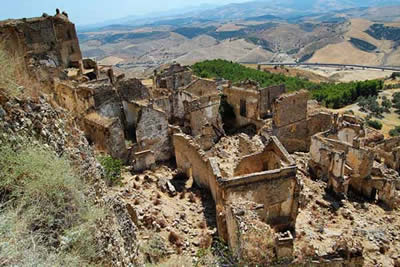
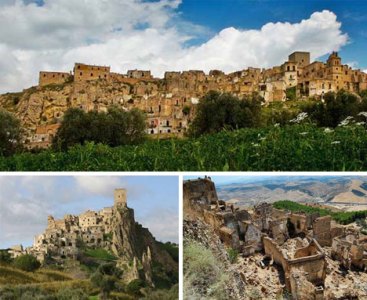
The deserted walled medieval town of Craco had a village located on its site as far back as the 500s AD. Over time, however, it was plagued by, well, plagues … as well as agricultural droughts, rogue banditry and finally insurmountable seismic activity which threatened to bring the whole town down. In the 1960s the last of the residents were evacuated for fear of an earthquake that could level the entire site and the town has since sat entirely abandoned high up on a 400-foot cliff.

vía 24 Tales of Ghost Towns and Abandoned Cities Deserted Walled Medieval Town of Craco, Italy – WebUrbanist.

Pueblos fantasma. Craco, ciudad medieval abandonada. En «Tejiendo el Mundo«

Craco

Paseando por las solitarias calles de este lugar, se pueden escuchar los ecos de miles de niños que corretearon por sus empinadas cuestas. Imaginar los pasos apresurados de las viejas que, al son de las campanas de la iglesia parroquial de San Nicola, acuden presurosas a la misa de doce.

Sin prisa y con el silbido de la brisa que siempre sopla en el valle de Cavone como único compañero, las destartaladas fachadas de palacios como el palazzo Grossi, el Madonna, el Carbone o el Simonetti van guiando el rumbo del caminante hacia las ruinas del viejo castillo. Fortaleza que durante muchísimos siglos acogió a las familias más poderosas del sur de Italia.

Craco, Italia. Foto: Petes Travel Snippets

CRACO (Italy): A Fascinating Medieval Town

Craco is located in the Region of Basilicata and the Province of Matera. About 25 miles inland from the Gulf of Taranto at the instep of the “boot” of Italy. This medieval town is typical of those in the area, built up with long undulating hills all around that allow for the farming of wheat and other crops. Craco can be dated back to 1060 when the land was in the ownership of Archbishop Arnaldo, Bishop of Tricarico. This long-standing relationshop with the Church had much influence over the inhabitants throughout the ages.

The solitude of ghost towns like Craco in Italy

From the hustle and bustle and the chaos to the silence and most absolute desolation: Once upon a time, cities that are now completely deserted use to be immersed in the everyday din of noisy life. A continuous flow of people and cars and the roar of civilization were witnesses of their essence till the day everything stopped. They were completely abandoned, left empty and silent.

ITALY, Craco: the ghost town ! skyscrapercity.com

Craco – De Wikipedia

Craco is a comune and medieval village located in the Region of Basilicata and the Province of Matera in Italy. About 25 miles inland from the Gulf of Taranto at the instep of the “boot” of Italy. The medieval village of Craco is typical of the hill towns of the region with mildly undulating shapes and the lands surrounding it sown with wheat.

Craco was built on a very steep summit, for defensive reasons, giving it a stark and striking appearance and distinguishing it from the surrounding lands which are characterized by soft shapes. The center, built on the highest side of the town, facing a ridge runs steeply to the southwest where newer buildings exist. The town sits atop a 400 meter high cliff that overlooks the Cavone River valley. Throughout the area are many unique vegetation-less mounds formed by intensive erosion that are called «calanchi.»

Deserted Floating City of Oily Rocks, Azerbaijan (Sitios fantasma XI) – 24 Tales of Ghost Towns and Abandoned Cities – WebUrbanist


Deserted Floating City of Oily Rocks. Foto: WebEcoist

Deserted Floating City of Oily Rocks, Azerbaijan

Like This!

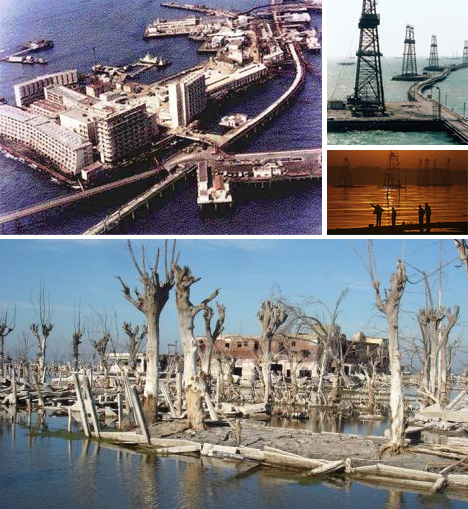
Off the coast of Azerbaijan sits what remains of one of the strangest organically-evolved cities in the world. Oily Rocks started with a single path out over the water, built on the backs of ships sunken to serve as foundations. This system of paths grew and evolve to serve the oil-drilling industry and eventually were widened to create space for houses, schools, libraries and shops for the workers and their families. Today, most of it sits abandoned and some paths and buildings have sunk back under the surf never to be seen again.

vía 24 Tales of Ghost Towns and Abandoned Cities Deserted Floating City of Oily Rocks, Azerbaijan – WebUrbanist.

Oily Rocks, Legend and Reality

by Seyyad Ibrahmov, Azerbaijan International

THE EARLY DAYS

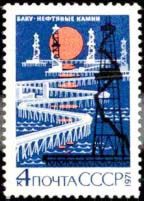
A Soviet Stamp commemorating Oily Rocks, the first off-shore oil project in the world. Azerbaijan International.

It was the stuff of legends, that night of November 7, 1949. Out there on the trestles hovering over the depths of the sea, nobody could sleep that night. If their calculations were correct, it would be the historical night everyone had been waiting for, the culmination of years of work. There, off the coast of Azerbaijan, would mark the first time oil had been recovered from depths in the sea.

And just as predicted, it happened. Oil was struck at a depth of 1,100 meters beneath the Caspian. And when that black, thick fountain started to pour forth, no one could contain their excitement and exuberance. Everyone rushed to feel it, to put their hands in it and smear it all over their arms and faces, hugging each other and shouting for joy. Their hard work had finally proved successful.

A new name was coined that night: no longer would the place be known as «Black Rocks.» The source of the «black» that passing ships had noted even a hundred years earlier, had finally been confirmed. Henceforth, it would be called «Oily Rocks» (Neft Dashlari).

Members of that first expeditionary team often used to recall that night that took place nearly 50 years ago. The group was led by Aghagurban Aliyev, a geologist and Yusif Safarov, Deputy Head of the Exploration Drilling Trust, who was responsible for determining exactly where they should drill. Mikhail Kavyorochkin headed up the Exploration Drilling Trust.

The small town of «Neft Dashlari» (called also the «Oily Rocks» area) is situated along the Caspian sea, east of Baku and is the world’s first offshore oil field.)

Neft DaşlarıDe Wikipedia

Neft Daşları (also, Neftyanyye Kamni and Nerftekamni; in English, Oil Rocks) is a settlement in BakuAzerbaijan. The settlement forms part of the municipality of Çilov-Neft Daşları in Əzizbəyov raion.[2]

The Oil Rocks Drilling Platform is located in Neft Daşları. A full town on the sea, it was the first oil platform in Azerbaijan. It was built in 1947 as an exercise of Soviet and Azeri ambition. The Oil Rocks lies 45–50 km (28–31 mi) offshore on the Caspian Sea and extracts oil from the shallow water portion of the Absheron geological trend. The most distinctive feature of the Oil Rocks is that it is actually a functional city with a population of about 5,000 and over 200 km (120 mi) of streets built on piles of dirt and landfill. Most of the inhabitants work on shifts; a week on Oil Rocks followed by a week on the shore. The small city includes shops, school and a library. After almost 60 years the Oil Rocks is still quite unusual as Azerbaijan’s first and largest oil platform.

Oil Rocks (Neft Dashlari, Neftyanyye Kamni), oil city in the Caspian sea, Baku, Azerbaijan
| .Azerbaijan, Industrial Facility

The Rock of Ages

Once the pearl of Azerbaijan’s industry, the Oily Rocks rig teeters on the brink of ruin — even as the region ushers in a coming oil boom. Is there a future for the world’s oldest drilling platform, and for its workers?Marcel Theroux reports from the Caspian Sea.

By Marcel Theroux

Pennzoil Pays Dues at Oily Rocks

By Thomas de Waal

BAKU, Azerbaijan — The men from Pennzoil refuse to say they got burned in Azerbaijan, but they do concede that doing business there is a long haul.

«Business is not a sprint here, it’s a marathon,» said Paul Justice, Pennzoil’s vice president for public affairs.

The Houston-based company now has a 10 percent stake in the international consortium exploiting three Caspian Sea oil fields. But they have also been involved in a natural gas project that has run less smoothly. The project is now up and running, but Pennzoil has not yet been paid the $150 million it is owed for it.

Bookmark and Share

Deserted Mining Town of Pyramiden, Sweden (Sitios fantasma VII) 24 Tales of Ghost Towns and Abandoned Cities – WebUrbanist


Pyramiden - Foto: Norwegian Polar Institute

Deserted Mining Town of Pyramiden, Sweden

Like This!

A thriving coal-mining town sold by Sweden to the former Soviet Union in the early 1920s fell victim to a classic case of soviet state-run company decision-making. Once the town was deemed insufficiently necessary and productive for the government’s purposes it was summarily and suddenly evacuated in its entirety. The population left many relics and furniture items behind which tourists can see through the windows – but not up close as visitors are forbidden (for safety reasons) from entering.

vía 24 Tales of Ghost Towns and Abandoned Cities Deserted Mining Town of Pyramiden, Sweden – WebUrbanist.

Pyramiden [78° 39.3′ N 16° 20′ E]

By Bjørn Fossli Johansen (ed.), Jørn Henriksen, Øystein Overrein, Kristin Prestvold

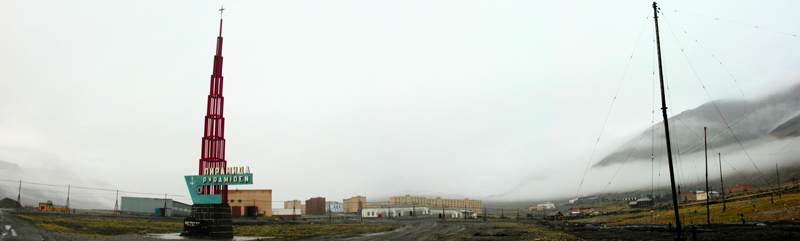
The Russian mining settlement of Pyramiden was discontinued and abandoned in 1998. Since then time has virtually been standing still here. With its wide streets and planned town-structure the place is a witness to the Soviet presence on the islands in the 1970s and 1980s. Everything here was designed with effectiveness and with mining in mind, but also with the intention of taking care of the workers’ welfare and family life. In contrast to the male dominated Longyearbyen, a community of families was characteristic for the Russian settlements.

Deserted Mining Town of Pyramiden, Sweden - Foto: WebUrbanist

Pyramiden Maps

Bookmark and Share

Pyramiden – De Wikipedia

Pyramiden (DanishNorwegian and Swedish meaning «the pyramid», Russian: Пирамида, piramida) was a Russian settlement and coal mining community on the archipelago of SvalbardNorway. It was founded by Sweden in 1910, and sold to the Soviet Union in 1927.

It lies at the foot of the Billefjorden on the island of Spitsbergen, and is named for the pyramid-shaped mountain adjacent to the town. The settlement, with a one time population of over 1,000 inhabitants,[1] was abandoned January 10, 1998 by its owner, the state-owned Russian companyArctikugol Trust, and is now a ghost town. Within the buildings things remain exactly as they were left, abandoned in a hurry.

There are no restrictions on visiting Pyramiden. However, visitors may not enter any buildings without permission, even if the doors are open, due to the health and safety hazards involved. Most buildings are now locked. Pyramiden is accessible by boat or snowmobile. Guided tours are available in Russian, Norwegian, and English.

The nearest settlements are Svalbard’s capital, Longyearbyen, some 50 km to the south,Barentsburg approximately 100 km south-east and the small research community of Ny-Ålesund, 100 km to the west.

Diseña un sitio como este con WordPress.com
Comenzar