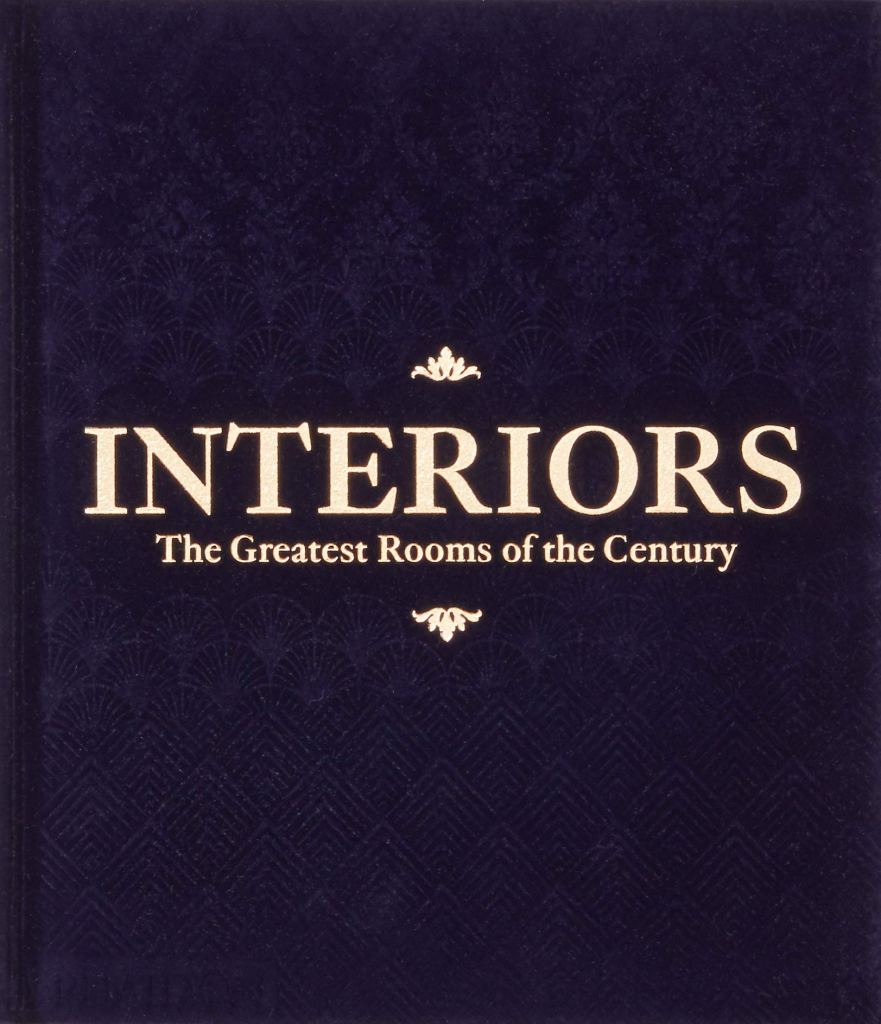
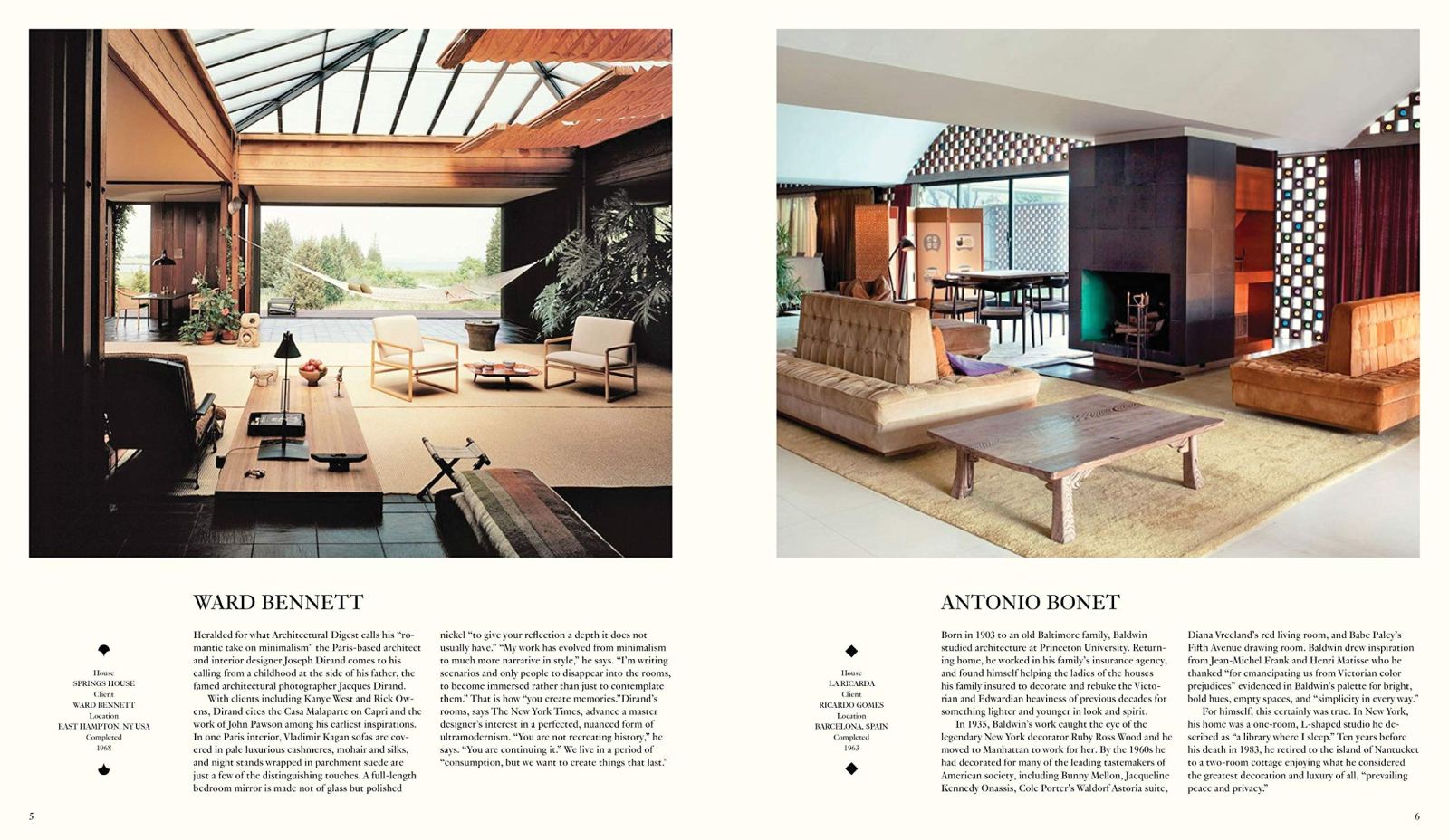
¿Cómo sería el mejor interior del mundo para vivir? https://t.co/jRGzrOVtdK Junto a las casas ideadas por arquitectos de fama internacional como Mies van der Rohe, Adolf Loos, Oscar Niemeyer o Zaha Hadid –que son manifiestos de su filosofía proyectual y signo de su tiempo- …
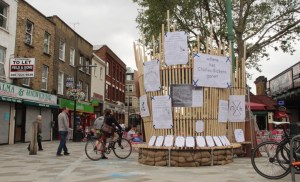
The Union Press temporary small-scale printing house has popped up on SE1’s Union Street for the duration of the festival – Wallpaper* Magazine
By Ellie Stathaki
With the 2012London Festival of Architecture reaching a crescendo this weekend, we thought it time to bring you the highlights of what has been a fortnight of thought-provoking architectural celebrations. Under the theme of the ‘Playful City‘ – referencing the impending Olympics, but also appealing to the child within use – this year’s events spanned a variety of ‘hubs’ across the British capital.
The first weekend honed in on Southwark, where community events like the Gibbon’s Rent Garden, the Union Street Printing Press and the Reunion Public House ensured a lively couple of days. Our highlights also included the Architecture Foundation’s gorgeous ‘Bureau Spectacular: Three Little Words’, featuring an installation inspired by practice founder Jimenez Lai’s architectural comic strips (on display until the end of August).
Moving on to the City of London hub, we marveled at the future face of the capital, as envisaged by the Developing City exhibition (on until 9 September). Meanwhile, architects competed to create the cleverest and best-looking structures out of cans at the Canstruction event in Canary Wharf. Squire and Partners were deservedly crowned the winners with their gazebo-style structure, incorporating 2,580 cans that were carefully secured in hand-cut wooden inserts.
The London Pleasure Gardens hub had to battle some bad weather, but launched triumphantly regardless a few days ago. Here, visitors can stroll among follies, pavilions and pop ups in the East London park, as well as sit down and relax on one of the pews and perches conceived by architects for the RIBA London competition.
The California College of the Arts in San Francisco presents a mazelike exhibition of the work of 60 artists and architects through April 7. http://www.sfgate.com
It’s a mazelike immersion where Richard Serra‘s rusted steel «Sequence» unwinds beneath the fog-shrouded Blur Buildingof Diller Scofidio + Renfro, an arm’s length away from Andy Goldsworthy‘s «Faultline.» Sixty architects and artists are represented in all, and an equal number of creative provocations.
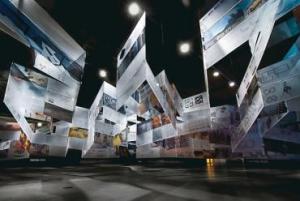
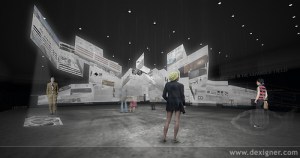
What’s on display isn’t the physical work itself, but diagrams, studies and images transferred to sequences of frosted acrylic panels. Each rectangular panel is connected by hinges to the panels alongside, above and below it. The interconnected panels – think flattened chains in taut rows – are then hung from the ceiling by thin steel cables.
The various strands all start at the exhibition’s outer four edges and twist and snap toward a central core, leaving just enough space for passageways from each side that visitors can follow. Plunging in, we encounter work by such emerging locals as Iwamoto Scott and Future Cities Lab as well as Big Names such as Serra and Goldsworthy.
This is the latest installment of the «Way Beyond Art» series at the college’sWattis Institute for Contemporary Arts. It was co-curated by Ila Berman, director of the architecture program, and architect Douglas Burnham. Their goal: to convey what the wall text calls «a new and expanding network of relations between the domains of architecture, sculpture, interiors and landscape.»
Architecture in the Expanded Field is designed and curated by Ila Berman, CCA director of Architecture, and Douglas Burnham, CCA adjunct professor and principal of envelope a+d. It explores the realm of installation art and architecture across a broad terrain of practices, ranging from the immersive environments of Ryoji Ikeda, Tomas Saraceno, and Philippe Rahm to the deconstructions of Gordon Matta-Clark and the spatial distortions and tectonic manipulations of Softlab, Numen / For Use, Gramazio & Kohler, and theverymany. The exhibition has two components: an immersive full-scale installation (both within and outside the gallery) and a didactic «surface» component that presents the mapped expanded field of architectural installation.





 Arquitectonico
Debe estar conectado para enviar un comentario.