

ABC Ultima hora: Sou Fujimoto presenta su pabellón para la Serpentine Gallery de Londres. http://goo.gl/mag/nGr4vhg
Etiqueta: Serpentine Gallery

Proyectará la versión 2013 :: Sou Fujimoto To Design Serpentine Pavilion! » Architizer Blog
Fujimoto será, a la fecha, el más joven proyectista (apenas supera los cuarenta años) convocado para el diseño anual de la Serpentine Pavilion.
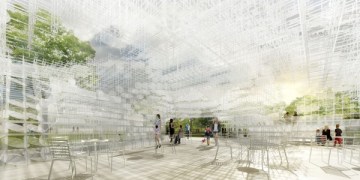
Sou Fujimoto has been commissioned to design the Serpentine Gallery Pavilion in London this year! The Tokyo-based architect has proposed a semi-transparent, deceptively delicate-looking structure made with criss-crossed steel bars.
The latticework will allow visitors to enjoy and engage with Kensington Gardens’ gorgeous greenery, and stepped terraces will provide seating for eating, drinking, and socializing.
At 41, Fujimoto is the youngest architect ever chosen to design the pavilion. Past designers include Frank Gehry (2008), Oscar Niemeyer (2003), and Zaha Hadid (2000).
vía Architizer Blog » Sou Fujimoto To Design Serpentine Pavilion!.
Web de Sou Fujimoto Architects.
Web de la Serpentine Gallery > Architecture.
Follow @arquitectonico
Compartir:

Un nuevo pabellón de acero y corcho se instala en los jardínes de Kensington – diseño de Herzog & De Meuron + Ai Weiwei | Cultura | elmundo.es
ARQUITECTURA | Serpentine Gallery
Reuters | Londres
Inmersa en los impecables jardines de Kensington, la Serpentine Gallery de Londres estrena su última creación, una gran estructura circular de metal y corcho de color tierra.
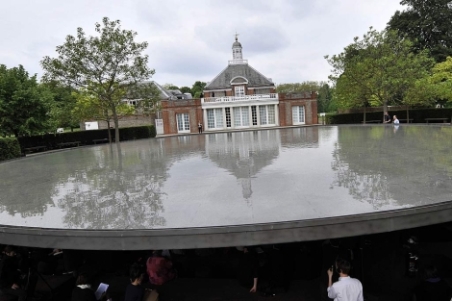
El pabellón es fruto del trabajo de los arquitectos Herzog & De Meuron y del artista chino Ai Weiwei. Lo diseñaron dentro de la serie anual de verano.
«Nos dimos cuenta de que queríamos algo que tuviese una apariencia pacífica pero una estructura interna muy complicada. Como si un arqueólogo hubiese excavado y hubiese expuesto la estructura subterránea», ha afirmado Ai.
«Nos cuenta que la arquitectura no es sólo sobre el espacio y la forma. También es sobre las circunstancias en las que nos encontramos, nuestro estado mental y nuestro trasfondo político«, ha añadido el disidente chino.
Estructurado en dos niveles
La estructura circular tiene dos niveles. El techo de acero cuenta con una capa de agua que refleja el cielo y una serie de formas, que representan cada uno de los anteriores pabellones.
En la planta baja, que está completamente cubierta con corcho de color tierra, cuenta con taburetes redondeados, como si fueran setas, para que los visitantes se sienten e interactúen durante los tres meses que el pabellón estará en la Serpentine.
Para Pierre de Meuron fue muy emocionante poder diseñar el pabellón este año. Aunque ha apuntado que fue un auténtico reto: colaboraron con Ai Weiwei por Skype, sólo contaron con un plazo de seis meses y tuvieron que construir la estructura bajo la mala meteorología de Londres.
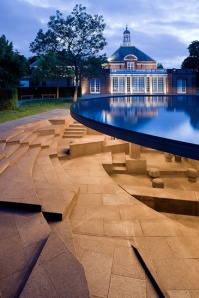
«Una ilusión siempre es algo positivo pero uno también tiene sus preocupaciones. Pienso que al final ha salido bien. Ahora está abierto al público, a ellos se lo damos, por eso creo que es importante que la gente venga a experimentar este espacio«.
Los diseñadores Herzog & de Meuron y Ai ya habían colaborado anteriormente, como en el estadio nacional de Pekín. Se conocieron hace una década.
vía Un nuevo pabellón de acero y corcho se instala en los jardínes de Kensington | Cultura | elmundo.es.
VÍDEO: SERPENTINE GALLERY 2012 _ Metalocus.
por Herzog & de Meuron y Ai Weiwei [LON] R.U [VÍDEO]
Diez años de pabellones efímeros por de los mejores arquitectos.
Web de la Serpentine Gallery.
Serpentine Gallery Pavilion 2012
Designed by Herzog & de Meuron and Ai Weiwei
1 June – 14 October 2012
The Serpentine Gallery is proud to announce that Herzog & de Meuron and Ai Weiwei will create the 2012 Serpentine Gallery Pavilion. It will be the twelfth commission in the Gallery’s annual series, the world’s first and most ambitious architectural programme of its kind.
The design team responsible for the celebrated Beijing National Stadium, which was built for the 2008 Olympic Games, comes together again in London in 2012 for the Serpentine’s acclaimed annual commission, being presented as part of theLondon 2012 Festival, the culmination of the Cultural Olympiad. The Pavilion is Herzog & de Meuron and Ai Weiwei’s first collaborative built structure in the UK.
Follow @arquitectonico
http://ti.tradetracker.net/?c=7906&m=298186&a=108093&r=&t=html
Compartir:

Swiss Designers of Spas, Tate Modern Follow Le Corbusier – Bloomberg
By Carolyn Bandel
Forget cheese and chocolate. Switzerland’s latest successful export is architects.
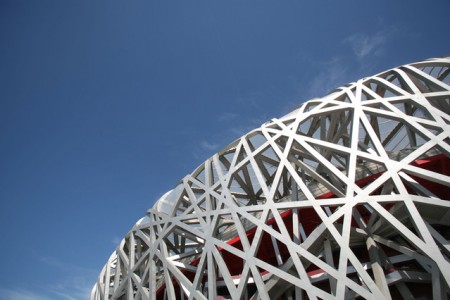
Jacques Herzog and Pierre De Meuron created the “Bird’s Nest” for the Beijing Olympics.
The Swiss have proven that architectural prowess needs no translation, with Jacques Herzog and Pierre De Meuron creating the “Bird’s Nest” for the Beijing Olympics and converting a London power plant into the Tate Modern Museum. Bernard Tschumi designed the New Acropolis Museum in Athens and Mario Botta crafted San Francisco’s Museum of Modern Art.
“In a certain sense, we’re the new luxury exports,” Botta, 68, said in an interview at his Mendrisio, Switzerland, office in the southern Alps. “Swatch helps the image of Swiss architecture as well even if it only makes watches.”
Switzerland’s wealth, quality of construction and reputation for precision have promoted a style of architecture that started with Le Corbusier, whose face adorns the Swiss 10- franc note. Yet in the land of Alpine peaks, the tallest building is the new Swiss Prime Tower in Zurich at just 36 stories. Switzerland’s limits on size means architects often go abroad seeking new challenges on a bigger canvas.
“You cannot become a star in Switzerland, the country simply is too small and there aren’t that many big projects where architects can reach international fame,” said Christian Schmid, who teaches at the Swiss Federal Institute of Technology or ETH. Still, “there’s a very lively architectural scene in Switzerland with many good architects.”
Swiss Architectural Stars
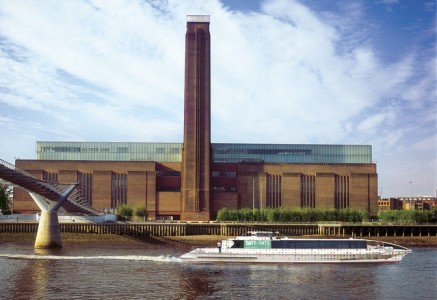
Since 2001, Switzerland’s Peter Zumthor and partners Herzog and De Meuron have won the annual Pritzker Prize, the most important global prize in architecture. This year’s award went to Chinese architect Wang Shu, whose works feature recycled bricks and salvaged roofing tiles.
Past laureates include Americans such as Frank Gehry, feted for his Guggenheim Museum Bilbao, France’s Jean Nouvel, designer of the Quai Branly Museum in Paris, and Norman Foster, whose iconic Gherkin building in London’s financial district was commissioned by Zurich-based reinsurer Swiss Re (SREN).
“We Swiss are not so susceptible to trends,” Zumthor, 68, said to explain Switzerland’s architectural successes after winning the 2009 Pritzker.
Zumthor built the Serpentine Gallery pavilion in London last year, a summer structure commissioned annually. This year, childhood friends Herzog and De Meuron along with Chinese artist Ai Weiwei, whom they collaborated with in Beijing, are designing the pavilion amid the run-up to London’s Summer Olympics.
Important architects are chosen for the pavilion, “and among the big names in the world, there are just very many Swiss, which is incredible,” Hans-Ulrich Obrist, co-director of the Serpentine Gallery and Swiss, said in a phone interview.
Thermal Spa
“The constraints that Switzerland has, such as the topography, create very interesting and dynamic architecture.”
Such topographical challenges in a nation where 40 percent of the terrain is mountains proved little issue for Zumthor, who built the Vals thermal baths southwest of Davos using 60,000 slabs of local rock.
Besides terrain, costs in a country of almost 8 million residents are also important after the Swiss franc reached near- parity with the euro last year, denting exports.
Local acceptance is crucial to the Swiss style of democracy, with popular votes held to approve large projects. Switzerland’s last big concert hall survived four referendums before it was finished in 2000 by Nouvel on Lake Lucerne. Nouvel also designed packaging for Nestle SA (NESN) to revamp a chocolate brand.
Switzerland’s populace can be “perplexed by large and expensive projects,” Schmid said.
vía Swiss Designers of Spas, Tate Modern Follow Le Corbusier – Bloomberg.
Entradas anteriores en ArquitecturaS:
Herzog & De Meuron y Ai Weiwei vuelven a trabajar juntos – ABC.es
Zumthor, el esencialista de lo sensual
Un Partenón de cristal para los mármoles exiliados · Inaugurado hoy en Atenas
Follow @arquitectonicohttps://twitter.com/#!/arquitectonico/status/185014920159559681
Compartir:

Herzog & De Meuron y Ai Weiwei vuelven a trabajar juntos – ABC.es
Arte
Tras su colaboración en el Nido de Pájaro de Pekín, diseñarán el pabellón de la Serpentine Gallery de Londres.
ABC.es / LONDRES

Los arquitectos suizos Jacques Herzog y Pierre de Meuron y el artista y disidente chino Ai Weiwei trabajarán de nuevo juntos en el diseño del pabellón de la Serpentine Gallery de Londres de este año, informa Efe. Esta colaboración llega cuatro años después de haberse ocupado de la estructura del estadio olímpico de Pekín, conocida como el Nido del Pájaro, diseñado por los arquitectos suizos con la asesoría artística de Ai Weiwei.
La directora de la galería londinense, Julia Peyton-Jones, consideró este nuevo proyecto entre Herzog & de Meuron y Weiwei como «tremendamente emocionante» y resaltó que supone además «un vínculo de los dos Juegos Olímpicos, el eje Pekín-Londres».
Peyton-Jones, en declaraciones al diario británico «The Guardian», afirmó que el trabajo de los tres artistas supone una continuación de una conversación entre ellos que comenzó en Pekín y que culminará en el diseño del pabellón de la Serpentine, que cada año corre a cargo de un artista diferente.
Así será el pabellón
El pabellón, que estará concluido el próximo junio, será el más bajo que se diseña hasta la fecha para la Serpentine, con un techo de tan solo 1,5 metros de alto, lo que no dificultará el paso de los visitantes pues sus artífices han planeado cavar bajo el suelo.

Esa estructura contará con doce columnas, once en representación de los anteriores pabellones y una representando al actual, con un techo habilitado para recoger la lluvia y reflejar el cielo, y preparado para secarse y ser utilizado en eventos especiales «como pista de baile o plataforma suspendida sobre el parque», explicaron los arquitectos y el disidente chino.
Sus autores señalaron en un comunicado que el pabellón será «el lugar perfecto para sentarse, quedarse de pie, tumbarse o asombrarse» y formará parte de los eventos que organizará Londres este verano con motivo de los Juegos Olímpicos de 2012, que empezarán el 27 de julio.
vía Herzog & De Meuron y Ai Weiwei vuelven a trabajar juntos – ABC.es.
Herzog & De Meuron y Ai Weiwei vuelven a trabajar juntos – Que!
@William Hanley Herzog & de Meuron and Ai Weiwei are teaming up again to design this summer’s Serpentine Pavilion bit.ly/wpi4x1
Off the Record – Architectural Record
|
Posted by william_hanley
|
Bird´s Nest, Herzog & De Meuron in China – a Film by Christoph Schaub and Michael Schindhelm.
Bird´s Nest, Herzog & De Meuron in China en IMDb.
Artículos sobre Herzog & De Meuron que puedes comprar en Amazon.es:
Architects Herzog & De Meuron: Alchemy of Building [Reino Unido]

Herzog & Meuron («arquitectura moderna»)

Architectures of Herzog and De Meuron

Jacques Herzog & Pierre de Meuron

Herzog & De Meuron – Prada Aoyama Tokyo

Herzog and De Meuron, 1978-2007 (español/ingles)

Herzog and de Meuron: Zeichnungen Drawings

Building Tate Modern: Herzog and de Meuron with Giles Gilbert Scott

Ai Weiwei / Herzog & De Meuron: Beijing, Venice, London

Artículos sobre Ai Weiwei que puedes comprar en Amazon.es:


Ai Weiwei (Contemporary Artists)

Ways Beyond Art Ai Weiwei (IVORY PRESS)

Ai Weiwei spricht: Interviews mit Hans Ulrich Obrist


Artículos anteriores en ArquitecturaS:
Peter Zumthor, ante el reto de la Serpentine | Cultura | elmundo.es
Serpentine pavillions past and present | Art and design | guardian.co.uk
Actualización: marzo de 2o12
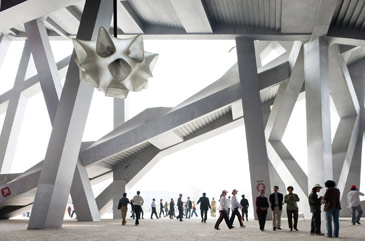
Designed by Herzog & de Meuron and Ai Weiwei
With China Architectural Design & Research Group, Arup Sport, and Arup Hong Kong
Photograph: Iwan Baan, 2008
© 2012 Herzog & de Meuron Basel
Serpentine Gallery Pavilion 2012 by Herzog & de Meuron and Ai Weiwei
1 June – 14 October 2012
The Serpentine Gallery is proud to announce that Herzog & de Meuron and Ai Weiwei will create the 2012 Serpentine Gallery Pavilion. It will be the twelfth commission in the Gallery’s annual series, the world’s first and most ambitious architectural programme of its kind.
The design team responsible for the celebrated Beijing National Stadium, which was built for the 2008 Olympic Games and won the prestigious RIBA Lubetkin Prize, will come together again in London in 2012 in a special development of the Serpentine’s acclaimed annual commission. Open from June to October 2012, the Pavilion will be presented as part of the London 2012 Festival, the culmination of the Cultural Olympiad. The Pavilion will be Herzog & de Meuron and Ai Weiwei’s first collaborative built structure in the UK.
Follow @arquitectonicohttps://twitter.com/#!/darioalvarez/status/168003568299802625

Compartir:

Peter Zumthor, ante el reto de la Serpentine | Cultura | elmundo.es
ARQUITECTURA | Reino Unido
Efe | Londres
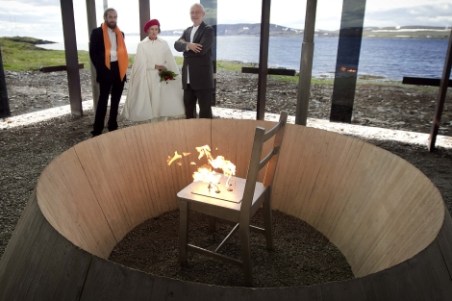
En medio del Kensington Garden londinense, el arquitecto suizo Peter Zumthor ha diseñado para la Serpentine Gallery un pabellón minimalista de planta rectangular que encierra un jardín destinado a cultivar los sentidos y a la meditación.
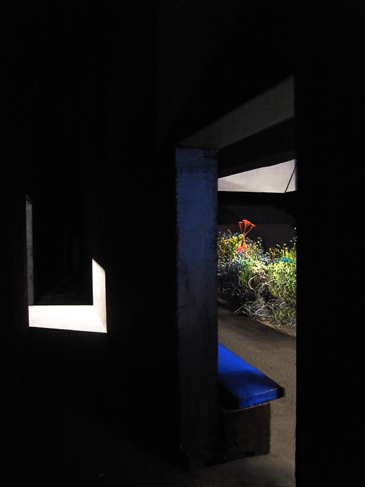
Es una especie de gran contenedor de paredes negras y mates de madera en cada uno de cuyos lados hay tres entradas por las que se accede a un pasillo oscuro que rodea toda su estructura.
Desde ese pasillo se llega a través de cuatro aberturas al espacio central, un rectángulo a cielo abierto protegido parcialmente por aleros, que evoca el «hortus conclusus» (huerto cerrado) de los antiguos monasterios, un islote de tranquilidad, abstraído de los ruidos de la gran ciudad.
Los «horti conclusi» eran lugares en los que durante la Edad Media los monjes cultivaban sus plantas más bellas y las hierbas medicinas para curar todo tipo de males y que aparecen representados en pinturas y manuscritos de la época.
Se trata de una frase procedente del Cantar de los Cantares, de Salomón: «Un jardín encerrado es mi hermana, un jardín encerrado, una fuente sellada», frase que, en la tradición cristiana, se ha dedicado a la Virgen María.
Zumthor ha trabajado en el pabellón en estrecha colaboración con el holandés Piet Oudolf, conocido por los jardines que aprovechan la arquitectura natural de las plantas, escogidas siempre según su estructura, su forma, sus colores y otras características.

En un texto publicado con motivo de la inauguración del pabellón londinense, que estará abierto al público hasta el próximo 16 de octubre, Zumthor destaca su amor por la naturaleza y las plantas.
vía Peter Zumthor, ante el reto de la Serpentine | Cultura | elmundo.es.
Serpentine Gallery Pavilion 2011 , Designed by Peter Zumthor 1 July – 16 October 2011
Entrada anterior en ArquitecturaS:
Peter Zumthor Unveils Sheltered Garden for 2011 Serpentine Pavilion | Inhabitat – Green Design Will Save the World
Allí el Blog de Artefacto Magazine dejó el siguiente comentario – invitación:
Hola Dario
El pabellon de Zumthor es fantastico! Puedes ver mis fotos y video en mi blog.
http://artefactomagazine.wordpress.com/2011/06/30/pabellon-serpentine-2011/
un saludo
Follow @arquitectonico
Dinamiza tu carrera profesional con nuestro curso de Responsable de Comercial y Marketing sponsored
Compartir:

Peter Zumthor Unveils Sheltered Garden for 2011 Serpentine Pavilion | Inhabitat – Green Design Will Save the World
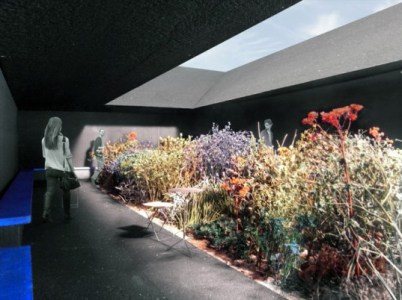
Today 2009 Pritzker Prize-winning architect Peter Zumthor unveiled his contemplative design for London’s annual Serpentine Pavilion exhibition. The 2011 Serpentine pavilion will be unique in that previous architects were required to have previously worked in England, and Zumthor is the first exception to this rule. The proposed offers a zen-like retreat for visitors, who will be guided by a series of pathways and staggered doorways towards an inner garden. Benches surrounding this chamber will offer a quiet space to sit and appreciate the open green space.
Serpentine Gallery Pavilion 2011
Peter Zumthor
July – October 2011
The Serpentine Gallery is delighted to reveal the plans for the Serpentine Gallery Pavilion 2011 by world-renowned Swiss architect Peter Zumthor. This year’s Pavilion is the 11th commission in the Gallery’s annual series, the world’s first and most ambitious architectural programme of its kind. It will be the architect’s first completed building in the UK and will include a specially created garden by the influential Dutch designer Piet Oudolf. more…

 Arquitectonico
Debe estar conectado para enviar un comentario.