Agradecemos a la ‘Sociedad Iberoamericana de Gráfica Digital‘ este
Mensaje:
Under the Patronage of H.E. President of the Republic of Cyprus
International Conference VSMM 2008
Call for Papers
Digital Heritage: Our Hi-tech – STORY for the Future
Technologies to Document, Preserve, Communicate,
and Prevent the Destruction of our Fragile Cultural Heritage
October 20 – 26th, 2008, Cyprus
Amathus-Hotel, Limassol
www.vsmm2008.org
Invitation:
You are kindly invited to submit a paper to the VSMM 2008 joint conference which will provide an opportunity to exchange research results, opinions, experiences and proposals on the best practice and hi-tech tools from Information and Communications Technology to document, preserve, manage and communicate Cultural Heritage (CH). The main goal of the event is not only to illustrate the programs underway but also excellent work wherever it is located and however it is supported, in order to promote a common approach to the tasks of e-documentation of World Cultural Heritage. Furthermore, regional capacities in the area of Cultural Heritage and IT will be facilitated in advancing their know-how through the exchange of information and generation of new ideas and cooperation’s, where the world meets the finger prints of several ancient civilizations on earth.
To reach this ambitious goal the topics covered will include experiences in the use of innovative recording technologies & methods and how to take best advantage to integrate the results obtained to build up new tools and/or experiences as well as improved methodologies for documenting, managing and communicating CH.
The VSMM 2008 joint event will focus on interdisciplinary and multi-disciplinary research concerning both cutting edge Cultural Heritage Informatics and use of technology for the representation, documentation, preservation, archiving and communication of CH knowledge.
The scope includes every phase of CH information technology: initial data capture/digitization, information/data processing, reconstruction, visualization and documentation as well as dissemination of results to the scientific and cultural heritage communities and to the general public (Multilingua, Multimedia Digital Library).
We are also interested in aspects of the wider legal and ethical esponsibilities of Cultural Heritage Informatics. Research subjects parallel the interests of VSMM, CIPA, ISPRS and EuroMed including culturally significant monuments,
artefacts and sites as well as the activities of museums, libraries, archives, and organizations involved with their care.
Topics:
Those researchers who wish to participate in this event are invited to submit papers on original and unpublished work addressing the following subjects:
. Data Acquisition Technologies focusing on Photogrammetry and Laserscanning,
. 3D Data Capture and Processing in CH
. On-site and remotely sensed data collection
. 2D and 3D GIS in Cultural Heritage
. CAD and FEM based Digital Reconstructions and 3D Modelling
. Reproduction Techniques and Rapid Prototyping in CH
. Visualisation Techniques (desktop, Virtual and Augmented Reality)
. Virtual Reality in Archaeology and Historical Research
. Multimedia, Multilingua, Data Management and Archiving
. Construction and indexing of large scale Multimedia/Multilingua Encyclopaedias in Cultural Heritage
. Computer Animation for CH Applications and Virtual Heritage
. Game Technologies in Cultural Heritage
. Non-Photorealistic Rendering of CH Data
. Virtual Museum Applications (e-Museums and e-Exhibitions)
. Digital/Virtual Documentation of Archaeological Excavations
. Novel Internet-based Cultural Heritage Applications
. Portals of Culture
. Usability, Effectiveness and Interface Design for CH Applications
. Innovative Graphics Applications and Techniques
. Interactive Environments and Applications
. e-Libraries and e-Archives in Cultural Heritage
. National Digital Libraries as cross-domain systems
. Long term availability of content and its long term accessibility
. Effective IC-Technologies for the creation, management and reuse of content and knowledge
. Storytelling and authoring tools
. e-Learning in Cultural Heritage
. Tools for Education, Documentation and Training in CH
. Archaeological Analysis and Interpretive Design
. Standards, Metadata, Ontologies and Semantic Processing in Cultural Heritage
. Authentication, Accreditation and Digital Rights Management
. Legal issues: Water-Marking, Orphan Works, Copyrights and IPR
. Professional and Ethical Guidelines
. The Economics of Cultural Informatics and Tourism
. Natural and Man initiated deconstruction of Cultural Heritage and prevention techniques.
. ICT assistance in monitoring and restoration.
Submission of Papers:
Submissions for the joint event are completely electronic, and both the paper and all supplementary material must be submitted through the on-line submission website. The conference accepts only original, unpublished work written in English.
We are soliciting three types of contributions:
Ï Full research papers
presenting new innovative results. These papers will have
a full-length oral presentation and will be published in a high-quality proceedings
volume. Each submitted paper must not exceed 8 pages in total.
Ï Project papers
focusing on the description of project organization, use of
technology, and lesson learned. These papers will have a short oral presentation
and will be included in a «Projects & Short Papers» proceedings volume. Each
submitted paper must not exceed 8 pages in total.
Ï Short papers presenting preliminary ideas and works-in-progress. These papers
will have a short oral presentation and will be available as posters in conference breaks. They will be published in the «Projects & Short Papers» proceedings volume.
Each submitted paper must not exceed 6 pages in total.
For information concerning style and format of all submissions, please refer to:
http://www.vsmm2008.org and then choose Paper Submissions.
Important Dates:
Abstract (full-/project-/short papers):
June 2nd, 2008
Paper submission full papers
June 16th, 2008
Paper submission project/short papers
June 30th, 2008
Notification of Refereeing results
July 31st, 2008
Camera ready FULL papers to printer
August 24th, 2008
Camera ready PROJECT/SHORT papers to printer
August 29th, 2008
Proposals for showcases/ demo’s
June 30th, 2008
For more information about the joint conference please visit the webpage
http://www.vsmm2008.org
or directly contact the chair of the event at:
chairman@vsmm2008.org.
The event is in cooperation with:
Ï The European Digital Library Foundation and the European Commission Projects:
Ï MINERVA+ (http://www.minervaeurope.org/whatis/minervaplus.htm)
Ï MICHAEL+ (http://www.michael-culture.org/en/hom)
Ï The Member States’ Expert Group on Digitisation and Digital Preservation.
Ï CHIRON (http://www.chiron-training.org/)










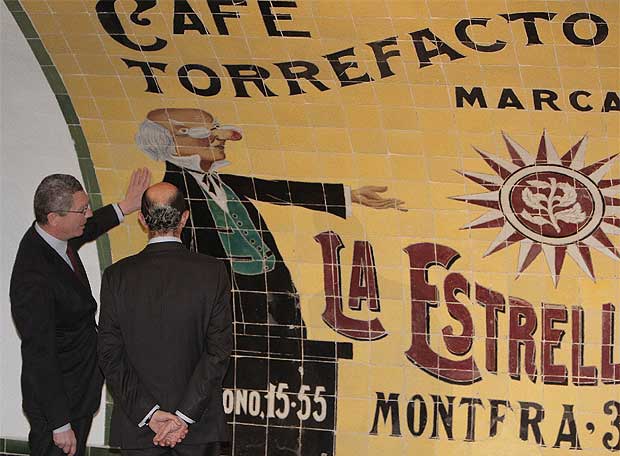


 Arquitectonico
Debe estar conectado para enviar un comentario.