

Con mando británico – La Bienal de Arquitectura de Venecia 2012 dirigida por David Chipperfield


David Chipperfield, Comisario de la Bienal de Venecia 2012 - Foto: Metalocus

Bajo la dirección de David Chipperfield, ya están en marcha los preparativos para la edición número 13 de la Bienal de Arquitectura de Venecia, que comenzará el 29 de agosto de 2012.

El inglés David Chipperfield fue designado como el Director de la Bienal de Arquitectura de Venecia 2012. Participarán 41 países de la edición número 13 del tradicional encuentro que se lleva a cabo en esa ciudad italiana, incluyendo el debut de Kosovo, Kuwait y Perú. Con el título Tierra compartida, la bienal se inaugurará el 29 de agosto y finalizará el 25 de noviembre.

«Quiero que esta Bienal celebre una cultura arquitectónica vital y que a su vez se pregunte sobre los territorios físicos e intelectuales que comparte (…) A la hora de seleccionar los participantes, alentaremos el diálogo. Invitaremos a arquitectos a participar con sus colaboraciones y a la vez les pediremos a ellos que nos digan con quiénes les gustaría trabajar y colaborar. De esta manera, a la primera nómina hecha por el equipo de curadores la completaremos con las sugerencias hechas por los arquitectos», detalló Chipperfield en su presentación como Director de la Bienal.

vía Con mando británico. Clarín ARQ

13th International Architecture Exhibition

Common Ground

29th August > 25th November 2012
On 27th December 2011, David Chipperfield was appointed Director of the Architecture Sector with the specific responsibility of curating the 13th International Architecture Exhibition, which will be held in Venice, at the venues of Giardini and Arsenale, from August 29th to November 25th, 2012 (preview on August 27th-28th).

Web Oficial de la la Biennale di Venezia.
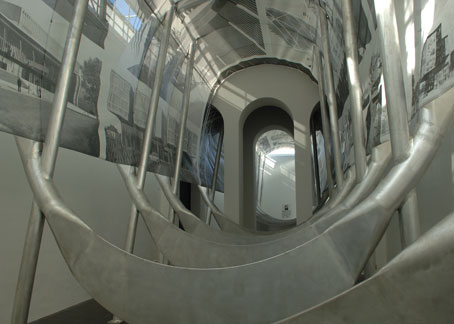
 PEOPLE MEET IN ARCHITECTURE, Austria: Austria Under Construction - Foto: la Biennale di Venezia © 2011 - all site contents are copyright protected
PEOPLE MEET IN ARCHITECTURE, Austria: Austria Under Construction - Foto: la Biennale di Venezia © 2011 - all site contents are copyright protected

David Chipperfield comisario de la Bienal de Venecia 2012Metalocus.

The Guardian, Andrew Gilchrist.

Por: Metalocus, PEDRO NAVARRO
David Chipperfield será el próximo comisario de la Bienal de Arquitectura de Venecia 2012. Este verano pudimos ver su brillante museo en Wakefield, en el centro de Inglaterra y su Neues Museum de Berlín era ampliamente premiado.
El retraso en los abatares políticos italianos le dará tan solo seis meses para poder desarrollar el tema de las dos sedes en las que se celebra la Bienal: El Arsenale y la de los Giardini.

El anuncio oficial se ha retrasado debido a las reservas de Chipperfield sobre el trabajo con Giulio Malgara, que se espera que sea el director de la bienal y es amigo del primer ministro italiano, Silvio Berlusconi.

Tras la decisión de Berlusconi de dimitir, se espera que el actual director Paolo Baratta conservará el papel dedirector de la Bienal.

El artículo en: The Guardian

The Danish Ministry of Culture has appointed the Danish Architecture Centre commissioner of the Danish Pavilion at the 13th International Architecture Exhibition in Venice, a three-month event starting in late august 2012.

The International Architecture Exhibition or is a festival featuring exhibitions and events scattered across the entire city of Venice. The exhibition consists of a thematic main exhibition in Arsenale di Venezia – the old city shipyard – where specially invited architects display their work. However, the major part of the exhibition is located at the Giardini Park where all the national pavilions are situated and where each participating country presents an exhibition.

Entradas anteriores en ArquitecturaS:

La Bienal de los castillos en el aire :: Venecia 2010

Una Bienal en busca de nuevas formas de vida | Vivienda | elmundo.es | XII Bienal de Arquitectura – Venecia 2010

Presentación oficial de la Bienal de Venecia 2010 :: dirigida por Kazuyo Sejima | Cultura | elmundo.es

El teatro flotante regresa a Venecia · ELPAÍS.com

La Biennale di Venezia – Entry page per l’architettura

https://twitter.com/#!/arquitectonico/status/164342260861894656

A Lisbon Architect Brings His Skills to MoMA — Q&A – NYTimes.com


Pedro Gadanho trades his gadfly-like career for a MoMA post. Photo: The New York Times /  Fernando Guerra | FG+SG
Pedro Gadanho trades his gadfly-like career for a MoMA post. Photo: The New York Times / Fernando Guerra | FG+SG

Currents | Q&A

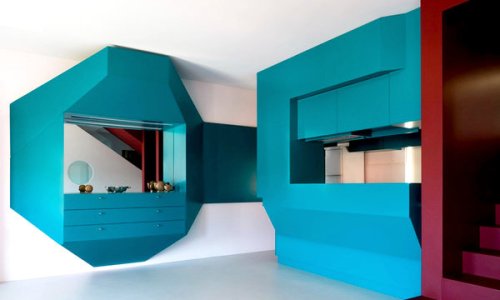
Pedro Gadanho, a 43-year-old Portuguese architect, may represent the future of the profession, in that he doesn’t do much actual building. Instead, he has fashioned a gadfly-like career as a curator, writer, blogger and teacher, while finding time to squeeze in an architecture project or two each year, like Baltasar House, a boldly colored residence he designed in 2007 in Porto, Portugal, and the Torres Vedras house, which he designed in 2010 outside Lisbon.

Photo: The New York Times / Feranndo Guerra | FG+SG

Last month, Mr. Gadanho was hired by the Museum of Modern Art as a curator in its department of architecture and design. His duties will include organizing exhibitions and overseeing the Young Architects Program, an annual competition, organized by MoMA with its affiliate, MoMA PS1 in Queens, in which emerging architects build projects for MoMA PS1’s courtyard.

Mr. Gadanho predicts that his new MoMA post will end what he calls “juggling in between different works,” and will direct his focus on curating. “I was allowed to play around with these possibilities for a long time,” he said recently, speaking on the phone from Lisbon. “But now, with this full-time job, which requires a lot of dedication, is the moment when I choose.”

vía A Lisbon Architect Brings His Skills to MoMA — Q&A – NYTimes.com.

Shrapnel contemporary – Pedro Gadanho’s Blog.

Pedro Gadanho is an architect, curator and writer based in Lisbon.

For a quick snapshot of his architecture work see the report at The Coolhunter.

Actualización: 19 de enero de 2012

See the Candy-Colored Architecture of New MoMA Curator Pedro Gadanho.

* – * – * – * – *
La noticia de hoy en ArquitecturaS (vía Twitter@arquitectonico

https://twitter.com/#!/arquitectonico/status/157834084029169664


generic_es_728x90.gif

Architect Cymon Allfrey Honoured : Architect honoured for home design – business | Stuff.co.nz


A Christchurch house was last night announced as the nation’s best architectural design.

AWARD-WINNING: Architect Cymon Allfrey, below, and his winning design. www.stuff.co.nz
AWARD-WINNING: Architect Cymon Allfrey, below, and his winning design. http://www.stuff.co.nz

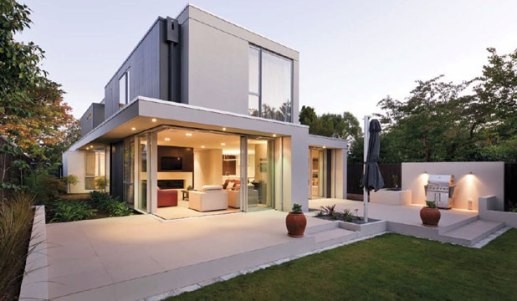
Cymon Allfrey was named supreme winner at the Architectural Designers NZ / Resene National Design Awards gala dinner held at Te Papa for his design of  «Leinster House«.

The Christchurch architect designed the «modest, contemporary home» in Merivale to accommodate the daily needs of a couple, and to also be spacious enough to handle the expected return of their adult children.

Judges described the house as «beautifully composed» with an «exemplary relationship to its garden».

«Still and orderly, this reflects the great skill and control of its designer.»

The suburban home is set in a «gardened» street and Allfrey took that into consideration by setting the home back from the road.

The house has a central entrance into a gallery that becomes two levels in height and serves as the hub of the home.

The gallery is designed to allow sun from the east into the kitchen, and passive ventilation through a thermal chimney means the home does not need air-conditioning.

Interior - Leinster House vía primedesign.co.nz

The main living spaces are in the north of the home. The secondary sleeping and living rooms are at the first-floor level, which serves as a second apartment.

Other winners included Tony Biesiek from Imagine Building Design, who took out a joint win of the residential Alterations and Additions Design Award for The Pepper House in New Plymouth. Biesiek’s design was praised by judges for its «unobtrusive commitment to sustainable design».

vía Architect Cymon Allfrey Honoured – business | Stuff.co.nz.

ADNZ – Architectural Designers New Zealand

Leinster House primedesign.co.nz

Imagine Building Design

Sketching Out a New Course for Architects – WSJ.com


Culture City

Ramin Talaie for The Wall Street Journal - Student Peter Spalding works on designs at the Beaux-Arts Atelier, which emphasizes the importance of knowing how to draw and paint the elements of classical architecture

Two blocks from the stately columns, arches and sculptures of Grand Central Terminal, a rogue band of architects is engaged in a retrograde venture: They’re teaching a new generation how to draw and paint the elements of classical architecture — all those columns, arches and sculptures — with nothing more than pencils and paints on paper. No computers. Ever.

«If you don’t understand the tradition profoundly, you can’t turn it on its head,» said the program’s director, Richard Cameron.

The Beaux-Arts Atelier, a one-year program inaugurated in September, is run by the Institute of Classical Architecture and Art, a 20-year-old nonprofit devoted to keeping the classical tradition alive. Located on West 44th Street between Fifth and Sixth avenues—a block lined with such notably classic facades as the New York Yacht Club and the Harvard Club—the Institute houses both the Beaux-Arts Atelier and the Grand Central Academy of Art, a four-year art school founded in 2006 with a focus on methods taught from the 15th to 19th centuries.

The Beaux-Arts Atelier has capacity for just 12 students. The inaugural class includes eight pioneers (some applicants deferred for next year) who will study an academic, figurative method that has its roots in the Ecole des Beaux-Arts, the French school of art and architecture that dates to the 17th century. Their courses, taken in five six-week terms, will include Geometry and Proportion, Study of New York Buildings, and Drawing and Drafting. They’ll learn how to draw and sculpt the human form from instructors within the Grand Central Academy of Art.

While a formal architecture degree takes years to obtain and trains students to design buildings, this one-year program teaches them how to be artists, with a working knowledge of classical forms, in the service of design. Though this was once standard training in architecture, it began to recede from academia as the modernists of the early 20th century rejected it.

«The Bauhaus and its followers thought it was a terrible way to train. They systemically got rid of it,» said Mr. Cameron. «In addition, they indoctrinated their students to believe that it was a bad thing.»

vía Sketching Out a New Course for Architects – WSJ.com.


Architects and Designers View Sustainability as Important but Question Viability of Manufacturers’ Claims – MarketWatch


Research reveals sustainable projects are on the rise; cost is potential prohibitive factor.

red box project
Red Box Project por Jeremy Levine Design - http://www.jeremylevine.com, en Flickr

BALTIMORE, PRNewswire via COMTEX/ — The majority of architects and interior designers, 87% and 86% respectively, acknowledge that they are concerned with how products are manufactured with regard to sustainability, according to new research released today by IMRE. The research showed that the number of sustainable projects performed by architects and interior designers is projected to rise in the next year, and that sustainable products are often associated with higher cost.

These are some of the results released from the survey in which 812 architects and designers responded to an online survey fielded between September 19 and 23, 2011. The survey was spearheaded by IMRE, a full-service marketing agency specializing in the Home & Building industry, in conjunction with the American Institute of Architects (AIA) and the American Society of Interior Designers (ASID).

Doubts are cast on manufacturer claims about sustainable products.

The way architects and interior designers view manufacturers’ claims that their products are sustainable reveals that brands need to re-focus their marketing efforts to make their claims more convincing.

While most architects and interior designers pay careful attention to manufacturers’ sustainability claims, both are similarly skeptical when asked if they are confident that products referred to as «sustainable» actually are.

40% of architects and 34% of interior designers are «uncertain» if products claiming to be sustainable are actually sustainable.

USACE builds sustainable distribution center for DLA
Construction nears completion July 28, 2011, on the 250,000-square-foot Logistics Distribution Center for Defense Logistics Agency Distribution Europe, headquartered in Germersheim, Germany .

Almost 22% of architects and 11% of interior designers are «somewhat» or «not at all confident» that products are actually sustainable.

Only 2% of architects and 3% of interior designers are «completely confident» in manufacturers’ claims that products are actually sustainable.

vía Architects and Designers View Sustainability as Important but Question Viability of Manufacturers’ Claims – MarketWatch.

* – * – * – * – *
La noticia de hoy en ArquitecturaS (vía Twitter@arquitectonico

https://twitter.com/#!/arquitectonico/status/121158177386541056

Jim Olson´s «Art for Architecture” :: WSU News Center – Exhibit showcases WSU museum expertise


Art and architecture

By Janet Casello Johnson, WSU News

Video by Matt Haugen, WSU News

PULLMAN, Wash. – The new Museum of Art/WSU exhibit «Art for Architecture” seems larger than life. And the patrons assembled for the opening reception Thursday, Sept. 29, could be described that way too.
Jim Olson FAIA
Jim Olson FAIA

The retrospective of architect Jim Olson’s career drew artists, architects and art collectors from Seattle and New York City. The show is an example of how Chris Bruce, director of the museum at Washington State University, is using his connections in the art world to debut top-flight exhibits in Pullman.

The exhibit also shows how art connects with other aspects of higher education at WSU, said eminent Northwest architect Olson. He said his work brings together the disciplines of landscape architecture, interior design, architecture and art.
The art/architecture connection has been appreciated by his art collector clients, some of whom were at the reception.
Jeff Brotman, co-founder and chairman of the board of Costco, called Olson «a genius.”
Olson remodeled the Brotman’s 1950s Lake Washington home three times before it was torn down to make room for their new Olson – designed home. It boasts 22-foot ceilings and natural lighting to showcase the art they have collected for more than 30 years.
Olson made trips to Pullman to consult with Bruce during the nine months the exhibit was in the works. Owners of Olson-designed homes contributed some of their art for the show.

vía WSU News Center – Exhibit showcases WSU museum expertise.

Jim Olson:  Architecture for Art

September 30-December 10, 2011
Reception: Thursday, September 29, 6 pm,  Lecture: 7 pm in CUB Auditorium

The Museum of Art/WSU is proud to present a career overview of one of the Northwest’s most significant architects, Jim Olson.

Olson has long been inspired by the relationship of architecture, art and nature.  A primary focus of his work is creating residences for major art collectors. The interplay between interior space for display and exterior view is a signature element in Olson’s design approach. A graduate of the University of Washington department of Architecture, Jim established his own firm in Seattle in 1966 and the office has since grown into a diverse practice with an international reputation, now known as Olson Kundig Architects.  Jim was the recipient of the 2007 Seattle American Institute of Architects Medal of Honor, and the firm won the National AIA Firm of the Year Award in 2009.  Along with Olson’s numerous built designs for major art collectors around the world, is the recently opened “Lightcatcher Building” for the Whatcom Museum in Bellingham, Washington.

Web de Olson Kundig Architects

* – * – * – * – *
La noticia de hoy en ArquitecturaS (vía Twitter@arquitectonico

https://twitter.com/#!/arquitectonico/status/120082143736102912

Comprar artículos de Informática en Amazon.es - desde aquí (hacer "click")

Architect Re-Creates Ancient Greece in New England | The Daily Eastchester


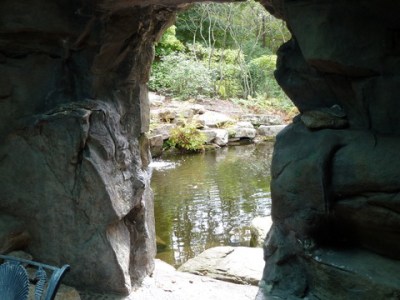
Looking out from the nymphaeum over the koi pond at the White Garden. Photo Credit: Fenella Pearson, ASID

by Fenella Pearson

Patrick Chassé, the award-winning landscape architect who designed the White Garden in Lewisboro, N.Y., likes his gardens to have a historical context. So when a homeowner asked him to design a garden for a new Greek Revival-style home set on 45 acres, his first concern was to make sure the house incorporated features that would recall ancient Greece.

The home itself is, in Chassé‘s words «Greece meets New England Barn.» The siding is weathered grey clapboard while the style is a play on a Greek temple. Each aspect of the house looks onto a different garden, each whimsical and endlessly fascinating as the seasons change.

Approaching the house along an unpaved driveway, one can glimpse the building through trees and across ponds. Several large, moss-covered stones lead the visitor through a narrow gap in an evergreen hedge and into a round, paved courtyard. «It’s a theater,» says Chassé. «The visitor is the player.» And the audience is a collection of old busts set in a circle around the courtyard, peeking out from among rhododendron bushes. Having bowed to the busts, the visitor reaches the front door.

«Greek temples were always in forests,» Chassé says, explaining that the large trees surrounding the house have been re-interpreted as a grove. The trees closest to the home’s foundation receive heavy root pruning to prevent damage during construction.

vía Architect Re-Creates Ancient Greece in New England | The Daily Eastchester.

Patrick Chasse Lecture and Garden Party at FDR Site


* – * – * – * – *
La noticia de hoy en ArquitecturaS (vía Twitter@arquitectonico

https://twitter.com/#!/arquitectonico/status/114674380033888256

hotel.info

‘Six Architects’ posters by Andrea Gallo | ArchDaily


By

posters by Andrea Gallo

We saw this incredible set of posters from iconic architects created by artist Andrea Gallo and felt the need to share them with you. They will be available for sale soon, so we look forward to buy one and decorate our office! Which one would you get? Check the posters of Frank Lloyd Wright, Le Corbusier, , Alvar Aalto and Walter Gropius after the break.

vía Six Architects’ posters by Andrea Gallo | ArchDaily.

Six Architects, pósters minimalistas de grandes arquitectos

Me gustan los pósters, me gusta la arquitectura y me gusta el minimalismo, así que os podéis hacer una idea de lo que me gusta Six Architects, una serie de pósters minimalistas de seis grandes arquitectos.

Diseñada por Andrea Gallo, se trata de ilustraciones que, con unas pocas líneas y formas geométricas recortadas sobre un fondo oscuro, nos traen a la mente algunas de las obras más significativas de maestros de la arquitectura como Mies Van der Rohe, Frank Lloyd Wright o Le Corbusier.

6 pósters – 6 arquitectos – Andrea Gallo – Flickr

Six Architects Posters by artist Andrea Gallo

Reactor

Iconic Architecture in Wall-Friendly Form

* – * – * – * – *
La noticia de hoy en ArquitecturaS (vía Twitter@arquitectonico

https://twitter.com/#!/arquitectonico/status/102678118803836928


hotel.info

ASCER convoca la X edición de los Premios Cerámica de Arquitectura, Interiorismo y PFC


La arquitecta Benedetta Tagliabue preside el jurado conformado por los arquitectos João Álvaro Rocha, Carlos Quintáns, Mikko Heikkinen, Andrés Jaque y Ramón Monfort, además de Sam Baron, diseñador.

Los Premios cuentan con tres categorías: arquitectura, interiorismo y PFC, con una dotación total de 53.000 €

Los Premios Cerámica de Arquitectura, Interiorismo y Proyecto Fin de Carrera que convoca ASCER (Asociación Española de Fabricantes de Azulejos y Pavimentos Cerámicos) celebran este año su décima edición. Como cada año, cuentan con un reputado jurado compuesto por profesionales de primer orden.
Este año, preside el jurado la arquitecta Benedetta Tagliabue (EMBT), que estará acompañada por vocales de primer nivel internacional. Componen el jurado el arquitecto portugués, João Álvaro Rocha; Carlos Quintáns, arquitecto y director de la revista Tectónica; el finlandés, Mikko Heikkinen (Heikkinen-Komonen Architects), Andrés Jaque (director de Andrés Jaque Arquitectos y del tiny lab Oficina de Innovación Política); y Ramón Monfort (decano del Colegio Oficial de Arquitectos de la Comunidad Valenciana), además de Sam Baron, diseñador jefe del centro de investigación Fabrica de Benetton.

Premios Cerámica de Arquitectura e Interiorismo - ASCER

Durante estos diez años, los Premios Cerámica han logrado un alto reconocimiento y prestigio en el ámbito profesional, al igual que el alcanzado por los recubrimientos cerámicos, cuyo uso en proyectos de arquitectura, interiorismo y Proyectos Fin de Carrera (PFC) buscan destacar los Premios.
El plazo queda abierto y la fecha límite para la presentación de proyectos es el 25 de octubre de 2011. Los Premios Cerámica cuentan con una dotación total de 53.000 € y se dividen en tres categorías. Las dos principales, Arquitectura e Interiorismo, se premian con 20.000 € cada una. El principal requisito para participar es que el proyecto se haya realizado con cerámica española. Además, se reserva una dotación de 5.000 € destinada a menciones especiales en cualquiera de estas categorías, según consideración de los miembros del jurado. La tercera categoría, Proyectos Fin de Carrera, va dirigida a estudiantes de arquitectura, y está dotado con 8.000 €.
En su modalidad de Arquitectura, los Premios Cerámica reconocen la labor realizada por profesionales de esta disciplina en edificios de nueva planta, obras de reforma o rehabilitación de edificios existentes, remodelaciones urbanas y paisajes exteriores. En la categoría de Interiorismo, el certamen distingue las mejores obras de decoración de espacios interiores de nueva planta, de reforma o de rehabilitación, así como los montajes ambientales para acciones de corta duración. Las obras que pueden concurrir a estas dos modalidades deben haber sido concluidas dentro del período que va de enero de 2010 a octubre de 2011. El requisito imprescindible es que en ellas se empleen pavimentos y/o revestimientos cerámicos fabricados en España como material importante en la parte formal del edificio. Tanto los participantes como las obras pueden ser internacionales.
Las bases, la ficha de inscripción y toda la información respecto a ésta y las anteriores ediciones están a disposición del público en la página web www.premiosceramica.com.

vía ASCER convoca la X edición de los Premios Cerámica de Arquitectura, Interiorismo y PFC.

<!–
document.write('http://optimized-by.simply.com/play.html?code=90095;32515;36219;0&from='+escape(document.referrer)+'‘);
// –>

Souto de Moura, técnica y poesía · ELPAÍS.com


Eduardo Souto de Moura. Foto por Augusto Brázio. www.pritzkerprize.com
Eduardo Souto de Moura. Foto por Augusto Brázio. http://www.pritzkerprize.com

TRIBUNA: JUAN MIGUEL HDEZ. LEÓN

«Una inconfundible inteligencia irónica fue la que llevó a Eduardo Souto de Moura – que ayer recibió en Washington el Premio Pritzker de Arquitectura – a afirmar que ‘la ruina deja de ser arquitectura y pasa a ser naturaleza…»

JUAN MIGUEL HDEZ. LEÓN

Una inconfundible inteligencia irónica fue la que llevó a Eduardo Souto de Moura – que ayer recibió en Washington el Premio Pritzker de Arquitectura – a afirmar que «la ruina deja de ser arquitectura y pasa a ser naturaleza». Era su justificación de la transformación del Convento de Santa Maria de Bouro en una sofisticada y lujosapousada, con el consiguiente escándalo por parte de algunos ortodoxos de la restauración. Los que nunca comprendieron la sutileza de un argumento que conducía a aclarar la utilización de los fragmentos existentes del antiguo monumento, en una operación combinatoria resultante de la relación intuida entre ruina y paisaje.

Siempre se ha relacionado la obra arquitectónica de Souto de Moura con la técnica. Una verdad a medias, a la que no es ajena su inicial, y explícita, inspiración en la obra de Mies van der Rohe. Pero que hay que complementar con su otra definición de la arquitectura como «un acto mental», una operación que reivindica el pensamiento, y por tanto una cierta forma de «escritura», para el proyecto arquitectónico.

Porque la precisión en el detalle constructivo, del que la obra de Souto hace gala, no se agota en la voluntad de eficiencia, sino que trasciende en clave poética la dimensión apagada de lo funcional.

El lugar es un instrumento, una herramienta, nos dice Souto de Moura, un pre-texto, añadiría por mi cuenta, que permite un despliegue de interpretaciones bajo la atenta mirada del arquitecto. Como demuestra con la integración paisajística del Estadio de Braga, adosado a una ladera rocosa, que previamente había sido modificada en su perfil mediante la construcción de una serie de terrazas excavadas en la piedra, en un gesto de que incorpora el perfil poniente a la arquitectura, al mismo tiempo que la abre al ámbito urbano. En un último guiño surrealista, toda la sugestión constructiva que el estadio expresa en la exhibición de los pórticos de hormigón, es puesta en cuestión por la gigantesca gárgola diseñada para evacuar el agua de lluvia.

vía Souto de Moura, técnica y poesía · ELPAÍS.com.

Ceremonia Premio Pritzker 2011: Eduardo Souto de Moura, y Barack Obama

Obama felicita a ganador de premio de arquitectura

JIM KUHNHENN

El presidente Barack Obama elogió el jueves al portugués Eduardo Souto de Moura, ganador del Prestigioso Premio de Arquitecura Pritzker, por lograr un estilo que según sus palabras es «tan fluido como hermoso«.

Obama felicitó a Souto de Moura en una ceremonia de premiación en la que el arquitecto recibió el premio Pritzker 2011. El codiciado galardón es calificado muchas veces como el Nobel de la arquitectura.

Obama entrega Pritzker a Souto de Moura

El mandatario entregó el premio al arquitecto portugués en la ciudad de Washington D.C.; el ganador ha diseñado centros comerciales, escuelas y estaciones de metro, entre otros proyectos.

Por: Redacción Obras

Entradas (posts) anteriores en ArquitecturaS:

Eduardo Souto de Moura gana el premio Pritzker de arquitectura · ELPAÍS.com

Anuncio Oficial Ganador 2011: Eduardo Souto de Moura (Portugal) – The Pritzker Architecture Prize

Souto de Moura da sus primeras declaraciones después del galardón: ‘La arquitectura del estrellato acabó’ | Cultura | elmundo.es

* – * – * – * – *
La noticia de hoy en ArquitecturaS (vía Twitter@arquitectonico

http://twitter.com/#!/arquitectonico/status/76939791534526465

Peter Zumthor Unveils Sheltered Garden for 2011 Serpentine Pavilion | Inhabitat – Green Design Will Save the World


Imagen: Inhabitat - inhabitat.com

by Cliff Champion

Today 2009 Pritzker Prize-winning architect Peter Zumthor unveiled his contemplative design for London’s annual Serpentine Pavilion exhibition. The 2011 Serpentine pavilion will be unique in that previous architects were required to have previously worked in England, and Zumthor is the first exception to this rule. The proposed offers a zen-like retreat for visitors, who will be guided by a series of pathways and staggered doorways towards an inner garden. Benches surrounding this chamber will offer a quiet space to sit and appreciate the open green space.

Read more: Peter Zumthor Unveils Sheltered Garden for 2011 Serpentine Pavilion | Inhabitat – Green Design Will Save the World

vía Peter Zumthor Unveils Sheltered Garden for 2011 Serpentine Pavilion | Inhabitat – Green Design Will Save the World.

Serpentine Gallery Pavilion 2011
Peter Zumthor
July – October 2011

The Serpentine Gallery is delighted to reveal the plans for the Serpentine Gallery Pavilion 2011 by world-renowned Swiss architect Peter Zumthor. This year’s Pavilion is the 11th commission in the Gallery’s annual series, the world’s first and most ambitious architectural programme of its kind. It will be the architect’s first completed building in the UK and will include a specially created garden by the influential Dutch designer Piet Oudolf. more…

Serpentine Gallery Pavilion 2011 by Peter Zumthor © Peter Zumthor

Organic Seaweed Farm Powers Bio-Hydrogen Airship : TreeHugger


The wings of the aircraft have twenty inlayed turbo-propellers that tilt horizontally during take-off.  Treehugger
The wings of the aircraft have twenty inlayed turbo-propellers that tilt horizontally during take-off. Treehugger
by Jerry James Stone, San Francisco, CA

Called the Hydrogenase and designed by Belgian architect Vincent Callebaut, the semi-rigid airship is powered by an algal-based bio-hydrogen in conjunction with inflatable photovoltaic cells and wind propellers that double as turbines.

With a height of 1,300 feet, the vertical aircraft has four main areas–housing, offices, science labs and entertainment–and looks like a flower ready to bloom. Each inhabited space is paired with a large bio-hydrogen-filled mattress covered with flexible photovoltaic cells. In between the divide is an array of helium-filled balloons. And the whole framework is wrapped with a double-layer of waterproof, fireproof, glazed canvas. While this type of construction makes it is heavier than an aerostat of the same size, its structure and helix-like aerodynamics afford it a higher airspeed and heavier cargo.

Hydrogenase sets atop a floating organic seaweed farm responsible for the bio-hydrogen production. The station sets on top of the sea surface and has four carbon wells below filled with seaweed. While the surface of the station is equipped with solar panels, under the water are 32 hydro-turbines capturing tidal energy.

Callebaut envisions the Hydrogenase could be a transportation reality by 2030. Of course, airships haven’t had much traction since the 1940s–most notably, since the Hindenburg disaster. Maybe it’s time for a resurgence?

Like this article? Follow me on Twitter or friend me on Facebook.

vía Organic Seaweed Farm Powers Bio-Hydrogen Airship : TreeHugger.

@ArchiCAD

Sci-Fi? Organic Seaweed Farm Powers Bio-Hydrogen Airship http://bit.ly/9QimKv #architecture #sustainability

Hydrogenase by Vincent CallebautDezeen

www.vincent.callebaut.org
http://www.vincent.callebaut.org

Vincent Callebaut Architectures

Diseña un sitio como este con WordPress.com
Comenzar