

Los inspiradores del Pompidou · Archigram · ELPAÍS.com


Dibujo de Walking City, uno de los proyectos futuristas de Archigram.

Reportaje

Valladolid acoge una muestra sobre la escuela arquitectónica Archigram

LAURA CANTALAPIEDRA – Valladolid

En las últimas décadas, la alta arquitectura ha descendido para jugar un papel trascendente en la vida pública. Aeropuertos, puentes, bodegas, edificios emblemáticos, viviendas sostenibles, han salido de los estudios de las estrellas del circuito actual, que en su época de mayor esplendor, crearon en Londres el grupo Archigram. Gente como Peter Cook, Warren Chalk, Ron Herron, Dennis Crompton, Michael Webb y David Greene, fueron los artífices de este movimiento, que enhebraba las palabras ARCHItecture y TeleGRAM y proponía una arquitectura profundamente tecnológica, realizada con nuevos materiales industriales, e indicativa de un modo de vida despreocupado y utópico. Más de cuarenta años después se presenta en Valladolid una retrospectiva de este colectivo. Un resumen de la historia de este importante movimiento a través de dibujos, maquetas, documentos y planos.

Archigram era al principio futurista, antiheróico y pro-consumista, y se inspiraba en la tecnología para crear una realidad con proyectos hipotéticos. Experimentaba con medios desechables, cápsulas espaciales e imaginería del consumo masivo. Sus obras ofrecían visiones seductoras de un glamouroso futuro de maquinas. Los temas sociales y ambientales quedaron olvidados. El movimiento bebía de las ideas del arquitecto italiano Antonio Sant’Elia, que imaginó un Milán futurista en su Città Nuova, y cuyas líneas, mezcladas con los conceptos de Archigram, fueron inspiración para el Pompidou, de Renzo Piano y Richard Rogers.

Una de las más famosas utopías del grupo fue la Plug-in City de 1964. La megaestructura de una ciudad dentro de la que idearon una universidad que crecería con el tiempo y cuyas aulas se instalarían o desmontarían según necesidades puntuales. Así, a medida que la gente tuviera más oportunidad de comunicarse a través de los ordenadores, el espacio sería el silo de almacenamiento de la información.

vía Los inspiradores del Pompidou · ELPAÍS.com.

ARCHIGRAM
Architects (1961-1974)

Dear Unemployed Architects: You Have Been Given A Gift – urbanverse's posterous


[picapp align=»left» wrap=»true» link=»term=Unemployed+Architects&iid=5967404″ src=»1/1/7/5/Model_Launch_95eb.jpg?adImageId=11146473&imageId=5967404″ width=»380″ height=»570″ /]

[Dedicated to former Kansas City Chiefs players who were cut and are playing in today’s Super Bowl. Congratulations! Clear proof that getting fired was a gift.]

When you lose your job, you feel crushed. And if you don’t find a new job quickly, the idea that your plight is anything short of a life disaster may seem even more ridiculous. Losing a job, and especially with the prospect of being out of work for an extended time period, wrecks your pocketbook and your sense of self-worth.

In short, losing your job is one of the worst experiences of your life. I agree.

Yet what I believe has really happened to you is that you have been set free. Free from going tomorrow to a job where you wonder if you’ll be there another day or a month. Free from the headaches of a project, chasing new jobs for the firm’s marketing efforts, and fearing disturbing discussions behind-closed-doors.

Your time is now your own. And that is quite a gift.

Furthermore, your freedom comes at a time when the architecture profession is battered from all sides. In short, trends and society have not favored architects. We all know that.

In the worst economic decline since the Great Depression, architects are the most out-of-work profession in America. A small field of only a couple of hundred thousand people at best, 50,000 are out of work. (New York Times). Some locations are facing over 40% unemployment.

It’s bleak. But that’s not my focus. I want to talk about freedom and what you might do with it.

Think of it as money in the bank. You can withdraw from it every day. I wager that the better you spend it, the more freedom you will find. In other words, invest in yourself wisely, generously, enthusiastically. You have struck gold.

vía Dear Unemployed Architects: You Have Been Given A Gift – urbanverse’s posterous.

@jbonet Advice for an aspiring architect http://bit.ly/bu7jor

Advice for an aspiring architect, in 1931

In December of 1931, as the Great Depression took hold, a young man by the name of Richard Crews wrote to a number of prominent architecture firms in the city of Chicago. Soon to enter the profession himself, Crews was curious to learn about an established architect’s typical working day, and so sent letters to local masters of the trade to find out from the best possible source. Four incredibly gracious responses arrived, including the one below; a letter filled with honest, sage and extremely quotable advice from Charles Morgan, a highly regarded architectural artist who in the ’20s and ’30s provided renderings for a number of large firms such as Frank Lloyd Wright. Had he written it today, I’m sure much of the advice would remain.

0047 Home


www.0047.org
http://www.0047.org

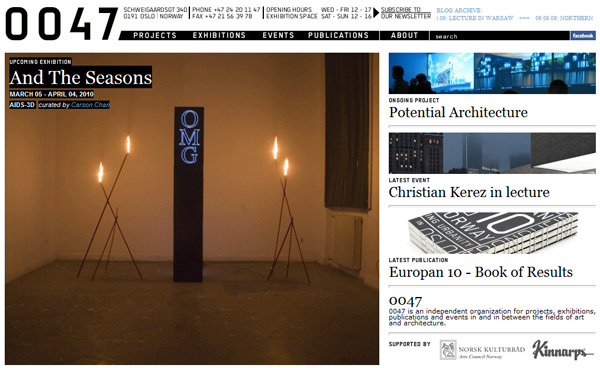
0047 is an independent organization for projects, exhibitions, publications and events in and in between the fields of art and architecture.

desde 0047 Home.

Sustainable Skyscraper « Bios Design Collective


biosarch.wordpress.com

BIOS collective is a working group of academic and professional designers exploring the application of biological patterns to architecture.

desde Sustainable Skyscraper « Bios Design Collective.

Richard Rogers wins Stirling Prize for Maggie’s Centre | News | Architects Journal


[picapp src=»8/1/f/6/0d.jpg?adImageId=6194296&imageId=1987680″ width=»411″ height=»594″ /]

Apr 29 2008

LONDON – APRIL 29: Architect Lord Rogers attends the official opening of the first branch outside Scotland of cancer care home Maggie’s Centre on April 29, 2008 in London, England. (Photo by Rosie Greenway/Getty Images)Content © 2009 Getty Images All rights reserved.

British architecture gives its top award to Richard Rogers in the year of his bruising public row with Prince Charles

The cancer support centre in west London was commissioned by Charles Jencks, whose wife Maggie died of the disease. There are already five Maggie’s Centres in Scotland, including designs by Frank Gehry (Dundee) and Zaha Hadid (Fife).

desde Richard Rogers wins Stirling Prize for Maggie’s Centre | News | Architects Journal.

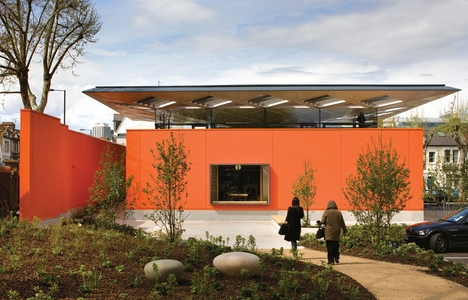
Maggie's Centre London by Rogers Stirk Harbour and Partners has won the 2009 Stirling Prize.

Rogers’ Maggie’s Centre wins the Stirling Prize

By Emily Cadman, Anna Winston

The judges described the London cancer centre as a “timeless work of architecture that not only distils the intentions of this brief but expresses in built form compassion, sensitivity and a deep sense of our common humanity.”

They added: “This quietly confident building is truly, unquestionably a haven for those who have been diagnosed with cancer. Rogers Stirk Harbour & Partners’ achievement is in having created a completely informal, home-like sanctuary to help patients learn to live with cancer.”

In his short acceptance speech, Richard Rogers described the building as a “wonderful project”.

He paid tribute to Maggie Keswick, the late wife of client Charles Jencks, who’s death of cancer led Jencks to create a series of cancer care centres as a fitting memorial.

Rogers said: “The one person missing here is Maggie. She will certainly be the person I’m thinking of.”

Lord Rogers wins Stirling architecture prize for cancer sanctuary – TimesOnline

Hugh Pearman, Architecture Critic

LORD ROGERS last night won the £20,000 Stirling Prize, the premier award in British architecture, for his design of a cancer support centre.

The prize comes as a ringing endorsement from his peers despite Rogers being bumped off the £1 billion Chelsea Barracks redevelopment project by the intervention of Prince Charles. His victory — for the Maggie’s Centre in Hammersmith, west London — came as a surprise. The favourite for the award had been an art gallery on a Danish island by minimalist architect Tony Fretton.

Giving the prestigious prize to the firm of Rogers Stirk Harbour was a popular choice, however. The programme of Maggie’s Centres began with a converted stable block in Edinburgh in 1996.

The six centres built so far are architecturally ambitious. Five are in Scotland, including designs by Frank Gehry (Dundee) and Zaha Hadid (Fife). Sarah Brown, the prime minister’s wife, was closely involved with the building of the Fife Maggie’s Centre, which is in her husband’s constituency.

Richard Rogers wins Stirling Prize for Maggie’s Centre
By David Basulto —

The RIBA Stirling prize is given each year to one selected building. And this year’s prize went to the Maggie Center by Rogers Stirk Harbour + Partners.

RIBA Stirling Prize, London, United Kingdon
Maggie’s Centre wins Stirling Prize

Editorial

Richard Rogers takes architecture’s top prize for the second time

Richard Rogers’ Maggie’s Centre in west London has been awarded the RIBA Stirling Prize for 2009, announced at a televised ceremony on Saturday. From a shortlist of six, Rogers’ design won the £20,000 prize making this the second time his practice has achieved what is considered to be one of the most prestigious architecture prizes. Rogers’ Barajas Airport in Spain scooped the top spot in 2006.

Richard Rogers‘ Maggie’s cancer care centre has won the RIBA Stirling Prize 2009 – RIBA (architecture.com) Official Anounce

Maggie’s Centre by Rogers Stirk Harbour + Partners wins Stirling Prize

Maggie’s Centre, a cancer care centre in London designed by architects Rogers Stirk Harbour + Partners, has won the RIBA Stirling Prize for the best building designed by a British architect.

Entradas anteriores en este Blog dedicadas a Richard Rogers:

Richard Rogers lidia con el sol y con la crisis · Reportaje

Richard Rogers+arquitectos. De la casa a la ciudad | Muestra en CaixaForum Madrid

Richard Rogers, idea y espacio en la era de la crisis


Premio RIBA Stirling para el Maggie´s Cancer Care Center, de Richard Rogers


El estudio Richard Rogers Stirk Harbour and Partners obtuvo el premio RIBA por segunda vez, por un centro para enfermos de cáncer en Londres; el primero fue en 2006 por la Terminal 4 de Barajas, Madrid

lanacion.com | Arquitectura | Miércoles 28 de octubre de 2009

Bjarke Ingels: 3 warp-speed architecture tales | Video on TED.com


Danish starchitect Bjarke Ingels rockets through photo/video-mingled stories of his eco-flashy designs. This montage of creative leaps, wild revision and happy accident shows the surprising evolution of a few of the world’s most compelling buildings.

About Bjarke Ingels

Theory meets pragmatism meets optimism in Bjarke Ingelsarchitecture. His big-think approach is informed by a hands-on, ground-up understanding of the needs of a building’s occupants

desde Bjarke Ingels: 3 warp-speed architecture tales | Video on TED.com.

Panoramio – Photos of architecture


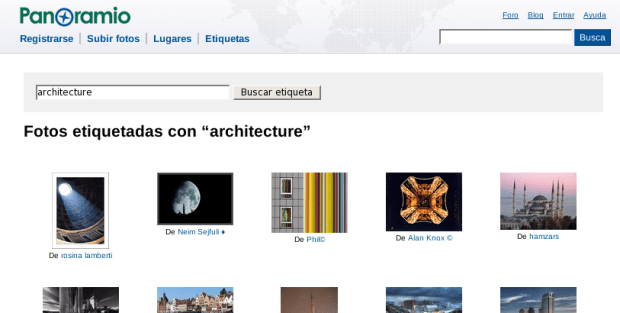
Panoramio_architecture_PantallazoFotos etiquetadas con “architecture”

desde Panoramio – Photos of architecture.

Facebook | BarberOsgerby Talk at the Design Museum


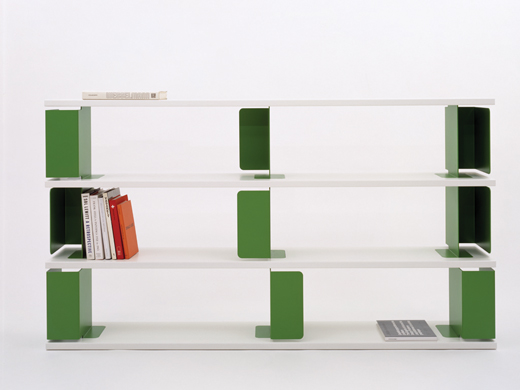
Shelving Design: Barber Osgerby  Production: Classican Photographed by Lee Furrell©
Shelving Design: Barber Osgerby Production: Classican Photographed by Lee Furrell©

EDWARD BARBER and JAY OSGERBY set up their practice in 1996 combining architecture, furniture and product design. They have worked for manufacturers including Cappellini, Flos, Established & Sons, Venini and Magis as well as developing products for Panasonic, Pantone, Swarovski and Coca Cola. Edward and Jay were made Royal Designers for Industry in 2007.

From ingenious coat hangers to looped tables, BarberOsgerby are the quiet champions of beautifully made and deceptively simple pieces. For Super Contemporary BarberOsgerby have designed the Listening Station. Find out more about the design and see exclusive videos at http://www.supercontemporary.co.uk/

desde Facebook | BarberOsgerby Talk at the Design Museum.

Atlas Style


www.atlas-style.com
http://www.atlas-style.com

Publishing house Atlas Style

Atlas Style is the biggest publishing house in Bulgaria concerning the architecture-design-construction branch. Our company works actively in collaboration with IAA (International Academy of Architecture) and the Chamber of Architects in Bulgaria. The leading position of the company is a premise for maintaining good business contacts with foreign companies and world known architects, designers and other specialists in the architectural-constructional branch. We dispose over large data base, comprising information about actively working architects, designers, artists, construction companies and consortiums, manufacturers and importers of construction materials, furniture, as well as information about the European real estate branch.

desde Atlas Style.

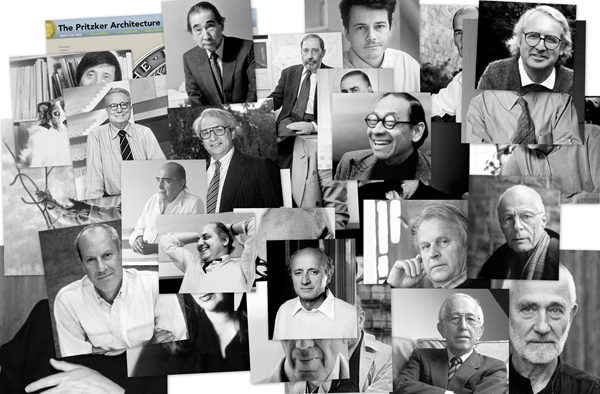
¿Cuál es tu ganador del Premio Pritzker favorito? – Listas – 20minutos.es


30 años de ganadores del Premio Pritzker de Arquitectura - vota por tus favoritos
30 años de ganadores del Premio Pritzker de Arquitectura – vota por tus favoritos

Arquitectos galardonados con el más prestigioso Premio Internacional de la especialidad (llamado por muchos el «Nobel de la Arquitectura») Galardón gestionado por la Hyatt Foundation, Sitio Web Oficial del Premio Pritzker http://www.pritzkerprize.com

desde ¿Cuál es tu ganador del Premio Pritzker favorito? – Listas – 20minutos.es.

RSS de la Lista – ¡vota ya por tus favoritos!

Eero Saarinen y la monumentalidad moderna


Arco Gateway
Arco Gateway

Reportaje: Arquitectura

La historia a veces hunde en el desprestigio a figuras que poco antes había encumbrado. Sólo el filtro del tiempo consigue poco a poco valorar a aquellas figuras vapuleadas por sus contemporáneos. Es el caso del arquitecto finlandés Eero Saarinen (1910-1961), que hizo carrera en Estados Unidos, al que hoy se mira como un innovador de las formas a través de una exposición que irá de gira por varias ciudades hasta 2010.

desde Eero Saarinen y la monumentalidad moderna · ELPAÍS.com.

Eero Saarinen: Shaping the Future is a comprehensive project exploring the work of one of the most prolific, unorthodox, and controversial masters of 20th-century architecture.

Eero Saarinen (EEUU, 1910-1961)

Architect Eero SaarinenGreat Buildings Online

Eero Saarinen en ScandinavianDesign.com

Entrada anterior en ArquitecfuraS:
La silla Tulip de Saarinen para Knoll

Un arquitecto español para la nueva Oslo · Juan Herreros


Proyecto Lambda, para la bahía de Oslo

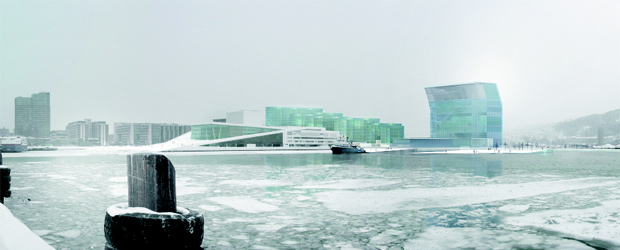
En la imagen: Aspecto que tendrá la bahía de la capital noruega tras la realización del proyecto Lambda. En primer término, el edificio de la Ópera, y a la derecha, el nuevo Museo Munch.

REPORTAJE: Diseño

Juan Herreros será el encargado de abrir la capital noruega al mar

La discreta y apacible Oslo está inmersa en una profunda transformación de su piel. Y de un modo algo insólito ha confiado en la arquitectura, en lugar de recurrir a las infraestructuras, para elaborar su futuro. Siguiendo el ejemplo de otras ciudades marítimas (léase Barcelona o Bilbao y la recuperación de su ría), la capital de un país que ama profundamente su naturaleza se prepara para abrazar definitivamente el mar. De modo que en 2011, la silueta de esta capital modelo de sociedad avanzada, ya no será la misma. El Museo Munch se ha configurado como la proa de una soberbia renovación urbanística que conquistará para la ciudad una isla naturista, una playa, un parque, un barrio de viviendas sostenibles y una librería.

desde Un arquitecto español para la nueva Oslo · ELPAÍS.com.

Nuevo Museo Munch será diseñado por estudio británico-español
Herreros Arquitectos estará encargado del proyecto que se contempla erigir junto a la también nueva Opera de Oslo, y cuya culminación se planea para 2013.

Resultados de los concursos para el Museo Munch y la Biblioteca Diechman

Herreros ArquitectosPrimer Premio / First Prize Munch Museum Competition, Oslo – Norway

Juan Hererros (Juan Herreros Guerra)

Juan Herreros (San Lorenzo del Escorial, 1958) es arquitecto español.

Juan Herreros (España, 1958)

Juan Herreros en Studio Banana, Madrid

Entrevista a Juan Herreros en Studio Banana TV – SBTV Interviews Juan Herreros

Entrevista a Iñaki Abalos & Juan Herreros, por Garanz

Sobre el actual Museo Munch:

Munch Museet – Página Oficial

Museo Munch de Oslo

Museo Munch

Museo de Edvard Munch (Munch-museet) – visit Oslo

Oslo, Museo de Edvard Munch (Munch-museet) VisitNorway.es

Actualización:  8 de abril de 2009

Perspectivas

Nuevo Museo Munch

lanacion.com | Arquitectura | Miércoles 8 de abril de 2009

Actualización: 4 de mayo de 2009

Juan Herreros abre Oslo al mar y da vida al Museo Munch

NATIVIDAD PULIDO | MADRID
Un fragmento completo de ciudad. Éste es el reto que tiene por delante el arquitecto español Juan Herreros, ganador de un concurso internacional para crear el Área Munch en el barrio de Bjorvika de Oslo: un gran proyecto que abrirá la ciudad al mar y cuyo plazo de ejecución está previsto para 2013. En un lugar hasta ahora inaccesible para los ciudadanos, Herreros construirá el Museo Munch, ocho bloques de viviendas y dos grandes parques en sendas islas. En una de ellas habrá una playa, se celebrarán conciertos al aire libre, será un lugar activo y ruidoso, apunta Herreros. La otra isla -llamada «Isla del Placer»- será un parque silencioso, naturista, un lugar hedonista para aislarse, una especie de balneario urbano. A Herreros le interesa «contribuir a la construcción de una sociedad civil más que a la sociedad del espectáculo».

Diseña un sitio como este con WordPress.com
Comenzar