«… según el diccionario de la Real Academia Española, es la creación o modificación de un producto, y su introducción en un mercado. Un aspecto esencial de la innovación es su aplicación exitosa de forma comercial. No sólo hay que inventar algo, sino, por ejemplo, introducirlo (Difusión (negocios)) en el mercado para que la gente pueda disfrutar de ello. …» (Fuente: Wikipedia)
Una web facilita la búsqueda de proyectos en el extranjero.
Emprendedores | Luis Benvenuty
Jordi Antonijoan y Víctor Vergés representan la generación de arquitectos que estudiaron convencidos de ir hacia la tierra prometida… y al poco se tropezaron con el Apocalipsis, como miles de jóvenes. «Empezamos con el boom. Nos dio tiempo a firmar unas cuantas obras, pero enseguida…».
Ahora ultiman Buildtonet.com, una web que en breve permitirá a pequeños y medianos despachos de arquitectura hallar en el extranjero, de un modo económico, proyectos que materializar. La idea de estos emprendedores recibió una ayuda Enisa de 50.000 euros del Ministerio de Industria e Innovación.
buildtonet.com
«España es uno de los países con más arquitectos por cada mil habitantes: 1,4, cuando la media europea es de 0,8. En el 2011 la construcción bajó en España un 20%. El sector está al nivel del de Rusia, que subió un 10%, al igual que otras economías emergentes: Brasil, India, China… Pero mientras en España los arquitectos somos cincuenta mil, en Rusia son trece mil», argumentan los socios del proyecto. El trabajo está lejos. Y, añaden, un despacho de arquitectura mediano o pequeño, en general con poca costumbre de promocionarse, puede acabar en la ruina en su búsqueda de proyectos en el extranjero.
Amazon podría presentar el Kindle Fire 2 (aunque aún no está confirmado que sea este el nombre del dispositivo) la próxima semana. De hecho serán dos tabletas, una de 7 pulgadas y la otra de 10, las que se anunciarán, aunque es posible que no se presenten al mismo tiempo. Ya se ha filtrado una imagen del producto.
Tras el éxito que cosechó la primera versión del Kindle Fire, que en sus primeros meses vendió varios millones de unidades y ahora ya se ha agotado en Estados Unidos, Amazon está preparada para lanzar la siguiente generación de su tableta barata.
Con bastante tiempo y experiencias acumuladas en la Página en Facebook de este Blog, su perfil en Twitter y la cuenta de Google + llegó el momento de reflejarlos en ArquitecturaS.
Consideraré Septiembre como un mes de prueba en el que las publicaciones se acercarán más al microblogging (entradas con cerca de 300 palabras), articuladas con las principales redes sociales de manera más directa – sin abandonar el estilo general de los artículos que hasta la fecha alimentan ArquitecturaS.
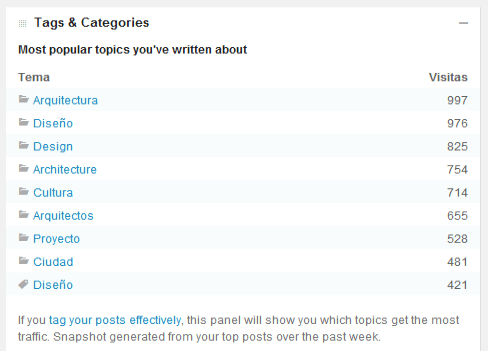
También con más de cinco años en línea, más de dos millones de visitas y cerca de 4.000 entradas (post) publicados, es hora de comenzar a redactar compilaciones: sobre lo más leído, los temas de las categorías y etiquetas (tags) más demandados.
Cerrando el mes pasaré una sencilla encuesta y serán los lectores quienes decidan si mantendré el estilo o vuelvo a innovar 😉
Así que. atentos a los cambios y pendiente de vuestro «feedback»
Entre las metas a mediano plazo, quiero citar mi interés en doblar la cantidad de visitas diarias y el número de lectores vía RSS / subscriptores WordPress en menos de un año. Y alcanzar los 5.000 followers (seguidores) en Twitter, así como los 2.500 «Me Gusta» en la Página de ArquitecturaS en Facebook.
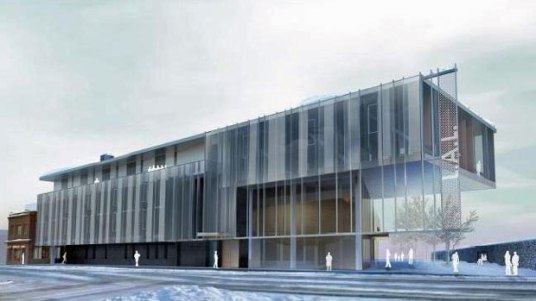
A provincial investment of $350,000 through the Centre for Research and Innovation in the Bio-Economy (CRIBE) will help to fund the incorporation of cross-laminated timber technology, or CLT, in the construction of Laurentian University’s School of Architecture. The CRIBE grant will allow Laurentian Architecture to showcase the first significant use of cross-laminated timber in a public building in Ontario.
An engineered wood product, CLT is made by gluing and pressing together successive layers of spruce, pine or fir 2x4s or 2x6s to form large solid blocks or sheets that can be precision-trimmed to specific purposes. CLT manufactured products can be used as walls, floors and roof panels in building construction. CLT construction is now being widely used in Europe, and is increasingly seen in taller wooden structures in the United States and in British Columbia.
“The possibilities created by CLT really are exciting from the architectural point of view,” said Laurentian Architecture’s Founding Director, Dr. Terrance Galvin. “This innovation in materials fits perfectly with our focus on green and sustainable building techniques, as well as our commitment to northern and Canadian design.”
“We are thrilled by CRIBE’s support for this forward-looking initiative,” said Laurentian Vice- President, Administration, Carol McAulay. “We wanted Laurentian Architecture to speak to a future generation of designers and architects, and this generous investment will help us realize that vision.”
In making the announcement today, Sudbury MPP Rick Bartolucci called it a “great boost, not only for Laurentian Architecture, but for Ontario’s forest industry.”
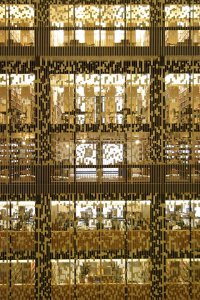
Perforated aluminum screens now enclose the balconies of the Elmer Holmes Bobst Library at New York University, where three students have leapt to their deaths since 2003. The N. Y. Times
“One of New York’s most spectacular architectural experiences,” Paul Goldberger, then the architecture critic of The New York Times, wrote in 1973 about the atrium of the new Elmer Holmes Bobst Library at New York University. It was that, indeed.
It also proved to be one of the most unnerving. The thin aluminum balusters ringing the balconies of the 12-story structure seemed disquietingly insubstantial against the 150-foot-high void beyond.
When seen from above, the trompe-l’oeil floor looked like a three-dimensional fantasy landscape by M. C. Escher that almost beckoned the viewer to enter. A journey through Bobst could feel precarious even on the best day.
And there were three dreadful days. On Sept. 12, 2003, John D. Skolnik, a junior, jumped to his death in the atrium. Less than a month later, on Oct. 10, so did Stephen Bohler, a freshman.
Within weeks, the university installed eight-foot-high clear polycarbonate barriers along the balconies. Despite this measure, on Nov. 3, 2009, Andrew E. Williamson-Noble, a junior, also jumped to his death there.
One step the university took in response to these and other student deaths was to commission Joel Sanders Architect to reimagine the troublesome space in Bobst. Instead of trying to create an inconspicuous barrier, Mr. Sanders and his colleagues have designed randomly perforated aluminum screens that completely enclose the balconies around the perimeter of the atrium and the open staircase connecting them, transforming the space in consequence.
University officials expect the renovation to be finished next month. They would not disclose the cost.
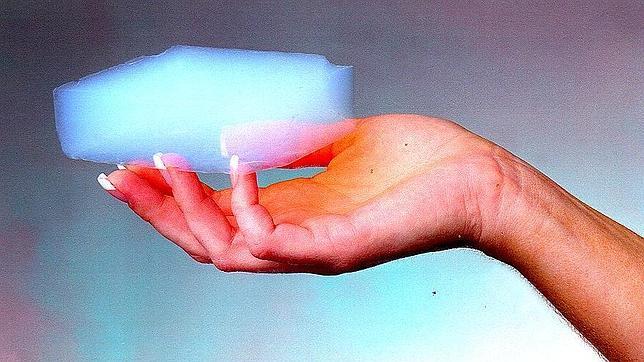
NASA. Los nuevos aerogeles flexibles son 500 veces más fuertes – ABC.es
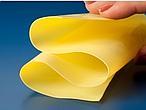
Los científicos creen que las mejoras en el aerogel, el sólido más ligero del mundo, permitirán su uso en la fabricación de ropa térmica, electrodomésticos eficaces y edificios bien aislados.
El aerogel, un sólido súper ligero al que también llaman «humo congelado», puede pasar de ser una maravilla de la era espacial a utilizarse en la vida cotidiana gracias a las grandes mejoras introducidas en los últimos años en sus componentes. Cientos de veces más fuerte, los científicos creen que este material podrá ser empleado en la fabricación de ropa que nos proteja del frío y las inclemencias del tiempo, frigoríficos con las paredes más delgadas en los que caben más alimentos o como aislante para edificios, entre otros productos. La investigación ha sido presentada en el encuentro anual de la Sociedad de Química Americana, que se celebra en Philadelphia (Pensilvania), y en la que participan más de 14.000 científicos.
Los aerogeles tradicionales desarrollados ya hace décadas están hechos de sílice, que se encuentra en la arena de la playa. Son frágiles y se rompen y se desmoronan fácilmente. Con el tiempo, los científicos han conseguido mejorar la fuerza de los aerogeles.
ARCHIVO El «humo congelado» ABC.es
«Los nuevos aerogeles son hasta 500 veces más fuertes que sus equivalentes de sílice», afirma la investigadora Mary Ann B. Meador, que ha presentado un aerogel desarrollado por científicos del Glenn Research Center de la NASAen Cleveland, Ohio. «Una pieza gruesa puede soportar el peso de un automóvil. Y pueden ser producidos con una forma delgada, una película tan flexible que hace posible una amplia variedad de usos comerciales e industriales».
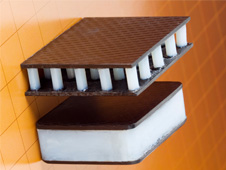
Aerogels are created by removing moisture from a gel while maintaining the gel structure. The resulting material provides very effective insulation. Image credit: NASA.
Picture preparing a bowl full of a sweet, gelatin dessert. The gelatin powder is mixed with hot water, and then the mixture is cooled in a refrigerator until it sets. It is now a gel. If that wiggly gel were placed in an oven and all of the moisture dried out of it, all that would be left would be a pile of powder.
But imagine if the dried gelatin maintained its shape, even after the liquid had been removed. The structure of the gel would remain, but it would be extremely light due to low density. This is precisely how aerogels are made.
Aerogels are among the lightest solid materials known to man. They are created by combining a polymer with a solvent to form a gel, and then removing the liquid from the gel and replacing it with air. Aerogels are extremely porous and very low in density. They are solid to the touch. This translucent material is considered one of the finest insulation materials available.
Although aerogels were first invented in the 1930s, NASA’s Glenn Research Center in Cleveland has invented groundbreaking methods of creating new types of aerogels that could change the way we think about insulation.
Aerogels‘ Porous Materials
Since their invention, aerogels have primarily been made of silica. The silica is combined with a solvent to create a gel. This gel is then subjected to supercritical fluid extraction. This supercritical fluid extraction involves introducing liquid carbon dioxide into the gel. The carbon dioxide surpasses its super critical point, where it can be either a gas or a liquid, and then is vented out. This exchange is performed multiple times to ensure that all liquids are removed from the gel. The resulting material is aerogel.
Las nuevas creaciones son: Branch y Medium. Según parece, no creen que todo esté inventado en el terreno de las redes sociales
EP-OTROS; @ABC_ES / MADRID – ABC.es
@FrankCunhaIII 998 0 FRANKCUNHAIII. Architect Artist Family Man Interested in Sustainable Design, Art, & Construction of Projects that lead to a positive future for everyone not just an elite few. First NYC, then Worldwide! · http://www.frankcunha.com – Siguiendo: 20.721 Seguidores: 20.486
@wjmarchitect 988 8 William J. Martin. AIA, Designer, Architect, Planner creator of Econo-Functional Aesthetic Balance (E-FAB) Design Philosophy & former GREEN, BETTER, BEST – Green Talk Radio host. NYC metro area · http://wjmarchitect.com/econofunctionalaesthetic.htm – Siguiendo: 17.679 Seguidores: 16.119
@FC3Arc 983 8 FC3Arc, Architect Artist Family Man Interested in Sustainable Design, Art, & Construction of Projects that lead to a positive future for everyone not just an elite few. NYC, USA · http://www.frankcunha.com – Siguiendo: 10.172 Seguidores: 10.116
@FRANKCUNHAIII 981 8 FRANKCUNHAIII, Architect Artist Family Man Interested in Sustainable Design, Art, & Construction of Projects that lead to a positive future for everyone not just an elite few. First NYC, then Worldwide! · http://www.frankcunha.com – Siguiendo: 20.721 Seguidores: 20.486
@EYerniyulia 974 7 ERNI Y PRAYOGA. BEFORE U JUDGE ME, MAKE IT SURE YOU’RE PERFECT • ♥ family • ♥ @indramedic INDRA PRAYOGA • ♥ sherny ELMO • MY ASTRO ♥ • ÜT: -7.0342889,107.5201026 · http://heello.com/erniyulia – Siguiendo: 272 Seguidores: 1.562
@Modenus 961 6 Veronika Miller, CEO of Modenus.com the leading interior design resource in the US and UK . Bloggers, ask me how to be part of BlogTour 2013 in Cologne, NYC and London. Orlando and London · http://www.modenus.com
– Siguiendo: 4.450 Seguidores: 11.292
@destAwlnrst 960 7 Uyeeeee~´▿`)\m/ J-fans! ! SMANILA☺. Friendship is forever and ever! これは私の人生です。単純に、簡単(ʃƪ˘˘ﻬ) C’mon here #DESTANGERSS ÜT: -5.3937278,105.2435597 · http://destauyee.wordpress.com – Siguiendo: 436 Seguidores: 787
@dita_tawa 954 7 Dita Anggiani. Architecture Engineering of Trisakti University’11 ..:: PΔRΔDOKS ::.. LIFE IS NEVER ENJOY. in your mind. – Siguiendo: 242 Seguidores: 614
@waku_waku 953 7 wakuwaku, iPhone tips & tricks founder. Apple Fanboy. Blogger. Successful Investor. Social Media Consultant. Mobile Device Management Architect. Dad to 3. Global · http://iPhone-tips-tricks.com – Siguiendo: 3.784 Seguidores: 3.656
@nadiya_namaorgy 952 7 أملنادية They say you learn from your mistakes , that’s why they mistake me . South Africa. – Siguiendo: 268 Seguidores: 985
@GROWNsix 951 7 Miss Gbemi. #teamIDGAF… Love The Weird And Listens To The Unpopular. On it, – Siguiendo: 358 Seguidores: 473
@Cooper_Designs 951 7 Chad Cooper. Former Town Architect for DPZ-planned TND :: New Urbanist :: Original Green (@stevemouzon) Advocate. Houston, TX area · http://ChadCooper.posterous.com – Siguiendo: 2.306 Seguidores: 3.384
@nandachipy 950 7 Silvia_Nanda. Be my self | Love my family | Little architect ♥ | Kevin Septyan ♥ ÜT: -7.1696133,112.6532957 – Siguiendo: 302 Seguidores: 403
En los últimos años las impresoras en 3D han dejado de ser objetos de ciencia ficción, para convertirse en aparatos que permiten crear pequeños objetos mediante la superposición de finas capas de materiales de plástico o resinas sintéticas.
Ahora, tal y como leemos en el blog «Xataka Smart Home», un profesor de la Universidad del Sur de Californiaha propuesto dar un paso más allá en el uso de esta tecnología y adaptarla para construir edificios de tamaño real.
Según Behrokh Khoshnevis, responsable del departamento de Ingeniería Industrial y de Sistemas, la adopción de este tipo de métodos automatizados permitiría construir viviendas de forma rápida, barata y totalmente personalizada en pocos días o incluso horas.
Behrokh Khoshnevis – USC
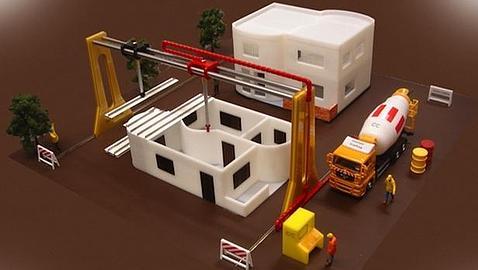
Para ello, solo habría que instalar estas grandes impresoras en 3D en el solar en el que se levantará la casa y sustituir la tinta habitual por un compuesto de hormigón especial. Además, mientras el aparato «imprime» las paredes un sistema especial instalaría los cables y tuberías de forma automática y simultánea.
Aunque este sistema de construcción sigue pareciendo una idea propia de la ciencia ficción, Khoshnevis tiene tan clara su viabilidad que incluso ha desarrollado una simulación del proceso que no duda en enseñar en todas las presentaciones de su proyecto.
Behrokh Khoshnevis is a professor of Industrial & Systems Engineering and Civil & Environmental Engineering, and is the Director of the Center for Rapid Automated Fabrication Technologies (CRAFT) and Director of Manufacturing Engineering Graduate Program at USC. He is active in CAD/CAM, robotics and mechatronics related research projects that include the development of novel Solid Free Form, or Rapid Prototyping, processes (Contour Crafting and SIS), automated construction of civil structures…
Information from the Royal Institute of British Architects on activities including awards, talks, debates, exhibitions, educational activities, news and tours. @RIBA http://www.architecture.com
Revista Construestilo de los fundadores de @ArquitecturaCAD / Revista de #Arquitectura #Construcción #Decoración & #inmueble, +info: ventas@construestilo.com @construestilohttp://www.construestilo.com
Architects upload their work and we show it off on the world’s leading platform for architecture. Follow us for a daily dose of architecture and design. @Architizerhttp://www.architizer.com
(33) Architect focused on modern design – Interested in all things creative – Love to help non-architects learn about architecture. @modative principal + co-founder. http://www.modative.com
(42) Architect, futurist, urban designer, rhetorician, adjunct prof, treehugger, former biz owner now a writer/analyst exploring city futures, reborn from @cindyfw.
Muchos son los multimillonarios que no pueden resistirse a comprarse una isla. Uno de los ejemplos más recientes es el de Larry Ellison, quien acaba de hacerse con una extensa propiedad en Hawai por 400 millones de euros. Por su parte, el gobierno de Grecia ha decidido poner a la venta algunas de sus islas, con precios que oscilan entre los dos y los 15 millones de euros, para encontrar financiación y aliviar parte de los graves problemas que tiene con su deuda. Ahora una empresa austriaca ha ideado un nuevo caramelo para las grandes fortunas: una isla que puedes llevar a cualquier lugar que desees.
Orson Island, nuevo concepto de viajar por el mundo a través de una isla móvil. Que!
Esta futurista isla artificial de la compañía Orsos Island tiene un tamaño de 20 metros de ancho por 37 de largo y dispone, según sus creadores, de mil metros cuadrados de espacio habitable. Suficiente para las 12 personas, más la tripulación, que pueden ser acomodadas.
No se trata de una embarcación al no tener motor, pero puede ser transportada al gusto del propietario. Además, la isla es autosuficiente y ecológica, gracias a los paneles solares y a los generadores eólicos con los que se obtiene la energía necesaria para el día a día.
Los responsables de la empresa aseguraron hace unos días a la agencia AFP que ya han recibido el primer pre-encargo y que podría estar en el agua en un plazo de entre 18 meses y dos años. Además, señalaron que tienen clientes potenciales en Estados Unidos, China y Australia. Su precio es una de las razones que podrían dar viabilidad al proyecto, ya que éste ronda los 5 millones de euros, mucho más asequible que la mayoría de islas naturales.































 Arquitectonico
Debe estar conectado para enviar un comentario.