‘Open House‘ is a simple but powerful concept: showcasing outstanding architecture for all to experience, completely for free.
Open House initiatives invite everyone to explore and understand the value of a well-designed built environment. The concept has been established in the following locations around the world.
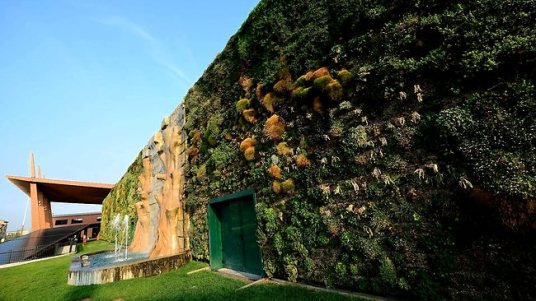
Italian architect designs world’s biggest vertical garden in Milan.
The largest vertical garden in the world on a shopping mall facade in the town of Rozzano, near Milan / AFP – http://www.news.com.au
A shopping centre near Milan is claiming an unusual record — the biggest vertical garden in the world, covering a surface of 13,600 square feet with a total of 44,000 plants.
A SHOPPING centre near Milan is claiming an unusual record – the biggest vertical garden in the world.
The huge garden covering a surface of 1263 square metres with a total of 44,000 plants, was inaugurated in 2010 but was only certified as a record this week.
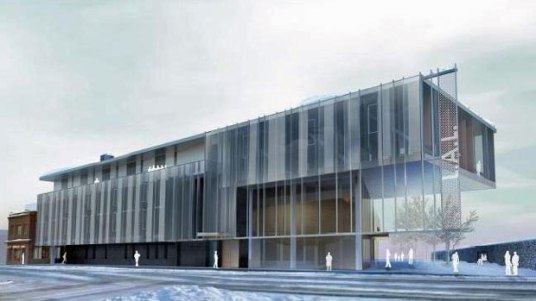
A provincial investment of $350,000 through the Centre for Research and Innovation in the Bio-Economy (CRIBE) will help to fund the incorporation of cross-laminated timber technology, or CLT, in the construction of Laurentian University’s School of Architecture. The CRIBE grant will allow Laurentian Architecture to showcase the first significant use of cross-laminated timber in a public building in Ontario.
An engineered wood product, CLT is made by gluing and pressing together successive layers of spruce, pine or fir 2x4s or 2x6s to form large solid blocks or sheets that can be precision-trimmed to specific purposes. CLT manufactured products can be used as walls, floors and roof panels in building construction. CLT construction is now being widely used in Europe, and is increasingly seen in taller wooden structures in the United States and in British Columbia.
“The possibilities created by CLT really are exciting from the architectural point of view,” said Laurentian Architecture’s Founding Director, Dr. Terrance Galvin. “This innovation in materials fits perfectly with our focus on green and sustainable building techniques, as well as our commitment to northern and Canadian design.”
“We are thrilled by CRIBE’s support for this forward-looking initiative,” said Laurentian Vice- President, Administration, Carol McAulay. “We wanted Laurentian Architecture to speak to a future generation of designers and architects, and this generous investment will help us realize that vision.”
In making the announcement today, Sudbury MPP Rick Bartolucci called it a “great boost, not only for Laurentian Architecture, but for Ontario’s forest industry.”
Determinados por la organización Ebuzzing a través de algoritmo propio en su “Labs”, para agosto 2012, a continuación los Blogs dedicados a la temática de Arquitecturamás influyentes en nuestro idioma común (el «Top 50«)
Tal como reseñé el mes pasado, tras un par de consultas, desde Ebuzzing me comunicaron que nuevamente no cuentan con una persona responsable del Ranking (explican que aprovecharán el verano para reorganizarse y designar un nuevo encargado en español para esta importante iniciativa). No creo que tengan mucho que buscar si al menos se tomaran la molestia de leer en detalle mi CV.
Por todo lo anterior, a diferencia de como fue costumbre, ininterrumpidamente, durante más de dos años en ArquitecturaS, este mes no pude ofrecer la «exclusiva» antes del día 5 (momento en que actualizó el Ranking Ebuzzing Arquitectura) dedicándome cuando dispuse de algún tiempo y conexión estable a internet, a la recopilación del siguiente listado Top 50.
Claves de lectura: + : sube en el ranking; – : baja en el ranking; (número de puestos); = : permanece en el mismo puesto que el mes anterior; (Ent.) Entra al Ranking en posición destacada.
Atención Colegas Blogueros que estáis presentes en este Listado: ¡Felicitaciones! De paso, y como siempre he procurado, estáis todos incluídos en los enlaces (links) de ArquitecturaS – agradecería vuestra reciprocidad y espero que logreis mejor posicionamiento el mes próximo.
Information from the Royal Institute of British Architects on activities including awards, talks, debates, exhibitions, educational activities, news and tours. @RIBA http://www.architecture.com
Revista Construestilo de los fundadores de @ArquitecturaCAD / Revista de #Arquitectura #Construcción #Decoración & #inmueble, +info: ventas@construestilo.com @construestilohttp://www.construestilo.com
Architects upload their work and we show it off on the world’s leading platform for architecture. Follow us for a daily dose of architecture and design. @Architizerhttp://www.architizer.com
Víctima de un infarto cerebral murió la madrugada de hoy el arquitecto, columnista y escritor mexicano Jorge Legorreta, a la edad de 63 años de edad. Foto: Archivo – http://www.cronica.com.mx
Víctima de un infarto cerebral murió la madrugada de hoy el arquitecto, columnista y escritor mexicano Jorge Legorreta, a la edad de 63 años de edad.
Sus familiares informaron que los restos del también urbanista y cronista arquitectónico están siendo velados en una famosa funeraria de la calle de Félix Cuevas.
Jorge Legorreta (1956-2012) fue catedrático en la Universidad Autónoma Metropolitana (UAM) y en el Instituto Politécnico Nacional (IPN).
A lo largo de su larga y sólida trayectoria en la rama de la arquitectura se especializó en política hidráulica y era considerado un conocedor de la historia arquitectónica de la capital del país.
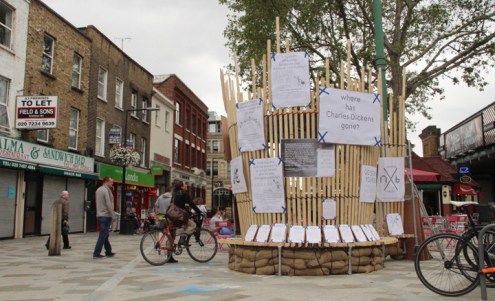
The Union Press temporary small-scale printing house has popped up on SE1’s Union Street for the duration of the festival – Wallpaper* Magazine
By Ellie Stathaki
With the 2012London Festival of Architecture reaching a crescendo this weekend, we thought it time to bring you the highlights of what has been a fortnight of thought-provoking architectural celebrations. Under the theme of the ‘Playful City‘ – referencing the impending Olympics, but also appealing to the child within use – this year’s events spanned a variety of ‘hubs’ across the British capital.
The first weekend honed in on Southwark, where community events like the Gibbon’s Rent Garden, the Union Street Printing Press and the Reunion Public House ensured a lively couple of days. Our highlights also included the Architecture Foundation’s gorgeous ‘Bureau Spectacular: Three Little Words’, featuring an installation inspired by practice founder Jimenez Lai’s architectural comic strips (on display until the end of August).
Moving on to the City of London hub, we marveled at the future face of the capital, as envisaged by the Developing City exhibition (on until 9 September). Meanwhile, architects competed to create the cleverest and best-looking structures out of cans at the Canstruction event in Canary Wharf. Squire and Partners were deservedly crowned the winners with their gazebo-style structure, incorporating 2,580 cans that were carefully secured in hand-cut wooden inserts.
The London Pleasure Gardens hub had to battle some bad weather, but launched triumphantly regardless a few days ago. Here, visitors can stroll among follies, pavilions and pop ups in the East London park, as well as sit down and relax on one of the pews and perches conceived by architects for the RIBA London competition.
This year marks the 5th anniversary since the inception of World Industrial Design Day, which was created in 2007 on the occasion of Icsid’s 50th anniversary.
To celebrate the milestone, the organisation is asking the global design community one simple question – What is industrial design?
As basic as this may seem, the organisation poses this question at a time when in fact nothing is simple anymore. The world is evolving and the industry of industrial design is expanding. What better time than on this international day of observance to reflect on how the profession of industrial design is defined today.
What is industrial design in 10 seconds or less
To facilitate the collection of ideas about ‘What is industrial design?‘ Icsidhas launched a social media campaign. All Icsid Members and friends are encouraged to participate in this year’s video challenge by submitting their definition of industrial design in 10 seconds or less. Watch the video below for more information and instructions on how to participate.
Cape Town (South Africa) – Cape Town was today officially appointed World Design Capital 2014 with the signing of the Host City Agreement today by Cape Town Mayor, Adlerman Patricia de Lille and Icsid President, Soon-in Lee.
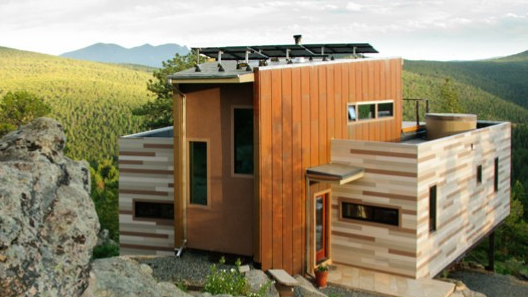
Studio H:T‘s Shipping Container House is, unsurprisingly, a house made from shipping containers – at least partially. But perhaps most impressive about the design is that it operates entirely off-grid.
Studio H:T’s Shipping Container House is, unsurprisingly, a house made partially from shipping containers – and one that operates entirely off-grid – Gizmag
First, let’s clear up where the shipping containers fit in. The taller central section (which is clearly wedge-shaped in plan view) is not a container. Nor is it fashioned from parts of containers. No, this specially-constructed space houses the living and dining areas, with some storage space above.
But two containers flank this central living space on either side, and these make up the Shipping Container House’s bedrooms and home office spaces – as well as the kitchen judging by the interior photography.
If the Shipping Container House does indeed constitute an entirely off-grid abode then this is the design’s main achievement – incorporating passive (i.e. non-mechanized) design approaches such as passive cooling and green roofs, while the building’s orientation and window design has attempted to minimize solar heat gain (the house is located in Colorado USA). It also appears some form of exterior cladding has been applied to the containers themselves in an additional effort to mitigate solar heating.
Llegó junio, el mes que oficialmente da inicio al verano, y contamos con la información para ofrecer, en ¡Exclusiva! la nueva edición del Ranking Arquitectura gestionado por Ebuzzing Labs.
A continuación los Blogs dedicados a la temática de Arquitectura más influyentes en nuestro idioma común, determinados por la organización Ebuzzing:
Casa ITESO Clavigero obra resultado de la inspiración del Arq. Luis Barragán. ARCHIVO http://www.informador.com.mx
‘La casa de Luis Barragán‘ permite conocer la creación más personal del arquitecto jalisciense.
El escritor Jorge Esquinca estimó el libro de un valor universal durante la presentación de este en en Casa ITESO Clavigero.
GUADALAJARA, JALISCO (30/MAY/2012).- La casa como un templo», expresó esta noche el escritor Jorge Esquinca, durante la presentación del libro La casa de Luis Barragán, un valor universal, en Casa ITESO Clavigero, donde el aforo fue de casi un centenar de oyentes.
La obra, que es una coedición por la Fundación de Arquitectura Tapatía Luis Barragán (FATLB), la Fundación Cultural Bancomer y la editorial RM, es un documento para conocer la creación más personal del arquitecto jalisciense y ganador del Premio Pritzker 1980 -equivalente del Nobel, pero arquitectura-, señaló el escritor, quien comentó el libro acompañado por los arquitectos Juan Palomar Verea, Carlos Petersen; el director de la Fundación Cultural Bancomer, Gustavo Lara; y el presidente de la Fundación de Arquitectura Tapatía Luis Barragán (FATLB), Armando Chávez Cervantes, quien explicó que el contenido del libro ofrece una visión renovada de la casa de Luis Barragán, que fue declarada Patrimonio de la Humanidad por la Organización de las Naciones Unidas para la Educación, la Ciencia y la Cultura (UNESCO) en 2004.
Para Juan Palomar, la casa de Luis Barragán es «una posible clave para construir el futuro». Agregó que la primera casa de Barragán data de 1940 y es un ensayo general de la que sería su morada».
Palomar Verea destacó que la casa de Luis Barragán es una decantada síntesis de un pensamiento elaborado a lo largo de 40 años».
El ejemplar incluye fotografías de la época y un acervo de imágenes realizadas para esta publicación.
La red de redes llegó para cambiar todos los ámbitos de nuestras vidas.
Sin Internet no tendríamos Blogs y no compartiríamos socialmente nuestra pasión por la Arquitectura y el Diseño.
Bien vale la pena tomarse un día al año para repensar Internet y su trascendencia – cómo la usamos, que provecho sacamos de ella, en que formas la potenciamos.


 ‘Open House‘ is a simple but powerful concept: showcasing outstanding architecture for all to experience, completely for free.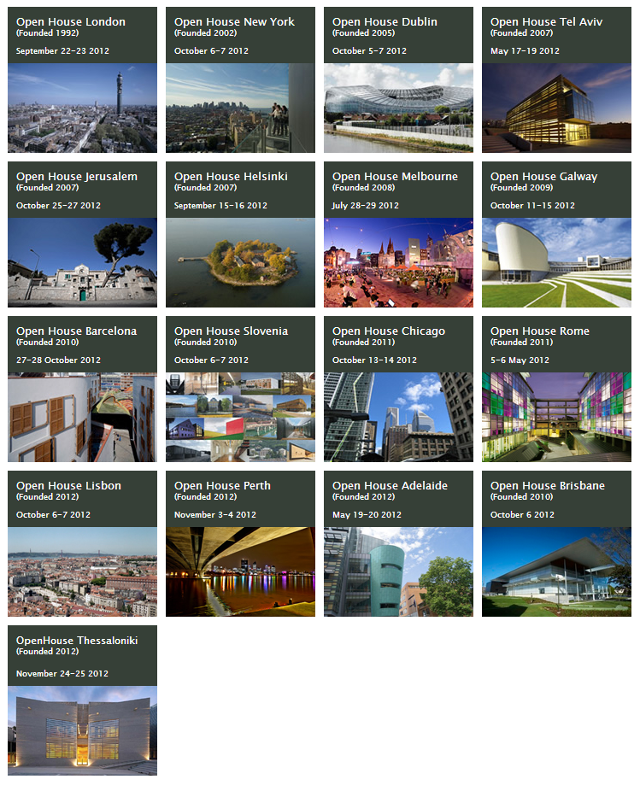


















Debe estar conectado para enviar un comentario.