Sostenibilidad, se refiere al equilibrio de una especie con los recursos de su entorno. Por extensión se aplica a la explotación de un recurso por debajo del límite de renovación del mismo. Desde la perspectiva de la prosperidad humana y según el Informe Brundtland de 1987, la sostenibilidad consiste en satisfacer las necesidades de la actual generación sin sacrificar la capacidad de futuras generaciones de satisfacer sus propias necesidades. Wikipedia.
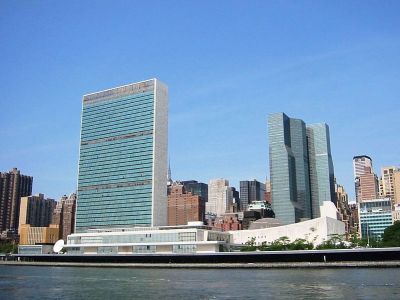
Desde 2007, Michael Adlerstein es Subsecretario General de la ONU y director ejecutivo del «Plan Maestro Capital«, el proyecto de restauración de la sede principal de la ONU en Nueva York que tiene un costo de dos mil millones de dólares.
El rascacielos de 39 pisos fue diseñado por el arquitecto Le Corbusier. Las obras de construcción concluyeron en 1952. Fue el primer rascacielos del mundo con una fachada suspendida de vidrio. Durante la restauración, se elimina el amianto de las paredes y se mejora significativamente la seguridad de las instalaciones. Además, la restauración logrará reducir el consumo de energía en un 50%, las emisiones de dióxido de carbono en por lo menos un 45% y el consumo de agua en por lo menos un 40%.
Thousands of building professionals from all over the world will come together @ Greenbuild 2012 for three days of outstanding educational sessions, renowned speakers and special seminars.
The BMW Guggenheim Lab is a mobile laboratory traveling to nine major cities worldwide over six years. Led by international, interdisciplinary teams of emerging talents in the areas of urbanism, architecture, art, design, science, technology, education, and sustainability, the Lab addresses issues of contemporary urban life through programs and public discourse. Its goal is the exploration of new ideas, experimentation, and ultimately the creation of forward-thinking solutions for city life.
Over the Lab’s six-year migration, there will be three distinct mobile structures and thematic cycles. Each structure will be designed by a different architect, and each will travel to three cities around the globe. The theme of the Lab’s first two-year cycle is Confronting Comfort—exploring notions of individual and collective comfort and the urgent need for environmental and social responsibility.
The BMW Guggenheim Lab launched in New York, running from August 3 to October 16, 2011. It is currently in Berlin, where it will be open through July 29, 2012, before moving on to Mumbai in late 2012. Cycle 1 will conclude with an exhibition presented at the Solomon R. Guggenheim Museum in 2013. Two additional two-year cycles will follow, each with a new mobile structure and theme, concluding in the fall of 2016.
Part urban think tank, part community center and public gathering space, the Lab is conceived to inspire public discourse in cities around the world and through the BMW Guggenheim Lab website and online social communities.
The public is invited to attend and to participate in free programs and experiments at the Lab. In addition, the BMW Guggenheim Lab website and social communities provide opportunities for participants around the world to engage with and to contribute to the ideas and experiments generated by the Lab.
Esta caja de herramientas itinerante y multidisciplinar, que se podra visitar en la capital alemana hasta el 29 de junio, abarca urbanismo, arquitectura, arte, diseño, ciencias, tecnología, educación y sostenibilidad
JOSE-PABLO JOFRÉ / CORERSPONSAL EN BERLÍN – ABC.es
Kreuzberg no se quiere aburguesar; los hipsters pertenecen a otros barrios berlineses. Así justificaron los vecinos del barrio donde originalmente quería instalarse la estructura itinerante del proyecto«BMW Guggenheim Lab» de la fundación neoyorkina Guggenheim. Así que ha aterrizado finalmente en Prenzlauer Berg, en una antigua nave industrial del sector este de la ciudad, reconvertido en centro multiusos. Esta es la razón que el BMW Guggenheim Lab haya retrasado hasta el 15 de junio y por más de tres semanas la inauguración de este laboratorio móvil de ideas en la capital alemana.
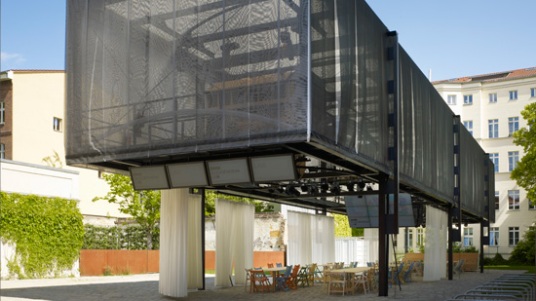
Exterior view; Photo: Christian Richters
La estructura que acaba de abrir sus puertas y que comenzó su recorrido en Nueva York, es un armazón de fibra de carbono diseñada por el despacho de arquitectos Bow-Wow de Tokio como una«caja de herramientas itinerante». Permanecerá en Berlín hasta el próximo 29 de julio, tras lo cual continuará su viaje a Bombay.
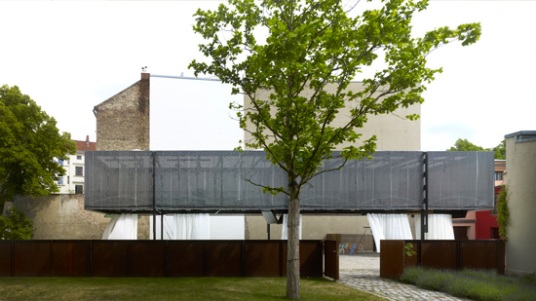
Lightweight and compact, with a structural skeleton built of carbon fiber, the mobile structure for the first cycle of the BMW Guggenheim Lab has been designed by the Tokyo architecture firm Atelier Bow-Wow as a “traveling toolbox.”
The structure’s lower half is a present-day version of the Mediterranean loggia, an open space that can easily be configured to accommodate the Lab’s various programs. The upper part of the structure houses a flexible rigging system and is wrapped in a semitransparent mesh. Through this external skin, visitors are able to catch glimpses of the extensive apparatus of “tools” that may be lowered or raised from the canopy according to the Lab’s programming needs, transforming the ground space into a formal lecture setting, a stage for a celebratory gathering, or a workshop with tables for hands-on experiments.
Design Architect
Atelier Bow-Wow, Tokyo, Japan
Principals: Yoshiharu Tsukamoto and Momoyo Kaijima
Project Team: Mirai Morita and Masatoshi Hirai
Fabrication and Structural Engineering
Superstructure and Installation: NUSSLI Group, Switzerland/USA
Structural Engineer: Arup, Tokyo, Japan
Berlin Design, Engineering, and Construction
Local Architect: magma architecture, Berlin, Germany
Structural and Civil Engineer: Arup, Berlin, Germany
Construction Management: NUSSLI Group, Switzerland/USA
New York Design, Engineering, and Construction
Architect of Record: Fiedler Marciano Architecture, New York, USA
Structural and Civil Engineer: Arup, New York, USA
Site Preparation Construction Management: Sciame Construction Co., New York, USA
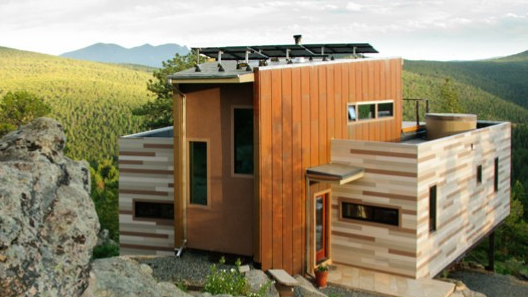
Studio H:T‘s Shipping Container House is, unsurprisingly, a house made from shipping containers – at least partially. But perhaps most impressive about the design is that it operates entirely off-grid.
Studio H:T’s Shipping Container House is, unsurprisingly, a house made partially from shipping containers – and one that operates entirely off-grid – Gizmag
First, let’s clear up where the shipping containers fit in. The taller central section (which is clearly wedge-shaped in plan view) is not a container. Nor is it fashioned from parts of containers. No, this specially-constructed space houses the living and dining areas, with some storage space above.
But two containers flank this central living space on either side, and these make up the Shipping Container House’s bedrooms and home office spaces – as well as the kitchen judging by the interior photography.
If the Shipping Container House does indeed constitute an entirely off-grid abode then this is the design’s main achievement – incorporating passive (i.e. non-mechanized) design approaches such as passive cooling and green roofs, while the building’s orientation and window design has attempted to minimize solar heat gain (the house is located in Colorado USA). It also appears some form of exterior cladding has been applied to the containers themselves in an additional effort to mitigate solar heating.
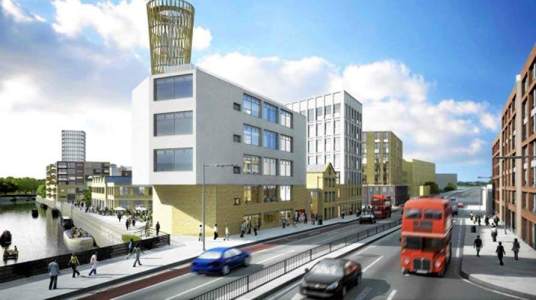
Barrio IKEA en Londres - El de Strand East será un barrio para 6.000 personas. (IKEA) 20minutos.es
Algunas empresas parecen no tener límites. Ikea, que ha amueblado ya los hogares de medio mundo, también construye. Y lo hace a lo grande. Un barrio entero. Está ocurriendo ya, las obras se han iniciado en Londres.
La nueva república independiente de la multinacional sueca se llama Strand East, un barrio del distrito londinense de Stratford, al este de la capital y próximo a las instalaciones que se construyen para albergar losJuegos Olímpicos.
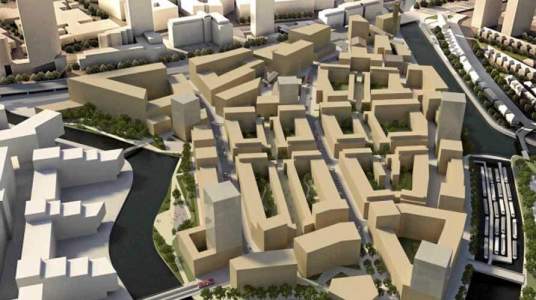
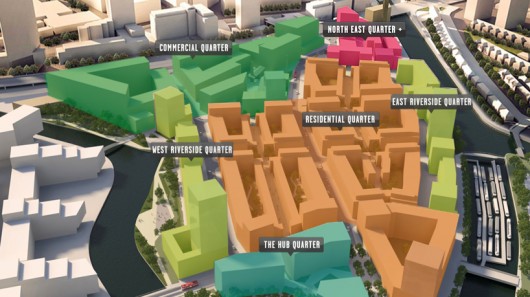
Strand East será un barrio de unas 10.000 hectáreas que dará sitio a unas 6.000 personas. Serán 1.200 viviendas, 45.000 metros cuadrados de oficinas, además de tiendas, restaurantes y un hotel de 350 habitaciones. El nuevo barrio tendrá una escuela, una guardería y un hospital.
Barrio IKEA en Londres - El terreno de Strand East supera las 10 hectáreas. (IKEA)
La filosofía del nuevo barrio es la de un urbanismo europeo, en su sentido tradicional, pero en un entorno contemporáneo. Y lo que es más importante, con un concepto «más humano» de escala, es decir, de pequeña escala y edificios de poca altura.
¿Se puede aplicar la filosofía de los muebles sencillos, pero diseñados, baratos y adaptables de Ikea no ya a un edificio sino a un barrio? Los suecos de LandProp, la sección de Ikea dedicada a la construcción y el urbanismo, aseguran que sí.
La compañía sueca Ikea, a través de su filial BoKlok, quiere trasladar su concepto simple, accesible y barato del diseño de interiores al mundo del urbanismo. Por eso está desarrollando un proyecto urbanístico en Londres para crear el nuevo barrio Strand East, situado en una antigua zona industrial de 12 hectáreas, al lado del Parque Olímpico. Tendrá una capacidad de 1.200 viviendas y empezará a construirse una vez hayan terminado los Juegos Olímpicos de 2012. El objetivo de Ikea es que las primeras familias se instalen en el barrio en 2018.
When you enter one of IKEA’s giant home furnishing stores, it often feels like taking a trip to a distant, uber-modern town where everyone is just a little more hip than where you just came from, and space is used oh-so-efficiently. Now, the iconic Swedish company wants to actually build just such a town in the real world – in London, to be exact.
LandProp Holding, IKEA’s real estate development arm, has snapped up 26 acres (10.5 hectares) in a historic and somewhat blighted section of London to create an idyllic urban hamlet dubbed «Strand East.» If you’re familiar with London-town, you’ll find it between Stratford High Street, the Three Mills Wall River and the River Lea waterways.
It’s not the first housing project IKEA has undertaken, but this time the company says the goal is to create a development that fits in with the rest of London «…where mews-style townhouses sit comfortably alongside creative commercial space. Where beautiful public courtyards open up to piazzas. And waterways weave their way around hotels, restaurants, parks, water taxi piers and cycle paths.»
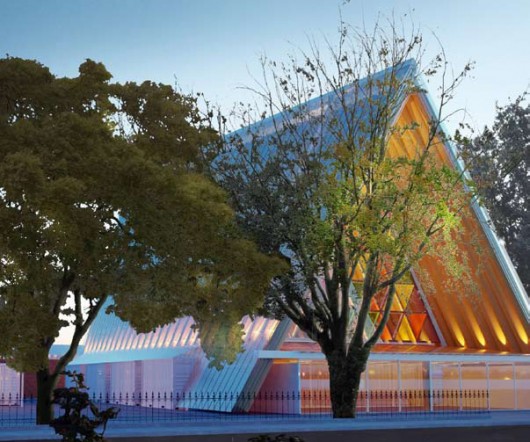
«Cardboard» and «cathedral» are two words you don’t often put together. Cathedrals are known for their sturdy presence, with flying buttresses, soaring domes, and Gothic grandeur. That, however, isn’t stopping the residents of earthquake-ravaged Christchurch from rebuilding the city’s iconic cathedral out of 104 tubes of cardboard.
Christchurch, the largest city on New Zealand’s South Island, was badly damaged in the 6.3-magnitude February 2011 earthquake.
The Victorian-era, Gothic-style ChristChurch Cathedral, which dominated the city’s central square, was a popular meeting place and tourist attraction until it was cordoned off soon after the quake. Any hope that it could be salvaged was destroyed after a large aftershock caused additional damage. Scheduled for demolition, church officials announced Monday plans to build a 25-meter (82-foot) cardboard cathedral in its place … temporarily.
Richard Gray, of the Transitional Cathedral Group, called the planed building «a symbol of hope for the future of the city,» saying it’s both sustainable and affordable.
Work will soon begin on architect Shigeru Ban‘s design for a cardboard cathedral in Christchurch, New Zealand. The city’s famous cathedral was badly damaged in a quake last year, and so Ban’s temporary structure will provide the local community with a new gathering place while they wait for a more permanent cathedral to be built.
When a powerful 6.3-magnitude quake struck Christchurch in New Zealand in February last year, its force caused part of the city’s famous cathedral to tumble to the ground.
Rebuilding the 131-year-old Anglican cathedral was recently judged to be too costly and dangerous, resulting in the controversial decision to at some point demolish its remains.
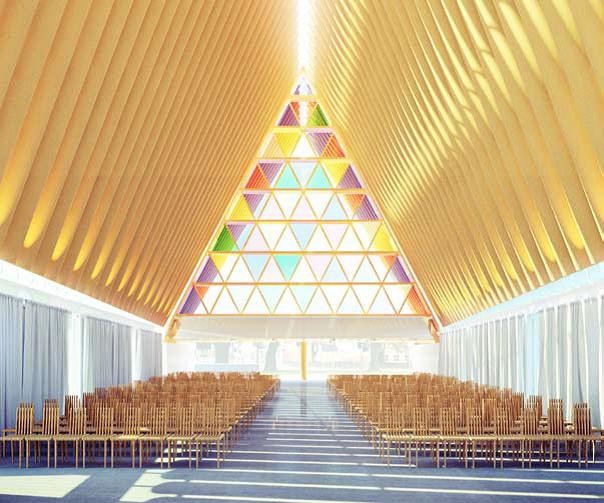
While local church-goers wait for a new cathedral to be built, the authorities have come up with the novel idea of building a 700-seat transitional cathedral out of cardboard. Designed by Japanese architect Shigeru Ban, the unique paper and cardboard structure will rest on an A-frame of timber beams and structural steel.
A location for the cathedral was announced yesterday on the Christchurch Cathedral website.
“This is a very exciting next step for the project,” the Transitional Cathedral Group’s Richard Gray said. “The Transitional Cathedral is a symbol of hope for the future of this city as well as being sustainable and affordable. The Cathedral is confident it will attract interest nationally and internationally drawing additional visitors to the city.”
Early on the morning of September 4, 2010, a 7.1 magnitude earthquake struck the South Island of New Zealand causing widespread damage. This was followed by a 6.3 magnitude quake on February 22, 2011 that was much shallower and devastated the city of Christchurch – NZ’s second-largest city – resulting in the loss of 185 lives. Among a considerable number of building collapses was the historic Anglican Cathedral, which sustained sufficient damage that it had to be demolished. Work has now begun on a temporary cathedral, intended to serve the needs of the community until sufficient funds are acquired to build a permanent replacement. Oddly, the architects decided to make the replacement of cardboard!
Vo Trong Nghia es un arquitectovietnamita, que estudió en Japón, donde aprendió la idea de avant design. Esta tendencia de construcción lo conectó con diversos materiales, principalmente el bambú, que se convirtió en su favorito.
Nghia ha creado majestuosas edificaciones a partir de este material. El estilo de estas construcciones mezcla milenarias técnicas orientales, con diseños contemporáneos e influencia y patrones estéticos de diversos lugares del mundo, por ejemplo de África.
Pero además de la propuesta estética, destaca en la arquitectura de Nghia el hecho de que utiliza recursos naturales, con lo que minimiza el impacto al medio ambiente.
Ventajas ecológicas de los materiales naturales
Si bien los materiales que provienen de la naturaleza suelen ser de mayor valor monetario, -porque está de por medio la dificultad de encontrarlos, o bien llevará bastante tiempo reunir la cantidad que se necesite para una construcción-, a largo plazo se retribuye.
Sin embargo, el bambú se está adaptando a la nueva tendencia sustentable, porque crece rápidamente en cualquier lugar del mundo y su cultivo es accesible; esto hace que su valor sea considerablemente menor.
Los diseños en bambú se caracterizan por su resistencia y cuidado del medio ambiente. Foto: altonivel.com.mx
Además, la utilización de los materiales ecológicos es beneficiosa ya que no son fabricados con productos químicos contaminantes. Al mismo tiempo, éstos se pueden reutilizar o reciclar.
Construcciones de Vo Trong Nghia
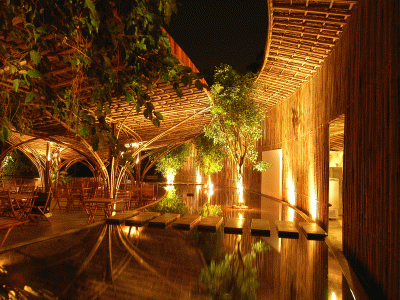
Este original arquitecto diseñó y fabricó el llamado Watter and Wind Café. Se trata de un lugar con particular belleza estética, ubicado en la provincia de Binh Duong, en Vietnam. Ahí el agua y el aire están acondicionados de manera natural, luego de estudiar su aerodinámica.
Esta estructura fue construida casi por completo con carrizos de bambú y fibras naturales, lo cual indica que no se usaron componentes o aglutinantes de origen industrial. Además fue recubierta con follaje de un arbusto local característico del país. Sorprendentemente, esta edificación tiene una alta resistencia y está certificada para satisfacer necesidades humanas de una manera práctica, algo indispensable en la arquitectura.
Otra de sus obras es el Bamboo Pavilion de arquitectura ecológica y económica, que presentó en la Expo Shangai 2010, y en la que también utilizó bambú. Su costó fue sólo un millón de dólares.
BANGKOK — A floating mosque and golf course for the submerging Maldives islands. Amphibious homes in the Netherlands lifted to safety as waters surge beneath them. A hospital perched on 400 stilts to protect patients from Thailand’s devastating floods and the encroaching sea nearby.
Architects’ answer to rising seas: Floating homes - businessmirror.com.ph
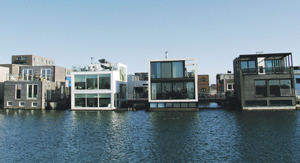
Around the world architects and city planners are exploring ways mankind and water may be able to coexist as oceans rise and other phenomenon induced by climate change, including extreme, erratic floods, threaten land-rooted living.
With the Dutch at the helm, projects in the cutting-edge field of aqua-architecture are already in place, including a maritime housing estate, floating prison and greenhouses in the Netherlands.
An increasing number are coming on stream, and while earlier blueprints appeared to be the stuff of science fiction, advocates say leaps of imagination are still needed given the magnitude of the danger.
“The focus on floating solutions has grown enormously. It has shifted from freak architecture to more sustainable, flexible alternatives,” says Dutch architect Koen Olthuis, citing growing support by governments and interest among private investors in Asia and Russia.
“We will have to live with a more watery environment. There is no choice,” says Danai Thaitakoo, a Thai landscape architect whose own Bangkok house was swamped last year as the country suffered its worst floods of modern times.
The Thai capital is also among the mega coastal cities projected by the end of this century to lie totally or partially under water as global warming boosts sea levels, according to the UN Intergovernmental Panel on Climate Change.
Others include Tokyo, London, Jakarta, Sydney and Shanghai—an apocalyptic prospect of mass migrations and economic crises.
Float!
While in earlier decades architects and planners, particularly Japanese and Americans, dreamed of entire marine cities housing millions, most today are proposing a mix of defending communities with barriers and building on water using floating platforms, raised or amphibious structures and solutions still being devised.
“Climate change will require a radical shift within design practice from the solid-state view of landscape urbanism to the more dynamic, liquid-state view of waterscape urbanism,” says Danai, who is involved in several projects based on this principle. “Instead of embodying permanence, solidity and longevity, liquid perception will emphasize change, adaptation.”
In a study for low-lying New York, Olthuis says he envisioned Manhattan ringed by a sea wall with outlying boroughs allowing water to enter and adapting.
The world’s Londons and Bangkoks, he says, may become “hydro-cities,” their historic hearts and concentrated core development waterproofed and other areas “going with the flow.”
Building on Water to Combat Urban Congestion and Climate Change
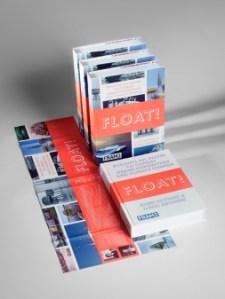
Float! Building on Water to Combat Urban Congestion and Climate Change proposes a new way of building: on water instead of on land.
Although the concept may seem revolutionary, it is an obvious solution to overcrowded metropolises. The majority of world cities are situated on the water and have too little space where it’s most needed: in the city centre. Building on water allows inner-city areas to expand.
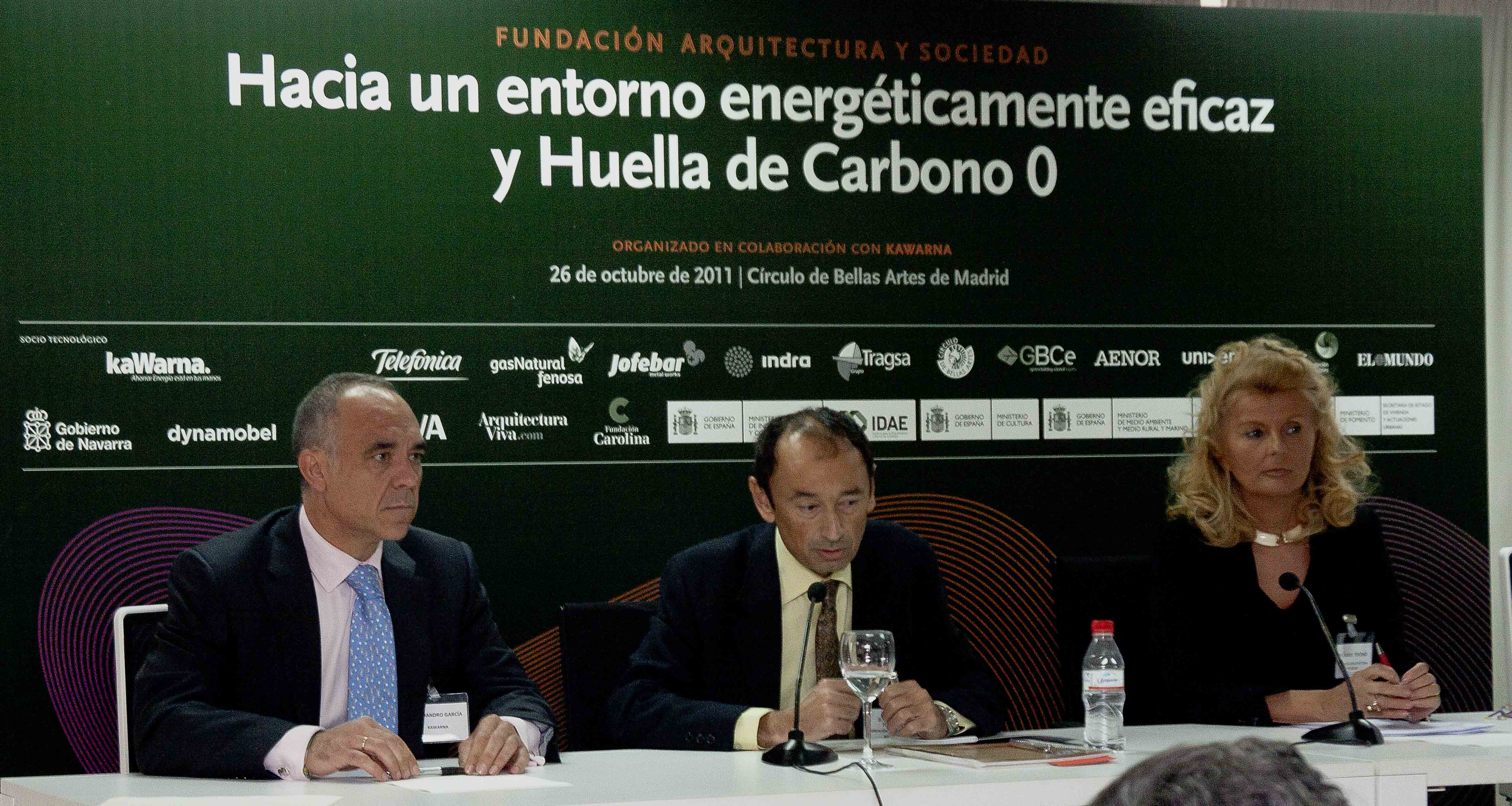
El objetivo del convenio es atender la necesidad de formación especializada, especialmente la realización de cursos de formación, jornadas técnicas y seminarios en ámbitos de Medio Ambiente, Sostenibilidad, Eficiencia Energética, y Arquitectura y Sociedad.
Isabel Tocino Biscarolasaga, Patrona de la Fundación Arquitectura y Sociedad, Presidenta de la Comisión de Seguimiento del Convenio, y Ex – Ministra de Medio Ambiente, manifestó durante la Jornada «Hacia un entorno energéticamente eficaz y Huella de Carbono 0«, que“las empresas que adopten estas prácticas serán pioneras y estarán en mejores condiciones de competir, en un entorno económicamente muy difícil de donde solo saldremos con la innovación y la tecnología». Por otro lado, añadió que «no puede olvidarse que la huella de carbono consiste también en un análisis de costes asociados a la energía que puede ayudar en esta tarea tan necesaria a día de hoy que consiste en conocer los costes de nuestras actividades y gestionarlos para ganar competitividad.”
Se hace necesario, por este motivo, establecer sistemas y procesos que permitan mejorar la eficiencia energética y reducir costes, a la vez que contribuyan a la disminución de las emisiones y del impacto ambiental asociado.
La firma de este nuevo convenio de colaboración se complementa con el apoyo al Curso on-line de Experto en Huella de Carbono, que actualmente AENOR(Asociación Española de Normalización y Certificación) está desarrollado conjuntamente con kaWarna.
– – –
Oportunidad conveniente para publicar los siguientes Vídeos:
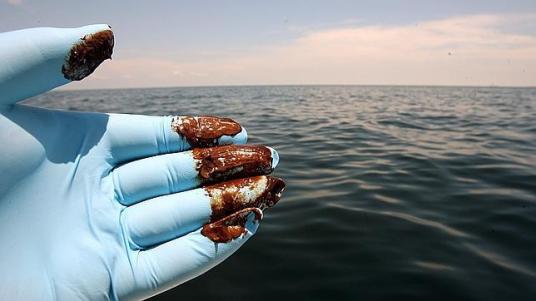
Un barquito construido con apenas 500 gramos de esta sustancia sería capaz de soportar encima más de 450 kilos sin hundirse. Absorbe el aceite, por lo que podría ser útil en la limpieza de derrames de petróleo.
ARCHIVO - El nuevo material puede ser útil en la limpieza de derrames de petróleo - ABC.es
Un material nuevo y asombroso ha sido presentado durante el encuentro anual de la Asociación Americana de Química, una importante sociedad científica que se reúne estos días en San Diego (California). Se trata de una de las sustancias sólidas más ligeras del mundo, pero tan resistente y fuerte que si se emplearan menos de 500 gramos para construir un barco sería capaz de soportar 453 kilos -lo que pesan cinco frigoríficos- sin hundirse. El material se inspira en los secretos que permiten a algunos insectos caminar sobre el agua y, por si fuera poco, absorbe el aceite, por lo que podría ser muy eficaz en la limpieza de derrames de petróleo.
El hallazgo se sitúa en un campo emergente llamado biomimética, en el que los científicos se inspiran en la naturaleza y adaptan los sistemas biológicos de plantas y animales para su uso en la medicina, la industria u otros campos. Según explica Olli Ikkala, de la Universidad de Tecnología de Helsinki en Espoo (Finlandia), el nuevo material flotante, diseñado para imitar las patas largas y delgadas del insecto tejedor que camina sobre el agua, está hecho de un aerogel, compuesto por nanofibras de la celulosa en las plantas. Los aerogeles son tan ligeros que a algunos de ellos se les llama incluso «humo sólido». También tienen notables propiedades mecánicas y son flexibles.
«Estos materiales tienen propiedades realmente espectaculares y podrían ser utilizados de manera práctica», dice Ikkala. Las aplicaciones potenciales van desde la limpieza de los derrames de petróleo hasta la creación de productos tales como sensores para la detección de la contaminación ambiental, robots miniaturizados militares e incluso juguetes infantiles y flotadores prácticamente insumergibles.
El nuevo material contiene celulosa, que se compone de cadenas largas de la glucosa de azúcar unidas entre sí en un polímero, como un plástico natural. La celulosa da a la madera su fuerza notable y es el principal componente de los tallos, hojas y raíces de las plantas. Tradicionalmente, los principales usos comerciales de celulosa han sido en la producción de papel y textiles (algodón). Pero el desarrollo de una forma muy elaborada de celulosa, denominado nanocelulosa, ha ampliado las aplicaciones y ha provocado una intensa investigación científica. La nanocelulosa consta de las fibrillas de diámetros tan diminutos que 50.000 de ellas encajarían en el punto y aparte de esta frase.
Eólica Wind Tower Una recreación de cómo será 'Eólica'cuando se construya. (Fran Silvestre Arquitectos) 20minutos.es
Un rascacielos sostenible y ecológico. Se llama ‘Eólica’ y es de momento un proyecto que se ha desarrollado en Valencia. Se trata de un prototipo de edificio, de 170 metros de altura, que permite integrar diferentes tipos de energías renovables en un entorno urbano, que además de producir 3.600 megavatios-hora anuales, evita problemas de ruido y vibraciones.
‘Eólica‘ es un edificio de 170 metros de altura que aglutina energía eólica, geotérmica, fotovoltaica y solar térmica y que contará con 400 aerogeneradores de eje vertical que evitan problemas de ruido, traspaso de vibraciones al edificio y aumentan la seguridad para personas y fauna.
Se trata de un edificio diseñado para ubicarse en cascos urbanos, que contará con un sistema capaz de producir 3.600 megavatios-hora anuales, que cuenta con la ventaja de no tener que transportar la energía, ya que se consume allí donde se produce y cuya construcción costaría 7 millones de euros.
Placas fotovoltaicas, colectores y aerogeneradores
Este proyecto, que combinaría usos públicos y privados, como una sala de conferencias, oficinas y un café-restaurante en la planta 50, tiene la ventaja de que los edificios adyacentes a los que se suministre esta energía no necesitarán ninguna adaptación especial para utilizarla.
El jueves 22 de marzo, se presentó el proyecto Eólica Wind Tower, desarrollado conjuntamente por la Universitat Politècnica de València, el Instituto Tecnológico de la Energía y el estudio Fran Silvestre Arquitectos.
El proyecto aglutina diferentes energías renovables como la eólica, geotérmica, solar y termoeléctrica en un edificio para abastecer a entornos urbanos.
REDACCIÓN
La Universitat Politècnica de Valencia (UPV), el Instituto Tecnológico de la Energía (ITE) y el Estudio Fran Silvestre Arquitectos presentan a los medios de comunicación la Torre Eólica, un edificio que integra diferentes energías renovables –eólica, geotérmica, solar térmica y fotovoltaica- para abastecer de energía a entornos urbanos.
Los medios asistentes podrán tomar imágenes de la exposición Eólica, que muestra varias maquetas del edificio, un prototipo de parte del edificio a escala real, fotografías de la reproducción del mismo, un video demostrativo tridimensional de cómo quedaría el edificio, así como de uno de los aerogeneradores que se instalarán en el edificio. Además de poder entrevistar al Subdirector de la Escuela Superior de Arquitectura de Valencia (ETSA) y portavoz del proyecto, Francisco Silvestre, y el director del ITE, Alfredo Quijano.
Tras la atención a los medios se procederá al acto de inauguración de la exposición ‘Eólica’.
El proyecto plantea la posibilidad de construir un edificio capaz de autoabastecerse de energía por medio de la combinación de energías renovables eólica, geotérmica, fotovoltaica y solar térmica. Además, podrá suministrar a las viviendas y oficinas del entorno.
Eólica es un edificio que ha sido diseñado para acoger hasta 400 aerogeneradores de eje vertical e instalaciones geotérmicas y solares (térmicas y fotovoltaicas). El rascacielos es un proyecto que han desarrollado conjuntamente la Universitat Politècnica de València, el Instituto Tecnológico de la Energía (dependiente de la Generalitat Valenciana) y el estudio Fran Silvestre Arquitectos.
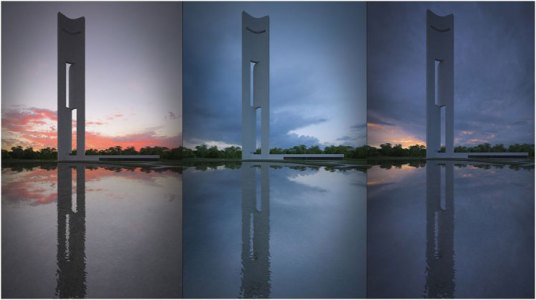
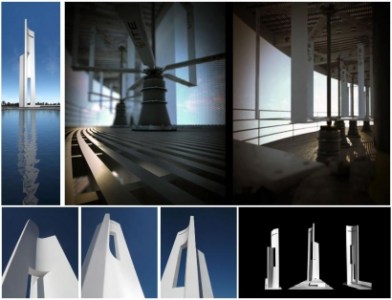
Desde el punto de vista arquitectónico se trata de un hito que modifica su proporción dependiendo del punto de vista y de la incidencia de la luz del sol, mostrando un elemento en constante evolución. Una torre esculpida por y para el viento haciendo referencia a las construcciones verticales en las que algunas arquitecturas tradicionales domesticaban los vientos para refrescar los edificios. La estructura propone un sistema de turbinas eólicas de eje vertical haciendo funcionar al edificio como un gran aerogenerador. Su quietud contrasta con la movilidad de las sombras, su solidez pone de relieve la fuerza del viento al que enmarca.
La disposición de las comunicaciones verticales y el hecho de estar unidas entre sí le dotan de un buen comportamiento estructural. El empuje del viento se ve siempre contrarrestado por un núcleo rígido, mientras que la orientación y la forma de la geometría le permiten transformar en energía los vientos predominantes. Las turbinas eólicas de eje vertical se disponen en las zonas curvas que unen los núcleos de comunicación. Tanto estos aerogeneradores como los ascensores panorámicos están cubiertos por una envolvente metálica calada (deployee) que siendo permeable para el viento y las vistas confieren a la estructura un aspecto monolítico.



















 Arquitectonico
Debe estar conectado para enviar un comentario.