(Latin architectura, from the Greek ἀρχιτέκτων – arkhitekton, from ἀρχι- «chief» and τέκτων «builder, carpenter») is the art and science of designing buildings and other physical structures. Wikipedia.
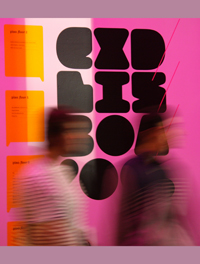
Dedicado al diseño, la arquitectura y la cultura contemporánea, el ExperimentaDesign bienal presenta actividades con una amplia selección de áreas incluido diseño ambiental, arquitectura, artes visual, cine, diseño gráfico, diseño industrial, fotografía, multimedia, música y vídeo.
A EXD’11 tem início a 28 de Setembro. Useless é o tema proposto, incentivando à discussão e reflexão sobre (pré)conceitos ligados à utilidade e sua ausência.
Experimenta is a knowledge production unit operating in design, architecture and design culture.
Experimenta’s field of action is contemporary cultural production, observed from an inclusive, multidisciplinary and transversal perspective. Experimenta’s activity combines critical thinking, concept development and creative up-to-dateness, resulting in a consistent and incisive intervention in the social, cultural and economic contexts it engages.
Based in Lisbon, the Portuguese capital, Experimenta has achieved international projection through the development of high-profile projects, as well as the partnerships and collaborations established with a network of institutions, agents and creative practitioners from all over the world.
EXD'11/LISBOA @exdbiennale
Strongly committed to innovation and open to new challenges and contributions, Experimenta is an enterprising work and discussion platform which views culture as a key element for sustained development in contemporary society.
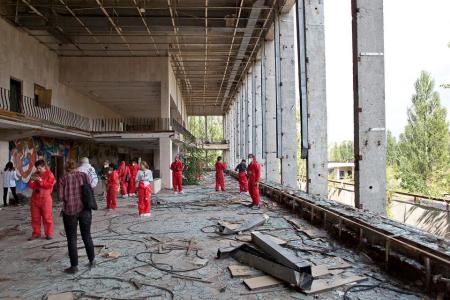
Research work at the site. Photograph by Neil Berrett. Domus
An international, multidisciplinary team of researchers visits the zones where the myths of the near future are manufactured.
The Visiting School Program at the Architectural Association under the direction of the talented and charismatic Liam Young and Kate Davies invited creative director and experience designer Nelly Ben Hayoun to join a multidisciplinary group of international research students, architects, artists, and writers on a trip to extraordinary landscape and industrial sites. Dubbed the Unknown Fields Division, they pack their Geiger counters and spacesuits to chart a course from the atomic to the cosmic, investigating the unknown fields between the exclusion zone of the Chernobyl Nuclear Reactor in the Ukraine and Gagarin’s launch pad at the Baikonur Cosmodrome in Kazakhstan. They will skirt the retreating tide of the Aral Sea and mine the ‘black gold’ in the Caspian oilfields and caviar factories. In these shifting fields of nature and artifice they aim to re-examine preservationist and conservationist attitudes toward the natural world and document a cross-section through a haunting landscape of the ecologically fragile and the technologically obsolete. Ben Hayoun delivers these excursionary dispatches from the zones where the myths of the near future are manufactured.
Nelly Ben Hayoun has been invited to join forces in a road trip from Chernobyl Exclusion Zone, through the Ukraine and the oil fields of Azerbaijan to rocket launch pad of Kazakhstan’s Baikonur Cosmodrone. A Project initiated by Liam Young and Kate Davies the AA( Architectural Association). more on the project at www.unknownfieldsdivision.com
Reports written by Nelly Ben Hayoun for Domus on this fantastic trip can be seen here
Nuevo mes y de manera eficiente, según lo que ya nos tiene acostumbrados, Etienne remite el código – en exclusiva, ya que no será oficial hasta el próximo día 5 – del Ranking Wikio Arquitectura de Blogs en Español.
En esta oportunidad, ingresan al podio del Top 20 varias caras nuevas, a las que aprovecho para dar la cordial bienvenida.
Sin más rodeos, con todos Ustedes, fieles lectores y seguidores de este Blog y su difusión en Redes Sociales, el Ranking Arquitectura de Wikio.es correspondiente a este mes que apenas comienza:
We’re big fans of cardboard architecture, but in most cases, the material yields structures that are boxy and rather simplistic. That’s why we were blown away when we spotted these incredibly intricate cardboard columns by Michael Hansmeyer, which FastcoDesign actually dubbed as the most complex architecture in the world. The dizzying Doric column variations are created on Hansmeyer’s computer using a subdivision algorithm that allows them to have between 8 and 16 million facets (distinct surfaces). They’re so insanely detailed that most people – including us – mistake the actual physical prototypes for computer renderings!
cardboard architecture. 1. Design process using models to show formal and spatial relationships without taking into account the materials or functions of the final buildings.
2. Models with flat surfaces pierced by plain black holes resembling a series of cardboard boxes. The term in this sense has been used to describe the 1960s work of Kahn and others.
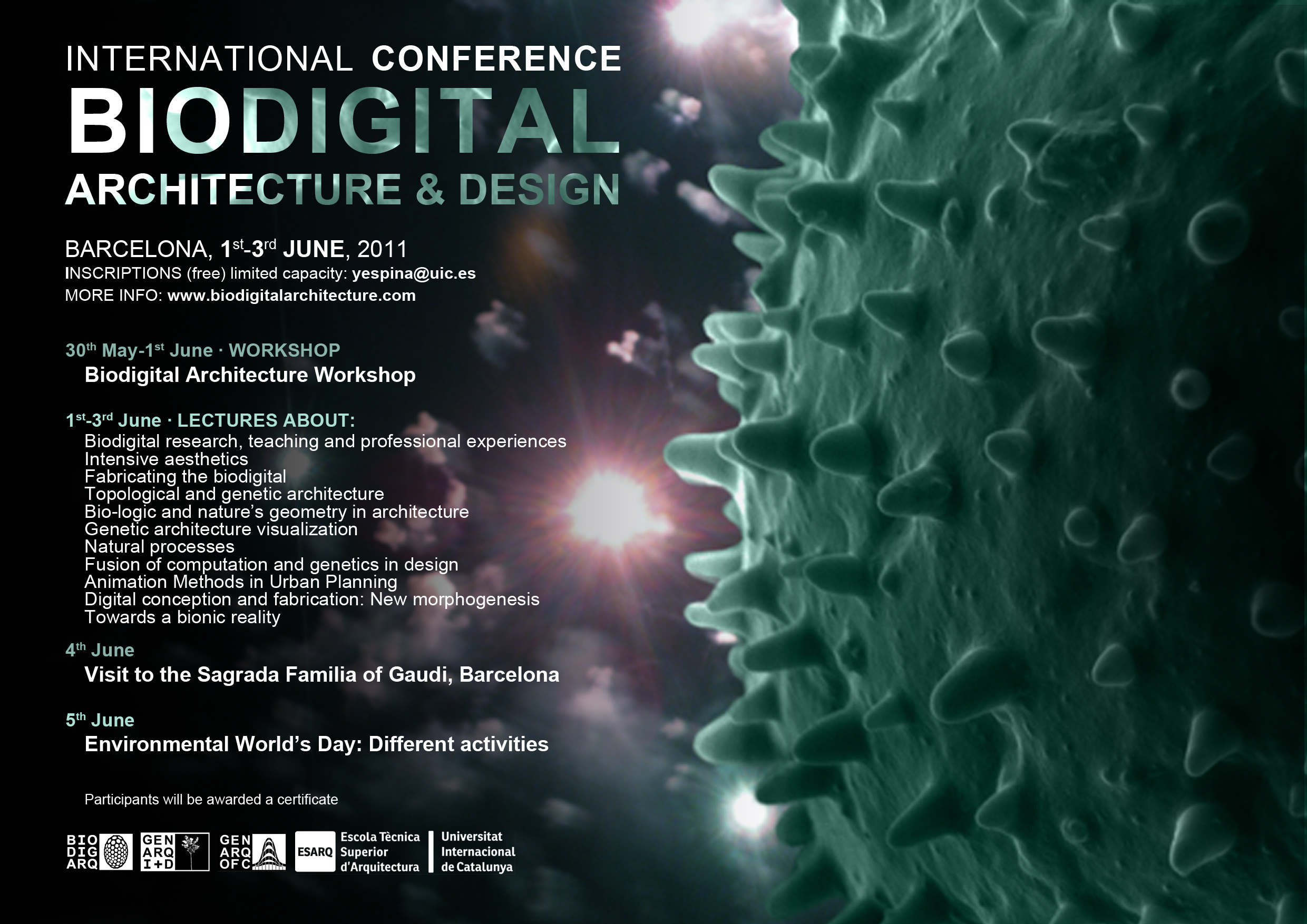
ESARQ (UIC), Barcelona, 2011, June, 1st-3rd
In the twenties and thirties of the 20th century, when some architects were disposed systematically to configure modern world, they did it stimulated for a cultural pressure, for a correct adaptation to new times, and fighting for minimum conditions of human existence. On the other hand, today the urgency is bigger. It is about the entire planetary subsistence. The question is not any more a simple caprice, neither an intellectual necessity, neither sensibility for losing less favoured people. Now, the necessity is global, without reservations of classes, races or religions. The whole planet is in front of danger of no-sustainability for all mankind.
By chance, now in this crucial moment, are offered new techniques of an enormous potential: biological techniques and digital techniques. And even fusion of both, in something that can be named biodigital architecture. One that has incorporated the advantages proportioned by the understanding of genetics in both ways, the biological and the digital way, that permit to face with hope some continuity also worthy, but this time a dignity for all The Earth.
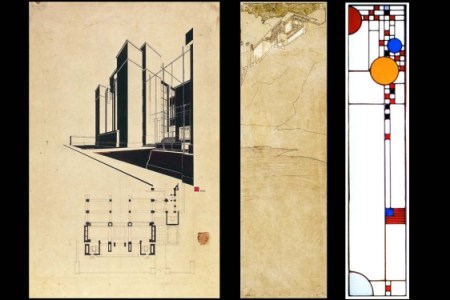
Naíf, visionario, rompedor, conservador, americano, orgánico, incansable,contradictorio, sensual, loco… Los adjetivos se amontonan en torno a la figura del estadounidense Frank Lloyd Wright (1867-1959), autor de más de 1.000 proyectos y patriarca de la arquitectura del siglo XX en su país. Muchísimo trabajo y muchísimo valor que la editorial Taschen se ha propuesto inventariar en una colección monumental.
La primera entrega de la colección llega con el formato de los antiguos portfolios que llevaban los arquitectos antes de la digitalización de su trabajo. Una cartera de cartón naranja con su asa y la leyenda ‘Wright‘ en mayúsculas y en una letra sin palo.
Image via Wikipedia
Debajo, dos cifras: 1885-1916: es decir, los primeros 30 años de carrera profesional de Wright, desde su casi adolescencia hasta el momento en el que el arquitecto rompió y se convirtió en el hito que hoy conocemos.
En este primer volumen, por tanto, se recopilan los primeros tanteos de Wright, la manera en que tomó el legado de la arquitectura tradicional y popular del siglo XIX e indagó en ella, en su relación con el terreno y la naturaleza y con la cultura americana. Las casas de la pradera y las casas ‘usonianas’ (de USA) son el fruto de esta indagación. Pero también aparece la arquitectura urbana de Wright en proyectos como la sede de la empresa Larkin, en Buffalo, Nueva York (1905).
El autor de este inventario es Bruce Brooks Pfeiffer, aprendiz y colaborador de Frank Lloyd Wright durante los últimos 10 años de su vida y ‘alma’ de Taliesin, el antiguo estudio del arquitecto, hoy convertido en la fundación que cuida su legado.
The California Institute of Earth Art and Architecture
The California Institute of Earth Art and Architecture is a 501 (C)3 non-profit/charitable foundation at the cutting edge of Earth and Ceramic Architecture technologies today. Founded in 1986 by its director, Nader Khalili (1936-2008), its scope spans technical innovations published by NASA for lunar and Martian construction, to housing design and development for the world’s homeless for the United Nations.
Continuing in his tradition, Khalili‘s associates and apprentices are dedicated to research and education of the public in environmentally oriented arts and architecture. Its philosophy is based on the equilibrium of the natural elements of earth, water, air, fire, and their Unity at the service of the arts and humanity.
Nader Khalili (1936-2008) is the world-renowned Iranian-American architect, author, humanitarian, teacher, and innovator of the Geltaftan Earth-and-Fire system known as Ceramic Houses, and of the Superadobe construction system. Khalili received his philosophy and architectural education in Iran, Turkey, and the United States.
In 1984, Lunar and Space habitation became an integral part of his work. He presented his “Magma Structures” design, based on Geltaftan System, and “Velcro-Adobe” system (later to become Superadobe) at the 1984 NASA symposium, “Lunar Bases and Space Activities of the 21st Century.” He was subsequently invited to Los Alamos National Laboratory as a visiting scientist. Starting in 1984, he presented papers and was published in several symposiums and publications including those of NASA, and the “Journal of Aerospace Engineering” for which he was awarded by the American Society of Civil Engineers. Khalili was a member of the team of “Lunar Resources Processing Project,” along with the Princeton based Space Studies Institute, McDonnell Douglas Space Systems, and Alcoa.
Khalili was the founder and director of the Geltaftan Foundation (1986), and the California Institute of Earth Art and Architecture (Cal-Earth) (1991). At Cal-Earth. Khalili taught his philosophy and earth architecture techniques. His sustainable solutions to human shelter have been published by NASA, and awarded by the United Nations, and the Aga Khan award for Architecture, among others. At Cal-Earth, prototypes were built and tested for inclusion in the Uniform Building Code.
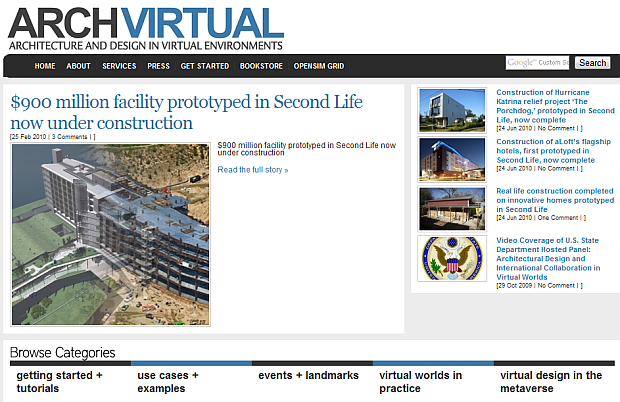
ARCH Virtualis a consulting group and community network, specialized in providing resources and design services to clients using Second Life, OpenSim and Unity3D.
We have completed a variety of assignments for clients in education, architecture, government, health care, advertising, and private enterprise.
To see a client list and some samples of our work, click HERE.
Frank Gehry llegó a realizar más de 30.000 dibujos hasta dar con la versión definitiva del Auditorio de Walt Disney en Los Ángeles. A pesar de todo, si mantuviéramos una conversación con el arquitecto seguramente nos diría que ya no le gusta. «Cuando acabo de construir un edificio, veo todas las cosas que debería haber hecho y no he hecho», ha dicho más de una vez.
Ésas son algunas de las curiosidades que nos desvela el Vitra Design Museum a través de una exposición sobre Frank Gehry en la que se muestra una selección de 12 proyectos concebidos desde 1997. Dibujos y maquetas originales de gran formato ayudan a comprender el proceso creativo de Gehry, desde que idea el boceto con cuatro garabatos sobre un papel blanco hasta que coloca la última piedra sobre el terreno. Y el lugar en el que se exhiben no podía ser más adecuado: el primer edificio que Gehry hizo en Europa, situado en el campus-fábrica del fabricante suizo de muebles de diseño.
El año de partida de la exposición coincide con el de la inauguración del Museo Guggenheim de Bilbao, que le catapultó a las mieles de la fama arquitectónica internacional. Fue el primero que construyó íntegramente utilizando CATIA, un software pensado para la construcción de aviones y que él mismo adaptó para facilitar la transición de la maqueta a la obra final. Hoy, ese programa es utilizado por centenares de arquitectos en todo el mundo, entre ellos la consagrada Zada Hadid.
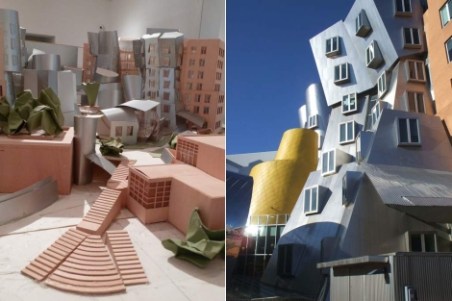
A pesar de recurrir a la tecnología, el resultado de sus trabajos parece hecho con cincel y martillo. Como ya hiciera Antoni Gaudí un siglo antes, Gehry disfruta sobrepasando los límites de su disciplina, rompiendo la tradición, imitando las formas de la naturaleza y sorprendiendo con composiciones que a simple vista parecen insostenibles. El arquitecto asentado en California multiplica las maneras de concebir el espacio, el tiempo, los materiales, las formas y cualquier otro elemento que forme parte de la identidad de una construcción. Su objetivo es comunicar un mensaje convirtiendo sus diseños en emociones, como en el caso del Ray and Maria Stata Center del Instituto Tecnológico de Massachusetts. Sus muros, todos diferentes, parecen improvisados. La flexibilidad del repertorio de Gehry se traslada a su interior, donde los tabiques son móviles para permitir que las salas se configuren en función de las necesidades. Esa ductilidad, fruto de juegos visuales inteligentes, se observa también en el edificio de viviendas de Beekman Street, que finalizará en 2011 en Nueva York. El último tramo de sus 260 metros de altura estará cubierto por un manto de acero ondulado que a modo de tela de seda acaricia el cemento. Es revelador ver el resultado final tras estudiar las decenas de modelos a escala reducida que muestra el Vitra Museum.
Otro de los elementos característicos de las construcciones de Gehry es la combinación de materiales, que le permite hacer transiciones no sólo entre varios elementos de un mismo edificio, sino entre los diferentes bloques. Se observa en la mezcla de ladrillos, acero y yeso del Neue Zollhof de Dusseldorf, o en la de vidrio y madera del DZ Bank de Berlín.
El Ray and Maria Stata Center, 1996-2001. ElMundo.es
Con las formas y las texturas, Gehry siempre busca integrar sus construcciones en el paisaje, para que sean una extensión más de sus alrededores. Así será también en la Fundación Louis Vuitton de París, un complejo de edificios que destila fantasía por los cuatro costados. Grandes extensiones de cristal cubrirán fachadas y techos para que el entorno natural pueda fundirse con el interior del museo, una gran nube blanca en medio del bosque.
For the first time in Puerto Rico, Designers, have the opportunity to exchange their ideas in one place, the Puerto Rico Design eXchange 2010.
This is an open design competition for emergent professionals and students in six different categories.
The PRDX2010 includes the following categories; Architecture, Fashion Design, Graphic Design, Industrial Design, Interior Design and Photography.
The competition extends an invitation to Designers, Architects, Engineers, Fashion Designers, Graphic Designers, Industrial Designers, Interior Designers, Photographers and students of all these categories.
We encourage Designers around the world to express them by submitting their work and ideas to PRDX2010.
Awards are given for excellence across a very broad spectrum in each design category.
Junto al Southbank Centre, uno de los espacios culturales más importantes de Londres, cayó una moneda de 3 metros de diámetro de la palma de un gigante, y quedó deformada por el impacto con el suelo. Así es como el autor de esta curiosa instalación, Paul Cocksedge, explica la presencia de Drop, una mole de metal magnetizada a la cual la gente adhiere monedas reales hasta cubrir toda su superficie. A su lado, un hombre que dice ser su cuidador –aunque nadie le cree– se dedica a levantar las monedas que se desprenden y a colocarlas nuevamente en su lugar cuando perfectamente podría llevárselas. Al mismo tiempo, en varios puntos de la ciudad ocurren hechos artísticos abiertos al público : la creatividad está en el aire.
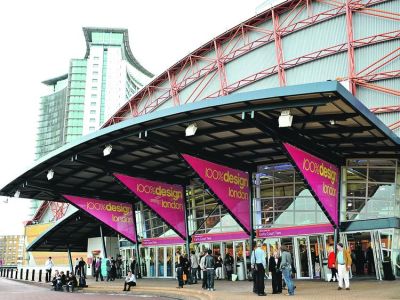
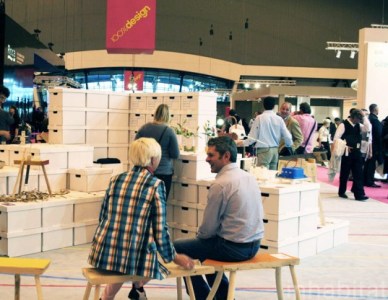
Todo esto sucede mientras en el centro de eventosEarls Court se lleva a cabo la tradicional feria100% Design London , dedicada al diseño industrial y el mobiliario. Allí, más que escenas bizarras o desaforadas, se advierten algunas tendencias bien racionales, como la síntesis y delgadez , hasta llegar casi a la desmaterialización. Lámparas, percheros, mesas, sillas y sillones tienden a definirse sólo en su perímetro: líneas desnudas que recortan el espacio y delinean las siluetas de los productos.
Tal vez, un caso extremo de ese espíritu de síntesis lo ilustró la luminaria Wired, del estudio británico Something From Us, cuya base insinúa la intersección a 90° de dos “placas” virtuales, de las que sólo se definen sus perímetros, dibujados en el vacío con barras delgadas de metal. La misma búsqueda pudo apreciarse en los productos del colectivo de diseño Mark, entre los cuales se destacó el perchero Six, de Dylan Freeth, materializado con tubos de hierro pintado al horno, cuya estructura resuelve tanto el soporte como el sostén de la ropa. Ambos productos comparten la concepción morfológica de simetría radial : geometría pura esbozada con trazos etéreos pero firmes.
También la familia de asientos Net, del diseñador Sam Johnson, ofreció bancos, sillas y taburetes de hierro galvanizado con estructuras lineales de sostén. A éstas les agregó unas superficies de apoyo inspiradas en la trama de las redes de pesca , que a su vez generan formas orgánicas de doble curvatura. En tanto, el perchero Standard, del diseñador británico John Green, propone una sumatoria constructiva de elementos tubulares igualmente despojados, en la que se alternan listones de madera con caños de metal unidos por encastre.
100% Design opened its doors during the London Design Festival Read more: The Best Green Designs From 100% Design London! | Inhabitat - Green Design Will Save the World
Otra de las tendencias visibles en la feria fue la mímesis con la naturaleza : la lámpara Ribbon Pendant (de Tom Raffield) remeda a un nido colgante y está realizada con flejes de chapas de madera curvados al vapor. También la mesa Wave Table, (colectivo Kay + Stemmer) que, aún con las restricciones de una forma recta y adusta recrea la veta de la madera con caladuras irregulares.
La figura del árbol también estuvo presente. El inclasificable Hobi tree, del estudio coreano i-Clue Design, es un pequeño arbolito pelado, podría decirse un bonsái de ABS inyectado, que puede servir como centro de mesa, alhajero o escurridor de mamaderas. O la mesa Fuse Table, (Vitamine), con un “tronco” de madera del que se desprenden “ramas” metálicas que soportan la superficie.
El estudio británicoScabetti, de Dominic y Frances Bromley, recurre a la imagen del cardumen tanto en luminarias esculturales como en diversos accesorios. Estos productos utilizan el j uego de llenos y vacíos para generar contrastes sugerentes de luces y sombras. Otra línea de luminarias, A Moment, del estudio coreano Blue Door, pero en este caso al ras del suelo, consiste en una familia de “piedras” traslúcidas de formas sensuales en las que el interruptor tiene la forma de un pájaro posado sobre la superficie lisa. “Recrear en el hogar un momento de la vida natural ”, fue la idea de Park Woo Sung, su autor.
100% Design London is about the best of contemporary interior design. 100% Design London features world-class interiors show 100% Design, architectural and interior materials exhibition100% Materials and emerging talent showcase 100% Futures.




















 Arquitectonico
Debe estar conectado para enviar un comentario.